

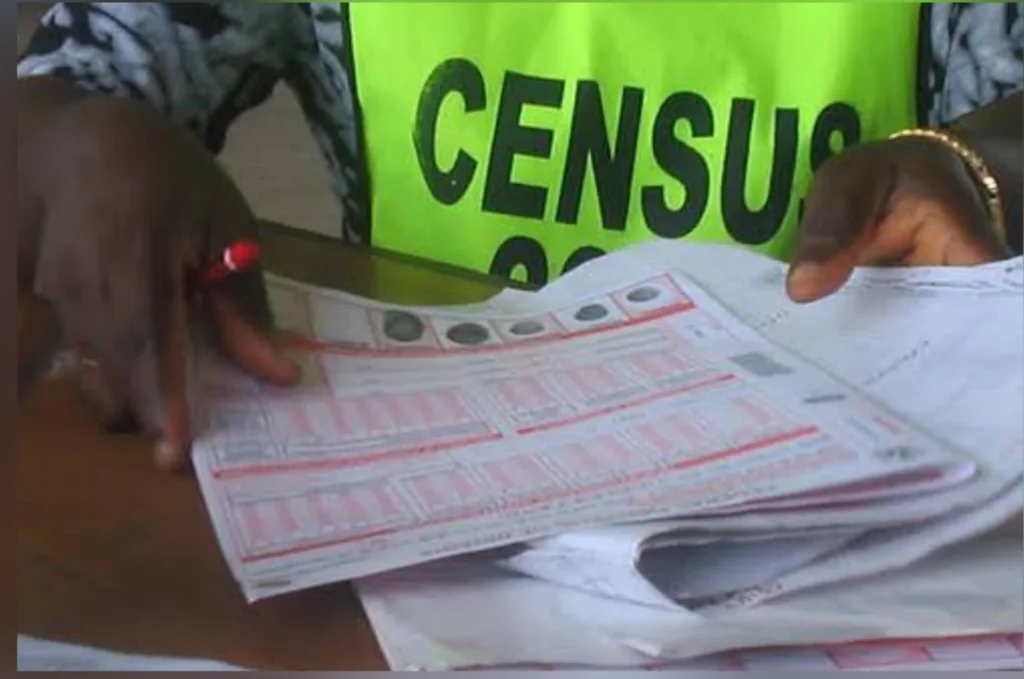
By Joel Ajayi
How does the government of a nation plan for the future of its citizens without
knowing the exact number of people it governs?
That question continues to trouble many Nigerians as the country inches toward
two decades without a National Population Census.
Twenty years after the last official headcount in 2006, Nigeria’s next census
remains uncertain, delayed by funding shortages, insecurity, politics, and
administrative bottlenecks and change of administrations.
The last National Population and Housing Census was conducted between
March 21 and 27, 2006, placing Nigeria’s Population at 140,431,790. Since
then, the country has relied largely on projections and estimates, even as the
demand for accurate demographic data has grown more urgent.
Although the United Nations recommends that countries conduct a Population
Census every 10 years, Nigeria has failed to hold another since 2006.
Plans for a fresh census, initially scheduled for 2016, 2019, 2023 and 2025 were
postponed. In April 2025, President Bola Ahmed Tinubu inaugurated a new
committee to drive preparations for a digital and environmentally friendly
census, but tangible progress has remained slow.
Before any census can take place, the National Population Commission must
complete the Enumeration Area Demarcation process, a critical exercise that
maps households and communities to ensure accurate counting, and the findings
by the New National Star Newspaper revealed that all have been done by NPC.
In October 2020, former President Muhammadu Buhari approved ₦10 billion
for the commission to support preparations, particularly the demarcation
project, which was expected to be completed in 2021. However, years later, the
exercise remains unfinished.
Reports by the New National Star Newspaper indicate that nearly all 774 local
government areas have so far been covered, an indication of the readiness of the
commission.
Nigeria’s worsening security situation has also complicated plans ranging from
insurgency in the North-East to banditry, kidnappings, communal clashes, and
other violent crimes across several states, as many communities remain difficult
or dangerous to access.
Also, the economy has also been a major obstacle. The aftermath of COVID-19,
inflationary pressures, and declining government revenues have created
competing priorities, making a costly national census harder to finance.
For a youthful and rapidly growing nation like Nigeria, accurate data on age,
gender, education levels, housing, and geographic distribution are essential for
planning schools, hospitals, roads, jobs, and social services. Without reliable
numbers, governments are left planning in the dark.
Population figures also influence the sharing of federal allocations among
states, political representation, and resource distribution. In a country where
many states rely heavily on monthly allocations from Abuja, population
numbers carry political and economic weight.
That is why census exercises in Nigeria have historically generated controversy.
Nigeria’s census history has been marked by disputes dating back over a
century.
The first census in 1911 covered only parts of the country. The first nationwide
census in 1921 was hampered by poor staffing and public resistance, as many
feared taxations.
The 1931 census faced tax riots and a locust invasion, while the 1941 exercise
could not hold because of the Second World War.
The 1952/53 census recorded about 30.4 million people. But by 1962,
controversy erupted when provisional figures suggested the southern regions
had a larger combined population than the North. A recount followed in 1963.
The 1973 census, conducted after the civil war, also sparked disputes, with
many rejecting the figures.
Even the 2006 census, Nigeria’s most recent, was not free from criticism.
Today, the National Population Commission estimates Nigeria’s population at
between 205 million and 206 million people.
Yet, many Nigerians continue to ask a simple question: How can exact
population figures be announced without conducting a fresh census?
While population projections based on birth rates, death rates, and migration
trends are common global practice, estimates are no substitute for an actual
nationwide enumeration.
The absence of credible census data affects both the public and private sectors.
For government, it weakens planning and budgeting. It can distort how
resources are allocated and make it easier for inflated figures to influence policy
decisions.
For businesses, the lack of reliable demographic data makes investment
decisions harder. Companies need to know where people live, how old they are,
what they earn, and how they consume goods and services.
From President Umaru Musa Yar’Adua, to Goodluck Jonathan and Muhammadu
Buhari, there has been one postponement after another.
Now, under the administration of President Bola Ahmed Tinubu, plans to
reschedule the census have also faced difficulties, as the Federal Government
remains uncertain over timing, methodology, and how best to capture data on
large mobile populations, including internally displaced persons.
Meanwhile, the President announced plans to create a committee to align the
census budget with the government’s present financial realities and demanded a
more feasible figure.
Barely two months later, to be precise on April 16, 2025, President Tinubu
inaugurated a high-level committee on the census with the coming of New
Chairman of the commission.
Like his predecessors who sought to make the census a reality without success,
the newly sworn-in Chairman of the National Population Commission, Dr.
Aminu Yusuf, has promised to conduct a transparent and acceptable national
census that will win public trust.
Shortly after assuming office, Yusuf said his immediate focus is delivering a
credible headcount that Nigerians can own.
“This country needs a transparent, acceptable census, which I have promised,”
he said.
“I’ve taken an oath here with my commissioners. By the grace of God, we will
be transparent in whatever we do, in the conduct of the census, so that at the end
of it all, it will be acceptable to Nigerians,” he said.
Conducting a credible census in Nigeria will not be easy. It requires funding,
technology, security, transparency, and strong political will. But the longer
Nigeria delays, the greater the cost.
And a modern nation cannot continue to depend on estimates nearly two
decades after its last headcount. Just as credible elections are vital to democracy,
a credible census is vital to development.
For now, Nigeria’s census remains on hold between promise and uncertainty.
And until that changes, the question will remain: How can a country truly plan
for the future when it does not know how many people it has today?


