By Joel Ajaiye
Early signs surrounding the 2026 FIFA World Cup suggest that the tournament’s opening could face unexpected challenges across host nations and venues.
Even before kick off, the buildup to football’s biggest global event has been marked by several concerns, including visa complications, geopolitical tensions such as the U.S.–Iran conflict, drug-related issues in Mexico, and other security-related worries.
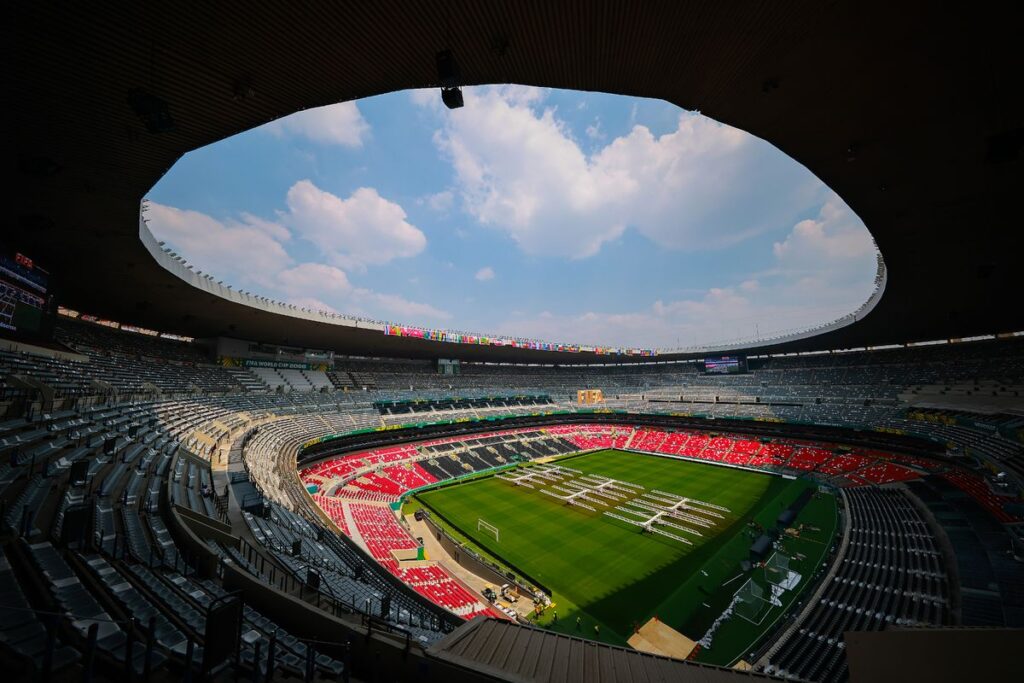
As global attention turns to the opening ceremony and Group A opening Match between Mexico and South Africa at the Estadio Azteca in Mexico City, scheduled for Thursday, tensions have already surfaced in the host city.
On Tuesday night, a protest briefly disrupted access to the iconic Azteca Stadium, blocking a major avenue for several hours just days before the tournament begins. The demonstration came amid a steady influx of fans arriving in Mexico for the jointly hosted competition by the United States, Canada, and Mexico.
The protest was led by a breakaway faction of the CNTE teachers’ union, which has staged a series of demonstrations in Mexico City over the past week. The group is demanding salary increases and the reversal of pension reforms, which the government has described as unfeasible.
President Claudia Sheinbaum described the protests as a “provocation,” suggesting they were intended to project instability ahead of the global tournament. “As if to say, ‘Look at how bad the situation is in Mexico,’” she said during a briefing.
Security forces quickly intervened to prevent demonstrators from reaching the stadium. Authorities deployed heavy police presence and concrete barriers around key routes leading to the venue, which will host the World Cup opener.
The protesters remained on surrounding streets for about three hours before dispersing peacefully. Mexico City’s security chief, Pablo Vázquez, confirmed that the situation was largely under control.
President Sheinbaum has assured that the opening match is “guaranteed” to proceed as planned, while maintaining that authorities will avoid excessive force and continue pursuing dialogue with the striking teachers.
However, tensions remain unresolved as the CNTE-led strike continues. Protest leader Austreberto Flores vowed that demonstrations would persist.
“We’re going to continue our struggle,” he said.
The union has also established a camp near the World Cup fan zone at Zócalo Square and called for further protests on match day, including participation from families of missing persons.
With millions expected to tune in worldwide, authorities are working urgently to secure venues and complete preparations as kickoff approaches, even as concerns over stability continue to linger.