

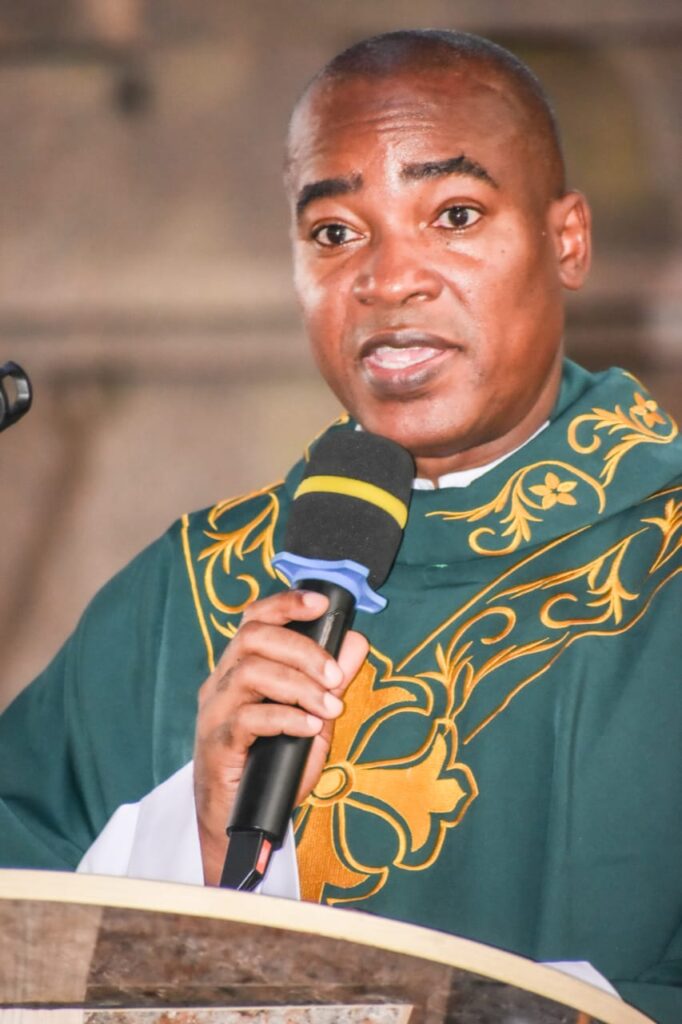
By Emmanuel Eko, Abuja
The Secretary-General of the Catholic Secretariat of Nigeria (CSN), Rev. Fr. Michael Ayanleke Banjo, has urged Nigerians not to allow ethnic sentiments to determine their choices in the 2027 general elections.
Fr. Banjo, who is also the Chaplain of St Gabriel Catholic Chaplaincy, Durumi, Abuja, made the call during a Holy Mass held as part of activities marking the chaplaincy’s patronal feast of St Gabriel the Archangel.
He urged Nigerians to assess political candidates based on their character, integrity, competence and record of service rather than their ethnic identity.
According to him, Nigeria’s cultural and linguistic diversity should be a source of strength and unity, rather than a reason for division or political favouritism.
“Today we wear different cultural attires and speak different languages, but we gather around one altar and receive the same Eucharist,” Fr. Banjo said.
He cautioned against ethnic cliques, favouring people simply because they belong to one’s ethnic group and defending wrongdoing because the person involved is considered “one of our own.”
“Our many tribes and tongues should add colour to the Nigerian family, not become walls that divide us,” he said.
Linking his message to the 2027 elections, the Catholic priest urged voters to carefully examine the records and capacity of those seeking public office.
He advised Nigerians to ask questions about what candidates had achieved in the past, whether they could be trusted with public resources, their understanding of the challenges facing ordinary citizens and whether they had credible ideas for addressing hardship and improving people’s lives.
“Before you vote, ask: What has this person done? Can this person be trusted with public resources? Does this person understand what ordinary Nigerians are going through? Does this person have credible ideas for reducing hardship and improving people’s lives?” he asked.
Fr. Banjo specifically warned Nigerians against allowing tribal loyalty to answer these questions during elections.
“Do not allow tribes to answer these questions for you. Hunger does not know your tribe. Unemployment does not know your language. Insecurity does not ask where you come from,” he said.
He explained that responsible participation in the electoral process is part of the Christian responsibility to contribute to the transformation of society.
Reflecting on the Gospel passage from Matthew 21:28-32, which recounts the parable of a father who sent his two sons to work in his vineyard, Fr. Banjo said Christians are called not only to worship but also to contribute positively to society.
He described the wider society as part of the “vineyard” in which Christians are expected to work for the common good.
According to him, the responsible use of the ballot is one practical way citizens can contribute to national development.
He therefore encouraged Nigerians to approach the 2027 elections with a sense of responsibility and to make choices based on issues that affect the welfare and future of the country.
“This is one of the ways we can express our ‘yes’ to God,” Fr. Banjo said.



