

BY TONY UDOKA
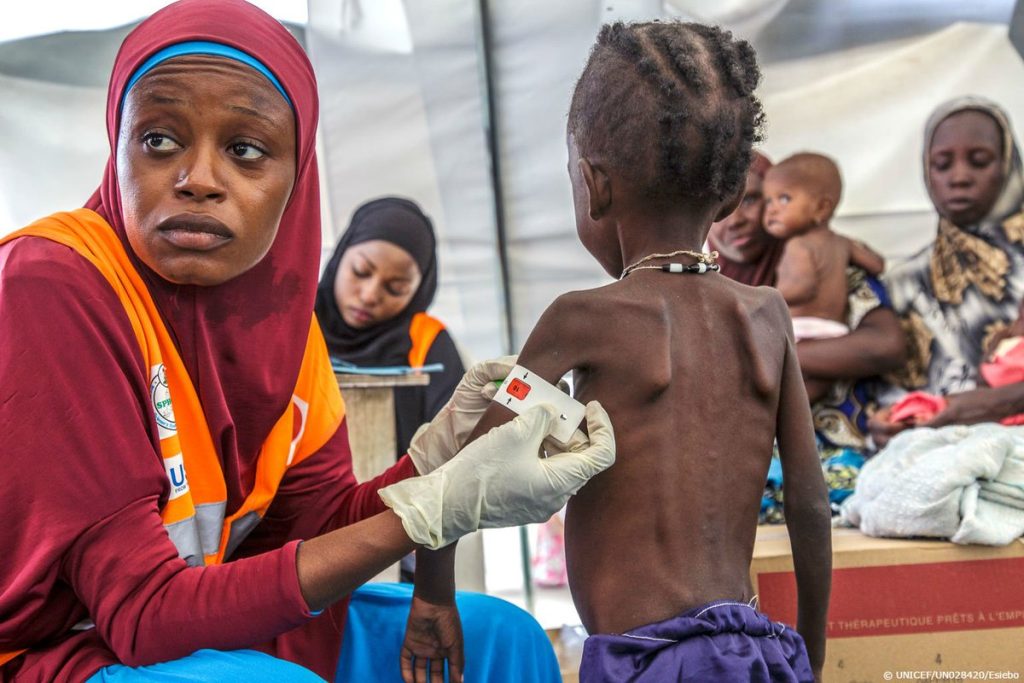
The International Committee of the Red Cross (ICRC) has raised the alarm over an impending malnutrition crisis in Nigeria’s North-East, warning that more than 3.7 million people are currently facing acute food insecurity due to widespread shortages.
The situation has been worsened by persistent insecurity across the region, where terrorist groups have overrun large swathes of farmland, displacing communities and preventing farmers from accessing their fields.
In a statement issued on Monday, the ICRC said residents in the most affected areas are grappling with hunger, displacement, and limited access to land, struggling daily to feed their families.
“Many of those affected are farmers who have lost access to their farmlands due to persistent violence and displacement,” the statement read.
The ICRC noted that the escalating food crisis is driving up malnutrition levels, particularly among children under five, and pregnant or breastfeeding women. In response, the organisation is supporting malnutrition stabilisation centres and running community education programmes to help families care for vulnerable children.
“To build resilience and support long-term recovery, the ICRC has launched an agricultural assistance programme for both rainy and dry seasons. This year alone, over 21,000 farming households have received locally adapted seeds and labour-saving planting tools,” the organisation stated.
The support includes staple crops such as rice and maize, alongside vegetables like tomatoes and okra, aimed at improving dietary diversity and nutrition. Farmers are also being trained in sustainable agricultural practices to ensure productivity beyond the lifespan of ICRC’s support.
At the national level, the ICRC has partnered with the National Agricultural Seed Council (NASC) to repair a critical water facility. This restored infrastructure now ensures uninterrupted water supply for NASC’s seed testing and greenhouse operations, a strategic move to strengthen Nigeria’s broader agricultural system.
Despite these efforts, the lean season remains a dire period for many.
“For many of us, it’s not just about farming, it’s about survival,” said Churi Ibrahim, a local farmer.
“When you can’t feed your children, every day becomes a struggle,” added Head of the ICRC Office in Maiduguri, Diana Japaridze.



