

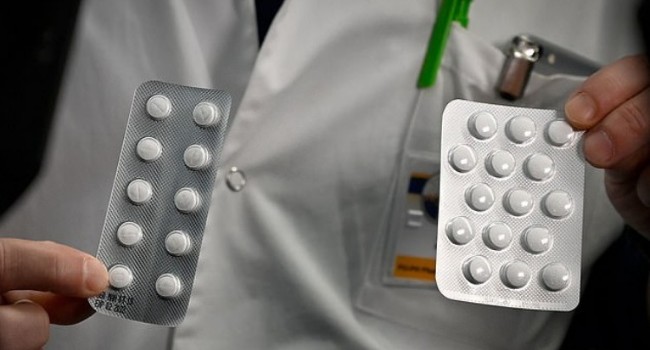
Nigerians’ concerns about rising mortality and declining life expectancy have been exacerbated by the rising costs of pharmaceutical items like as anti-diabetic, anti-malarial, anti-diabetic, and hypertension medications.
Retail costs for regularly used pharmaceuticals in Nigeria have increased by at least 300 percent every day, making the threat more severe.
Aside from food inflation, which was 40.01 percent in March, the last four months have seen an exponential increase in the rate of inflation in medicines.
Antibiotics and antimalarial medications like Tavernic soared in price to N25,735 from N11,370 in January, according to a recent Market Survey in Abuja. Levofloxacin SGS sold for N1,200 from N550.
Additionally, the price of the Ventolin inhaler is N9,000 as opposed to N2,000, the Seretide inhaler is N31,950 as opposed to N8,000, the Augmentin 625mg is N14,200 as opposed to N25,000, and the Terivid tablet 200mg is N10,320 from N4,460. Coartem 80/480 is N6,500 from N1,750. Amatem soft gel is N3500 from N1,375.
The majority of Nigerians who struggle to make ends meet on the N30,000 minimum salary now face uncertain futures.
The president of the Pharmaceutical Society of Nigeria, Prof. Cyril Usifoh, attributed the price increases to the foreign exchange problem, the need for imported medications, and growing energy expenses in a recent interview.
The Naira closed at N1,234.49 per dollar on Monday in the FMDQ market, and the recent increase in the electricity bill by N240 per unit adds to the risk.
The National Bureau of Statistics reports that during the third quarter of 2023, drug imports increased by 68%.
This development coincides with GlaxoSmithKline’s (GSK) August withdrawal from the company last year.
Blessing Adams, a community pharmacist, predicted that more Nigerians would die from chronic illnesses as a result of rising medication costs.
She claimed that because prescribed medications are so expensive, patients are now seeking alternatives like plants.
It’s pitiful. My hospital had a patient who passed away due to not being able to buy an inhaler.
“Moreover, a patient with hypertension passed away due to inability to pay for antihypertensive medications such as diuretics, CCB, and ARB,” she bemoaned.
Isaac Adebayo, a patient at the National Hospital in Abuja, bemoaned the fact that his family is considering other options because of the exorbitant cost of medications.
“Due to their exorbitant costs, we can no longer afford pharmaceuticals. “My family is currently exploring out-of-hospital alternatives for treatment,” he stated.
In the meantime, President Bola Ahmed Tinubu is aiming for an Executive Order as a temporary solution to lessen the spike in pharmaceutical product prices, as stated by Minister of Health Ali Pate in February. Nevertheless, this has not materialized.
The president of the Nigerian Medical Association, Dr. Uche Ojinmah, stated in a Monday exclusive interview that the country’s death rate and life expectancy had increased as a result of the spike in prescription prices.
He mentioned the nation’s current struggles with rising prescription costs and an increase in counterfeit drugs.
To prevent further collapse, Ojinmah urged the government to declare an emergency in Nigeria’s health system.
He went on to say that the Nigerian government ought to consider tax breaks for pharmaceutical and medical imports as well as involvement in domestic medication manufacturing.
We live in a nation where the minimum wage is N30,000 and a hypertensive patient’s monthly medication, which was once sold for N2,000 to N4,000, now costs N39,000.
“Antibiotics are currently priced at N8,000 and above. Right now, paracetamol may be the least expensive medication—a pack costs about N400.
There will be twofold illness burdens on this nation. both lifestyle diseases and infections.
“In the West, lifestyle diseases like diabetes, hypertension, and others are the main causes of illness, but in Africa, there is a dual burden of disease.”
“Patients are currently unable to afford medications for diabetes, hypertension, kidney disease, and renal failure. Dialysis is currently far from the reach of many people.
Young children under the age of five are particularly vulnerable to illnesses since their parents cannot afford to treat them. It is projected that there would be a significant death rate. Life expectancy will decline if we are truthful with our data.
“Visiting a hospital is one thing; receiving a diagnosis and treatment is another.
We are not discussing the proliferation of counterfeit pharmaceuticals in Nigeria or those manufactured with inferior ingredients in this debate. Some are only made of chalk. When you add all of them together, only God knows how Nigerians manage to survive.
“Doctors are currently suffering because of patients who cannot afford medications because of their exorbitant cost.
“After you write a prescription, a patient tells you they can’t afford it and asks for a less expensive option when they return two or three days later.
“What do you expect when a patient comes two or three days later without taking the prescribed medications?
Some medications are phony despite their high cost. Some are made using fewer components. Despite the expensive price, you can even question the drug’s quality.
“The health industry needs to be placed in emergency mode. We have to make amends. We will soon be faced with a crisis if we are unable to manage the expense of pharmaceuticals, regardless of our efforts.
“In my opinion, the government need to collaborate with regional pharmaceutical companies to support the development of generic versions of these medications. India succeeded. When the production of anti-HIV medications became problematic in India, the government provided funds to regional producers.
Nigeria’s government has the ability to take similar action, as do regional pharmaceutical firms.
“Take away the taxes on pharmaceutical and medical supplies so that generic versions can be developed and purchased.
“We are unable to murder our people because to patience. What our people need to take care of themselves locally should be produced nearby. That’s the quickest fix, he said.



