

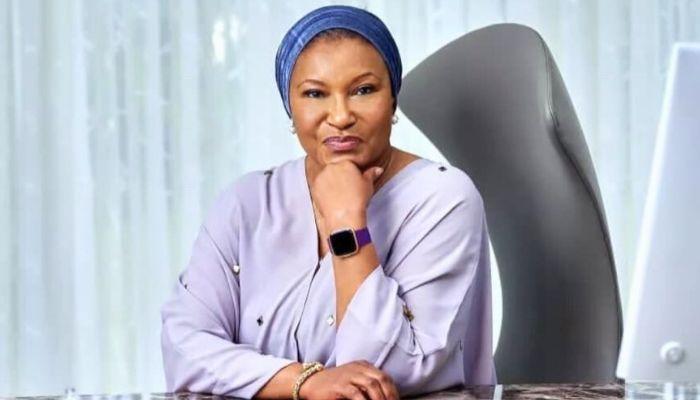
Senator Ireti Kingibe of the Federal Capital Territory (FCT) has underlined the necessity for new legislation in Nigeria to guarantee the participation of women in administration.
During her Sunday guest appearance on Arise Television, Kingibe emphasized that nations where women hold elected office have shown a strong link between economic growth and women’s involvement in drafting policies and making decisions.
“Let me give you an example in the parties you know,” she remarked. They will only bring male delegates when they want three representatives from each Ward.
The parties will begin bringing in women as soon as they declare that there will be three delegates from each Ward, one of whom must be a woman.
“First and foremost, it would be beneficial if it were the law. I’m not attempting to imply that we follow the law.
This implies that finding qualified women will be the responsibility of the parties, the government, or whoever. Do you get it? Additionally, they are present.
Speaking to the idea that women don’t support one another in elections, Kingibe said that this is no longer the case, pointing out that women are now more conscious of this.
She disclosed that she was working to compile a nationwide database of women voters in order to use them as a lobbying group.
Kingibe remarked, “I’ll tell you the truth: women’s consciousness and thought processes have altered substantially, even though that may have been the case in the past.
“I am aware that, first and foremost, women from all backgrounds and political persuasions have shown me a great deal of support.
Secondly, a database of women from around the nation is being created by me and a few other women. Because it is insufficient to simply say “do something,” we can utilize women voters as a lobbying block.
“You need to prove it to me, so what will you do if I don’t? Do you get it? And that would be beneficial.
Furthermore, how many women do you see on the ballot and why do women not vote for other women? That presents another issue.
“Even with the Labor Party being as proactive as I had anticipated, there were only two or three women on a total of 109 tickets, and that is unacceptable.”
“So, you can’t say women aren’t being voted for if they aren’t on the ballot.” She continued.
Nigerian women’s representation in the government is still a hot topic in the political sphere.
There are now just four women in the Nigerian Senate.



