

BY SAM OTUONYE
The federal government has disclosed its plan to re-base the country’s Consumer Price Index (CPI) and Gross Domestic Product (GDP) by 2025 to enhance policy accuracy and boost investor confidence.
The disclosure was contained in a statement on the official X (formerly Twitter) account of the Ministry of Finance following a meeting between it and the Statistician General of the Federation, Adeyemi Adeniran.
According to the Ministry, Adeniran met with Minister Wale Edun to provide a comprehensive update on the ongoing rebasing of the CPI and GDP, adding that the validation and launch are scheduled for early 2025.
“The Statistician-General of the Federation, Prince Adeyemi Adeniran, and his team met with the Honourable Minister of Finance and Coordinating Minister of the Economy, Mr Wale Edun, at Finance HQ earlier today to present a comprehensive update on the ongoing re-basing of the Consumer Price Index (CPI) and Gross Domestic Product (GDP).
“Set for validation and launch in early 2025, these updated frameworks are expected to strengthen Nigeria’s economic management systems and solidify its position as a leading economic force in Africa,” the Ministry said.
Accordingly, the Ministry stated that the re-basing effort will also deliver economic benefits for the country, highlighting that the update will boost investor confidence by providing a clearer and more reliable depiction of the economy.
Furthermore, the Ministry noted that the exercise will enhance global comparability by aligning Nigeria’s economic indicators with international standards.
“The re-basing of the CPI and GDP promises substantial economic benefits, including enhanced policy accuracy through more precise fiscal and monetary data, increased investor confidence with a clearer and more reliable depiction of the economy, and improved global comparability by aligning Nigeria’s economic indicators with international standards,” the statement added.
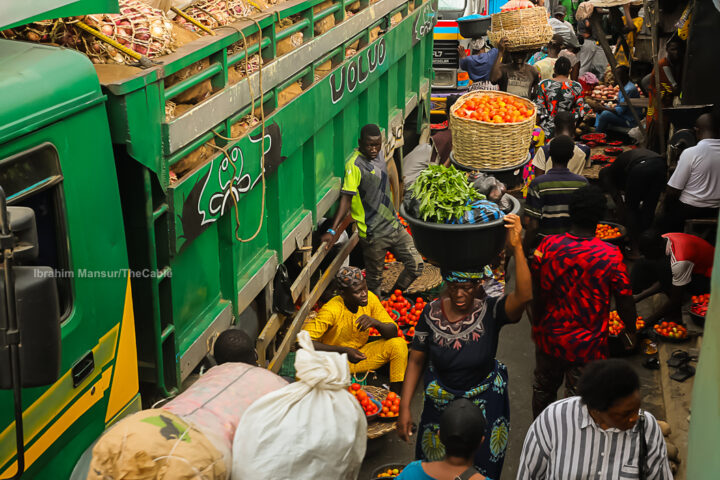
It is worthy of note that there has been an ongoing conversation about re-basing Nigeria’s gross domestic product (GDP) data to better capture the informal sector.
According to estimates, Nigeria’s informal sector, which is only faintly reflected in the GDP, contributes about 60% of the country’s economic activities.



