

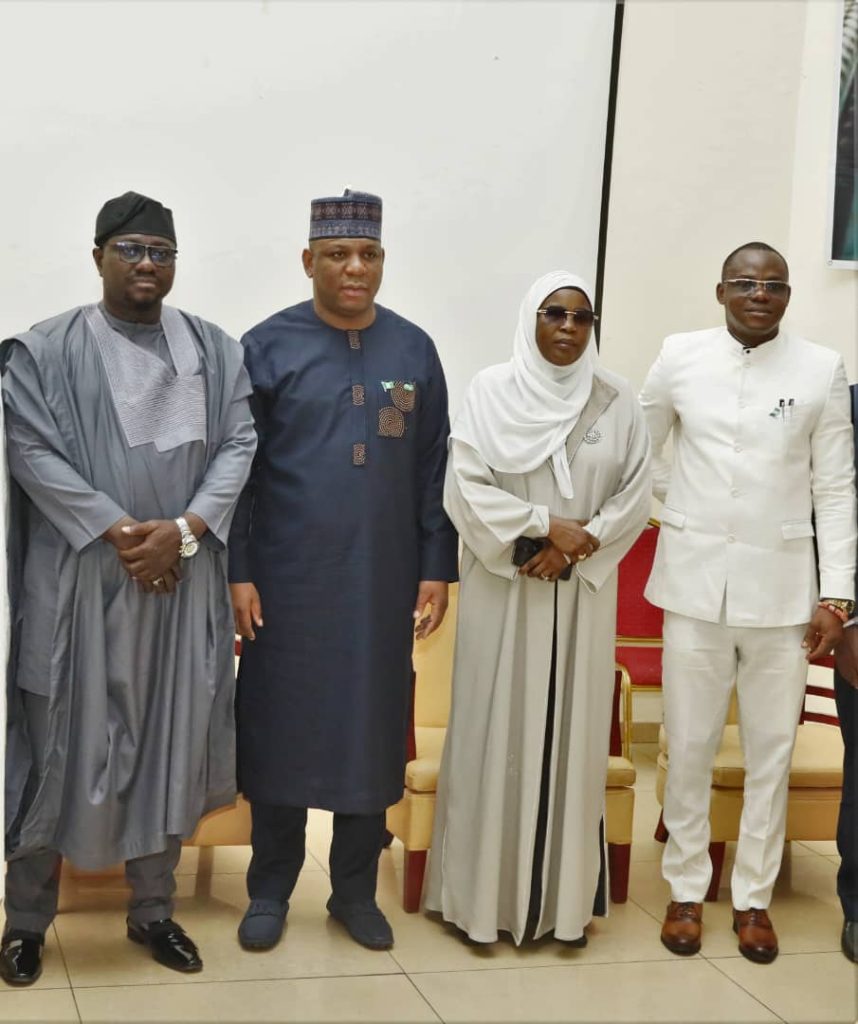
… Seeks stakeholders input on metallurgical industry bill
BY AKUDORO GLORIA
The Minister of Steel Development, Prince Shuaibu Abubakar Audu, on Tuesday said that the absence of a comprehensive legal structure has hindered growth, efficiency, and global competitiveness in the steel industry.
The Ministry stated this while delivering his keynote address during a stakeholders meeting on the Nigerian Metallurgical Industry Bill 2023 held in Abuja.
Prince Audu emphasized the vital role of the metallurgical industry in national development, stating that when passed into law, will enhance the Ministry’s capacity to regulate the steel and metals industry, providing a well-defined legal framework that ensures operational standards, quality control, and industrial best practices.
The Nigerian Metallurgical Industry Bill 2023, which aims at revitalizing the nation’s metallurgical sector and fostering sustainable development, brought together key stakeholders from academia, government institutions, private enterprises, and civil society.
“The Nigeria Metallurgical Industry Bill is a landmark piece of legislation designed to provide a robust legal and regulatory framework for the metallurgical sector.
“For too long, the absence of a comprehensive legal structure has hindered growth, efficiency, and global competitiveness in our industry. The Bill seeks to address these long-standing issues, ensuring that Nigeria’s metallurgical industry is not only viable but also a key contributor to our economic diversification efforts.
“The Bill will empower the Ministry with stronger enforcement mechanisms to curb illegal mining, scrap metal theft, and substandard imports, enhance investors confidence, attract both local and foreign investors and create a more transparent business environment”, he emphasized.
The Minister, while encouraging stakeholders’ engagement, said, “however, we must also address key challenges such as enforcement mechanisms, infrastructural gaps, and industry security. The collective input of all stakeholders will be instrumental in refining the Bill to ensure effective implementation.”
In his remarks, the Permanent Secretary Dr. Chris Osa Isokpunwu noted the importance of the stakeholders’ engagement on the Nigerian Metallurgical Industry Bill, 2023, saying that when enacted, will serve as the primary legislation governing the steel sector, hence, it is imperative that the Bill adequately reflects the current realities of the industry, including the new roles and mandates of the Ministry of Steel Development.
The Chairman, Senate Committee on Steel, Senator Patrick Ndubueze, advised that the Bill be introduced to the Senate in order for it to go through the normal reading and deliberations, get to the third and final readings before its eventual passage into law.
Also, the Chairman, House Committee on Steel, Honourable Zainab Gimba, stated that the establishment of the Ministry of Steel Development, following its separation from the former Ministry of Mines and Steel Development, has fundamentally transformed the regulatory landscape for the steel sector and necessitated a rigorous re-examination of the Nigerian Metallurgical Industry Bill, 2023, to ensure it accurately reflects the Ministry’s updated status, functions, and responsibilities, while also addressing the regulatory gaps that have emerged from the separation from the Ministry of Solid Minerals.
She revealed that the Bill which has passed the first reading is not merely a legislative document; but a strategic instrument poised to shape the future trajectory of the steel sector. She added that the stakeholders’ meeting will provide an unparalleled opportunity to harness collective expertise and insights.
Honourable Gimba highlighted some key focus areas of the Bill to be: General Administration; Control Measures at Metallurgical Plants; Issuance and Revocation of Operating Licenses; Employees’ Duties and Promotion of Indigenous Industries; Offences and Penalties among others.
The Chairman, National Steel Council, Prof. Abdulkarim Abubakar Kana, while noting that the nation’s steel sector required an emergency approach, said it is high time to take a final stand to find solutions to the challenges facing the sector by having a bill that encapsulates every aspect of steel.



