

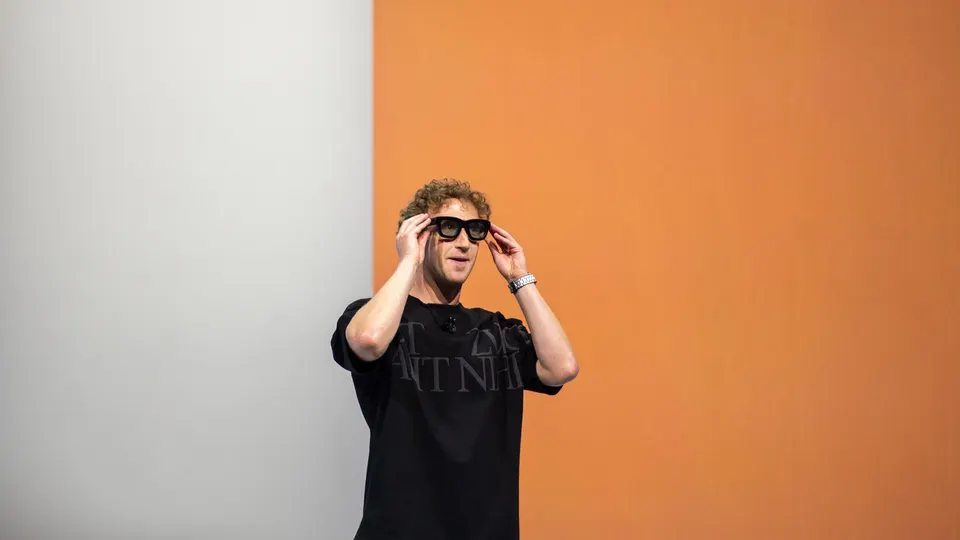
For nearly three decades, the smartphone has been at the heart of our daily lives, from communication and navigation to entertainment and productivity.
“The trend in computing is to become more omnipresent, more natural, and more social. You want to interact with people around you seamlessly, and I think that will probably be the next big platform after phones,” Zuckerberg stated.
His vision revolves around smart glasses, which he argues will allow users to access information, communicate, and engage with digital content in a more intuitive way, without the need to constantly check a screen.
In the near future, he predicts that people will start reaching for their phones less often, relying instead on the convenience of augmented reality (AR) glasses.
Although the idea of replacing a smartphone with a pair of glasses might sound unimaginable but tech giants, including Apple and Meta, are already heavily investing in wearable computing.
Meta is developing the Orion smart glasses, while Apple has launched the Vision Pro, marking the beginning of what could be a major transformation in personal technology.
Zuckerberg believes that by the 2030s, smartphones will no longer be a primary device. Instead, AR-powered smart glasses will take centre stage, offering real-time information, hands-free interactions, and even AI-powered virtual assistants capable of answering questions on the go.
“There will come a time when your smartphone is more often in your pocket than out of it,” he predicted.
“Users will opt for the convenience of glasses to get things done.”
This new generation of smart glasses could replace many smartphone functions, including:
● Real-time navigation without the need to glance at a screen.
● Instant access to news, weather, and notifications through an AR interface.
● Seamless communication, allowing users to take calls, send messages, and browse the web without holding a device.
Meanwhile, while smart glasses are still in their early stages, the tech industry is rapidly moving toward wearable computing. With advancements in augmented reality, AI, and lightweight display technology, the pieces are falling into place for a future where our smartphones no longer dominate our digital interactions.
Smartphones are deeply integrated into our routines, and switching to smart glasses will require not just technological progress, but also cultural acceptance.
Still, with major tech players racing to develop the next-generation AR devices, it seems inevitable that our digital habits will evolve.
Analysts opine that whether smart glasses will completely replace smartphones or simply become an alternative tool remains to be seen, but one thing is certain—the way we interact with technology is about to change forever.



