

BY PETER USMAN
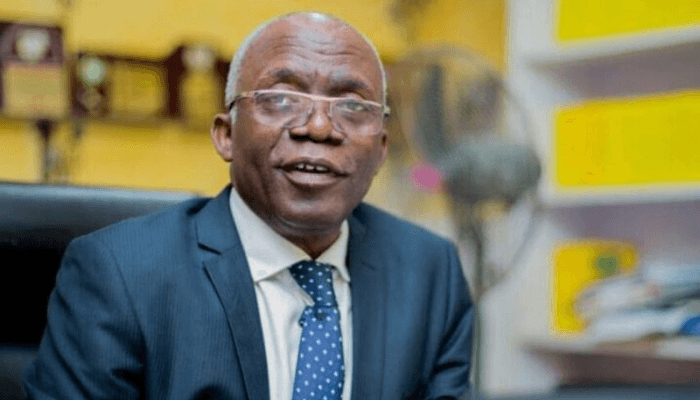
Human rights lawyer and Senior Advocate of Nigeria (SAN), Femi Falana, has revealed that oil and gas companies owe Nigeria a whopping $6 billion in unpaid taxes.
He made this disclosure while speaking during a paper presentation titled, “Tax Law and Administration: Challenges of Compliance” at the ongoing 27th Annual Tax Conference of the Chartered Institute of Taxation of Nigeria (CITN) in Abuja.
Falana criticised the federal government for allowing such massive revenue losses while continuing to borrow to fund national budgets, as he described the situation as evidence of poor financial accountability and called for greater transparency and representation in the country’s tax system.
The prominent human rights lawyer, who criticised the Nigerian tax system, described it as lacking the foundational principle of “taxation with representation.”
Also speaking during a panel discussion on tax policy and public accountability, Falana said Nigeria’s approach to taxation is riddled with inefficiencies, opacity, and mismanagement that undermine public trust and discourage compliance.
“In Nigeria, we cannot perform taxation without representation. If you want me to pay taxes, then why? Where is the representation, the justification, or the return to the people?,” he queried.
Speaking further, the senior lawyer lamented over the proliferation of taxes in Nigeria, pointing out that some fiscal policies list as many as 60 different taxes, far beyond the original 25 outlined.
Talking on issues on revenue transparency and accountability, using Lagos State as a case study, Falana claimed that taxes collected from buses and motorcycles alone amount to over N1.3 billion annually, yet there’s little clarity on how these funds are utilised.
Citing a September 2023 report, Falana revealed that oil and gas companies allegedly withheld $6 billion (about N64 billion) in taxes due to the government within a year.
Falana also condemned the government’s silence over a COVID-19 era N3.4 billion loans allegedly used without due process. “Nobody has challenged it,” he said, questioning how public funds are managed.
He stressed that taxes are meant to provide public services such as security, schools, hospitals but today, many Nigerians see no benefit from what they pay.



