

…..NDLEA officers patronise us -Peddler
……It’s not true; we raid them every week, says NDLEA
By EZEOCHA NZEH and BEN OGBEMUDIA
In the heart of Karu, a bustling satellite town of the Federal Capital Territory (FCT), lies a dark underbelly that starkly contrasts with its status as a residential hub for Nigeria’s elite civil servants.
Karu, part of the Abuja Municipal Area Council (AMAC), is split between a structured Federal Housing estate which is home to staff of the Ministries of Defence, Works, Agriculture, as well as agencies like the CBN, EFCC, DSS, and Customs.
Here, at the fringes of the formal city and bordering Nasarawa State, life takes on a different rhythm. Congested and teeming with informal commerce, Karu village throbs with energy, some of it dangerous.
Tucked behind the old Chief’s palace, just a stone’s throw from the bustling Karu Market, sits the Karu abattoir. On the surface, it is a simple meat market where families come to buy beef and goat for their daily meals. But behind the pungent smell of blood and livestock hides a more sinister trade: drugs, sex, and a growing cohort of disillusioned young people caught in a toxic web.
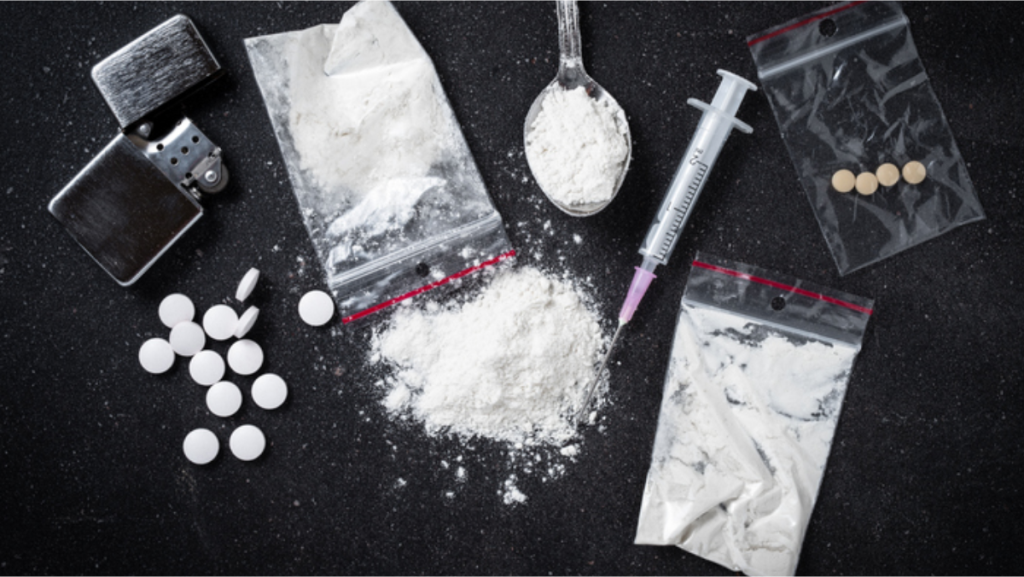
A New National Star investigation also uncovered a thriving drug syndicate operating from the abattoir grounds which is now a playground for underage dealers and users alike. By day, slabs of fresh meat are hacked and sold; by nightfall, the market morphs into a hive of narcotics activity. The irony is that it all happens in plain sight, just metres from a police checkpoint.
Teenage boys and girls, barely old enough to vote, run the operation with chilling confidence. They sell, smoke, and distribute a range of hard substances, from cannabis to more potent synthetic drugs. These young dealers have carved out a mini-economy, turning the slaughterhouse into a sanctuary of vice.
One of them, Bashir, who was bold and nonchalant, said this is the only work he can do in Abuja to fend for his family: “This is the only work I can do in Abuja. I sell drugs here and send the money to my wife in Katsina. I even deliver to some customers at their homes,” he said with pride.
Dressed in tattered jeans and a faded shirt, Bashir said the trade is lucrative enough to support a family, no matter the moral cost.
Then there’s Sadiq, a former ‘Baban bola’ (garbage scavenger), who claims he’s been arrested twice by the NDLEA but now considers some of its operatives ‘friends.’
“We all contribute money to bail each other when arrested but some NDLEA officers even patronise us,” he adds with a shrug.
The abattoir has become more than a drug den and it’s a brotherhood or fellowship of the fallen. The dealers operate like a cartel, protecting one another, pooling resources, and forming bonds that the state’s weak enforcement machinery struggles to break.
Sadiq doesn’t mince words as he said there’s high unemployment in Nigeria but was quick to add that even workers are their highest customers at the close of the day.
“There’s no job in Nigeria. Even the garbage business is dying. But here, we sell at night and people coming back from work are our best customers. Even the police at the checkpoint are our guys too,” he said.
When asked if they’re not afraid of being arrested by law enforcement agents, he simply laughed and said. “The police don’t disturb us. NDLEA comes sometimes, but we get warning before they arrive. Everyone has a hustle here, even the uniformed men.”
However, traders and residents around the abattoir say they’ve grown helpless in the face of this escalating menace. While some admit that the drug activity inadvertently brings more foot traffic and by extension, more customers, others expressed dismay.
A wine shop owner near the abattoir lamented that they are becoming a growing menace to the area. “They threaten us when we ask them to leave our shopfronts. These are kids who should be in school, but they’re lost to drugs. And when we complain, they say they’re businessmen like us, just that we’re selling a different product.”
“We’ve tried reporting them, but if the police stationed just metres away can’t stop them, who are we to fight?”
In response to claims that law enforcement agencies are complicit or worse, their customers, spokesperson for the NDLEA, Femi Babafemi, called the allegations “baseless and unfair.”
“We raid that place almost every week. But the challenge is that the community shields these boys. Before we get to the gate, they’ve been tipped off. So, they vanish. We need community support to succeed,” Babafemi said.
He added, “They’re blackmailing our men. It’s just a tactic to distract from the real issue. We’re committed to cleaning up that zone and we will.”
Similarly, the FCT Police Command’s Public Relations Officer, SP Josephine Adeh, dismissed claims that officers are fraternising with the dealers.
“Our officers are responsible professionals. Still, we’re not turning a blind eye. We’ll keep Karu station on alert and continue surveillance. But no law enforcement agency can win this fight alone. We need the public to cooperate,” she pleaded.
What’s unfolding in Karu abattoir is more than a story of crime. It’s a broken system where hunger, joblessness, and state failure converge. The drug dealers here are not just criminals, they are also casualties of a nation that leaves them no ladder out of poverty.
And so, in the blood-soaked alley of a meat market, Nigeria’s youth are being butchered, not by machetes, but by meth, marijuana, fornication and all forms of moral neglect and decadence.
Until the system changes, Karu’s abattoir will remain a ‘slaughterhouse’ for dreams.



