

BY DAVID ADUGE-ANI
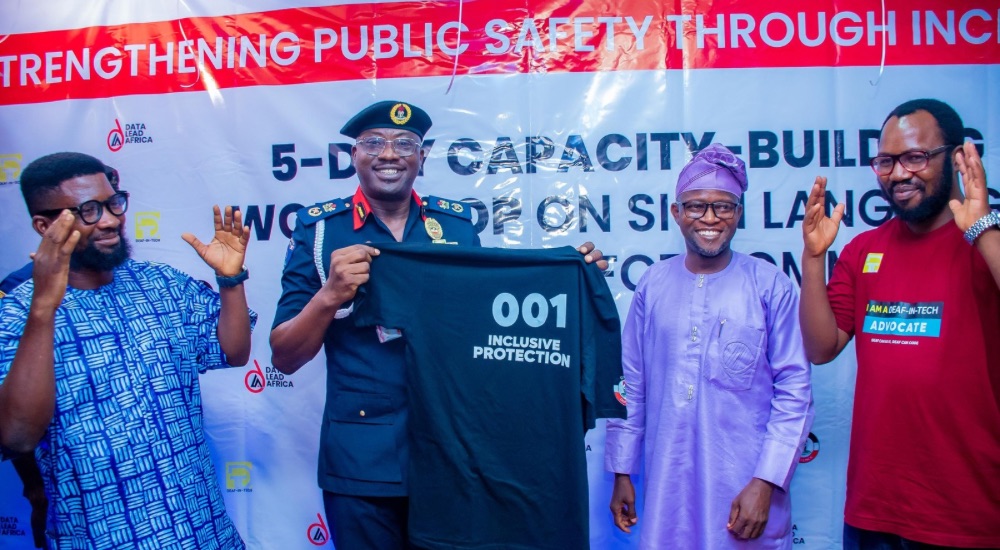
The Nigeria Security and Civil Defense Corps (NSCDC) Federal Capital Territory (FCT) Command, has trained its officers on sign language proficiency.
Speaking at the closing ceremony of the five-day training programme in Abuja on Monday, the NSCDC-FCT Commandant, Dr Olusola Odumosu, stated that the successful conclusion of a groundbreaking training programme, the first of its kind in our Command, was designed to build the capacity of its personnel in the effective use of sign language as a tool of communication.
Odumosu explained that the initiative is not merely a training exercise, but a strategic investment in the future of intelligence gathering, criminal investigation, and delivering on the NSCDC core mandates.
He noted that by equipping NSCDC personnel with sign language proficiency, the Command is tearing down a long-standing barrier between law enforcement and members of the deaf community.
“Today marks the successful conclusion of a groundbreaking training programme, the first of its kind in our Command designed to build the capacity of our personnel in the effective use of sign language as a tool of communication.
“This initiative is not merely a training exercise. It is a strategic investment in the future of intelligence gathering, criminal investigation, and delivering on the NSCDC core mandates.
“By equipping our personnel with sign language proficiency, we are tearing down a long-standing barrier between law enforcement and members of the deaf community,” he said.
Odumosu maintained that this is citizens-centred approach to law enforcement in its truest sense, because it builds trust, sense of belonging, improves access to justice, and ensures that no voice goes unheard, whether spoken or signed.
“From the several training programmes and reorientation of personnel to our reward system for excellent performance, we have continually raised the bar.
This training is one clear testament to that vision, bold, progressive, and deeply impactful.
Permit me to say this loud and clear: FCT Command is not waiting for the future — we are creating it,” he added.



