

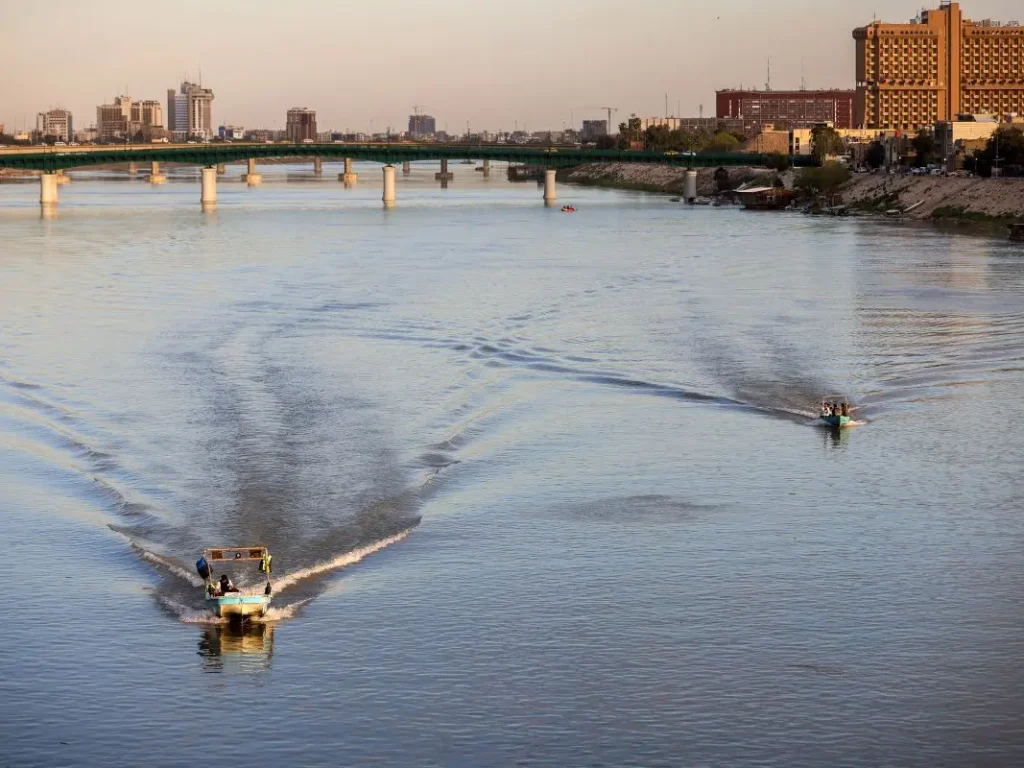
Iraq’s water reserves are at their lowest in 80 years, following a dry rainy season and dwindling shares from the Tigris and Euphrates rivers, government officials announced Sunday. This exacerbates a severe environmental crisis for the country’s 46 million people, grappling with climate change, drought, rising temperatures, and declining rainfall.
Authorities also attribute the dramatically reduced flow of the historically vital Tigris and Euphrates rivers to upstream dams constructed in neighboring Iran and Turkey.
“The summer season should begin with at least 18 billion cubic meters… yet we only have about 10 billion cubic meters,” said Khaled Shamal, spokesperson for the water resources ministry. “Last year our strategic reserves were better. It was double what we have now.”
Shamal added, “We haven’t seen such a low reserve in 80 years,” primarily due to the reduced river flow. Iraq currently receives less than 40 percent of its historical share from the Tigris and Euphrates.
Sparse rainfall this winter and low water levels from melting snow have worsened the situation in Iraq, which the United Nations considers one of the five countries most vulnerable to the impacts of climate change. Water shortages have compelled many Iraqi farmers to abandon their land, and authorities have drastically curtailed farming activity to prioritize sufficient drinking water supplies.
Agricultural planning in Iraq is heavily dependent on water, and this year aims to preserve “green spaces and productive areas” totaling over 1.5 million Iraqi dunams (375,000 hectares), Shamal stated. Last year, authorities permitted farmers to cultivate 2.5 million dunams of corn, rice, and orchards.
Water has been a recurring source of tension between Iraq and Turkey, with Turkey urging Baghdad to adopt more efficient water management plans. In 2024, Iraq and Turkey signed a 10-year “framework agreement,” primarily focused on investments in projects to ensure better water resource management.


