

BUSINESS/TRANSPORT FEATURE
Transportation is the artery through which a nation’s lifeblood flows, its people, goods, and ideas. In Nigeria, the sector has often struggled under the weight of age-old inefficiencies and fragmented policies. But under President Bola Ahmed Tinubu, PETER USMAN writes that change has rolled onto the tracks and highways with a boldness long missing from the national narrative.
For the first time in Nigeria’s history, a National Land Transport Policy is at the cusp of approval by the Federal Executive Council.
More than a bureaucratic document, it’s a vision to harmonise Nigeria’s disjointed transport systems into a strategic whole. Once ratified, it will define infrastructure priorities, guide private investment, and encourage integration between road, rail, and port systems. It’s the architectural blueprint for a future where movement fuels prosperity.
President Tinubu’s administration has wasted no time modernising road infrastructure. A major win is the rehabilitation of Lagos’ Third Mainland Bridge, easing traffic snarls on one of Africa’s busiest urban corridors. More than symbolic, it’s a message that critical infrastructure will no longer be ignored.
Ambitious new projects are setting records and reshaping expectations. The 700-kilometre Lagos-Calabar Coastal Highway is not just an engineering feat, it promises to link Nigeria’s coastal states, boost tourism, and lift communities previously cut off from economic opportunity.
Other key road initiatives include: The 1,000-kilometre Sokoto-Badagry Highway, passing through Kebbi, Niger, Kwara, and Oyo States; The 46-kilometre Enugu-Abakaliki-Ogoja Road, connecting key Middle Belt and Southeastern states; and the rehabilitation of 330 roads and bridges across all six geo-political zones, an unprecedented scale of intervention.
Where previous administrations dreamt, Tinubu’s team builds.
The Kano-Kaduna Railway, a $254.76 million project, exemplifies this momentum, cutting travel time, improving logistics, and generating jobs. The Kaduna-Kano and Kano-Maradi standard gauge lines, once stalled at 15% completion in May 2023, have now crossed the 50% mark.
Meanwhile, long-ignored corridors like the Lagos-Ibadan and Abuja-Kaduna are receiving renewed attention. Tinubu’s administration is also working to finalise the APMT Terminal in Apapa, dramatically easing congestion at Nigeria’s busiest port.
The result? Over 105 containers now move daily by rail, reducing pressure on roads and accelerating supply chains. With vehicular overpasses separating road from rail, delays and accidents are fading into memory.
To complement rail improvements, major upgrades at Lagos and Onne ports are underway, projected to increase cargo capacity by 30%. But modernisation doesn’t stop at steel and concrete.
The rollout of e-ticketing across rail corridors like Lagos-Ibadan, Warri-Itakpe, and Abuja-Kaduna, marks a digital pivot. Financial transparency has improved, and passengers are enjoying a smoother, more secure experience.
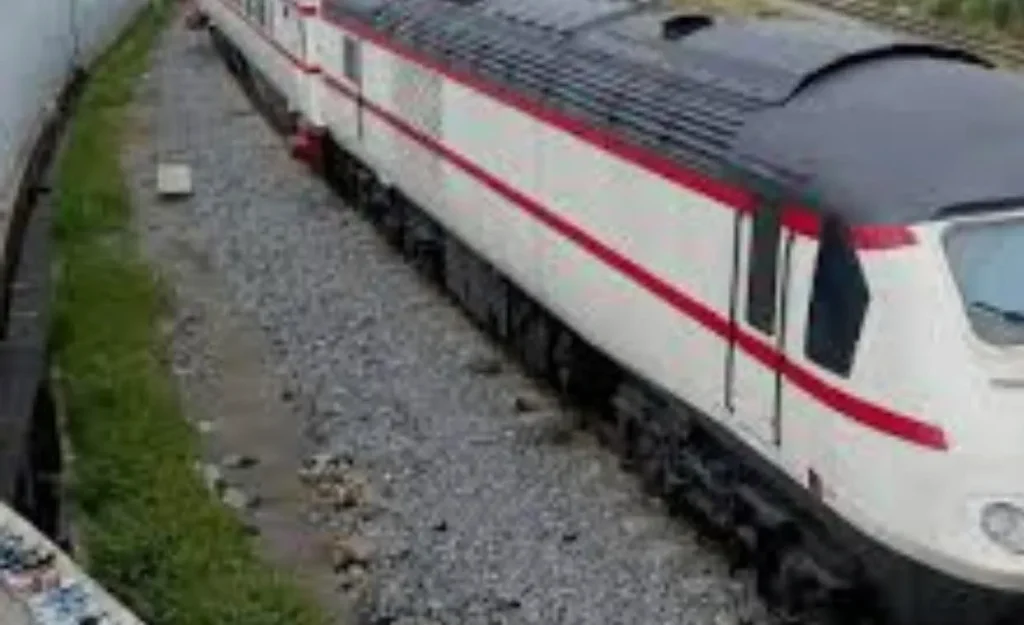
The retrofitting of NRC locomotives, particularly along the Abuja-Kaduna line, now ensures more reliable and safer rail services for commuters.
The Minister of Transportation, Sa’idu Ahmed Alkali has emerged as a key player in Tinubu’s transport reforms. Passionate and hands-on, Alkali has re-energized a ministry that drifted after the departure of former Minister Rotimi Amaechi. He has been blunt about the disrepair he inherited, particularly in the railway sector, and is leading a full-scale revival.
Alkali recently proposed a $35 billion investment portfolio to expand Nigeria’s railway network. His 2024 budget plan includes the construction of nearly 6,000 kilometres of standard gauge lines, plus the rehabilitation of 3,505 kilometres of narrow-gauge track.
The goal? Link Nigeria’s North and South, East and West, connecting agricultural hubs, mining zones, and port cities like the Lekki Deep Sea Port. This is more than transit. It’s a strategic play for economic diversification and national cohesion.
Under Alkali’s watch, the Aba section of the Port Harcourt–Maiduguri narrow gauge line has commenced commercial service. Once the full 1,443-kilometre line is complete, it will restore a vital East-West rail connection that has long been dormant.
Work is also advancing on the 387-kilometre Kano–Daura rail project, expected to be operational by 2026. According to Alkali, the rail will facilitate trade, improve mobility, and tighten connectivity between Nigeria’s southern ports and the North-East.
Despite funding challenges and revenue constraints, the Ministry remains committed to President Tinubu’s Integrated Infrastructure Master Plan, a sweeping effort to bridge Nigeria’s infrastructure gap, create jobs, and lift living standards.
This is not change for change’s sake. It is deliberate, structured reform, driven by a government determined to rewrite the story of Nigerian transportation, from the battered bus stations and rusty tracks of old to a new era of sleek highways, humming railways, and bustling ports.
With resolve in the seat of power and vision at the wheel, Nigeria’s transport sector is not just on the move, it’s accelerating toward a future finally within reach.



