

BY SAM OTUONYE
The Securities and Exchange Commission (SEC), Nigeria, has stressed the need for the mobilisation of capital markets to bridge the colossal financing gap for climate adaptation in Africa.
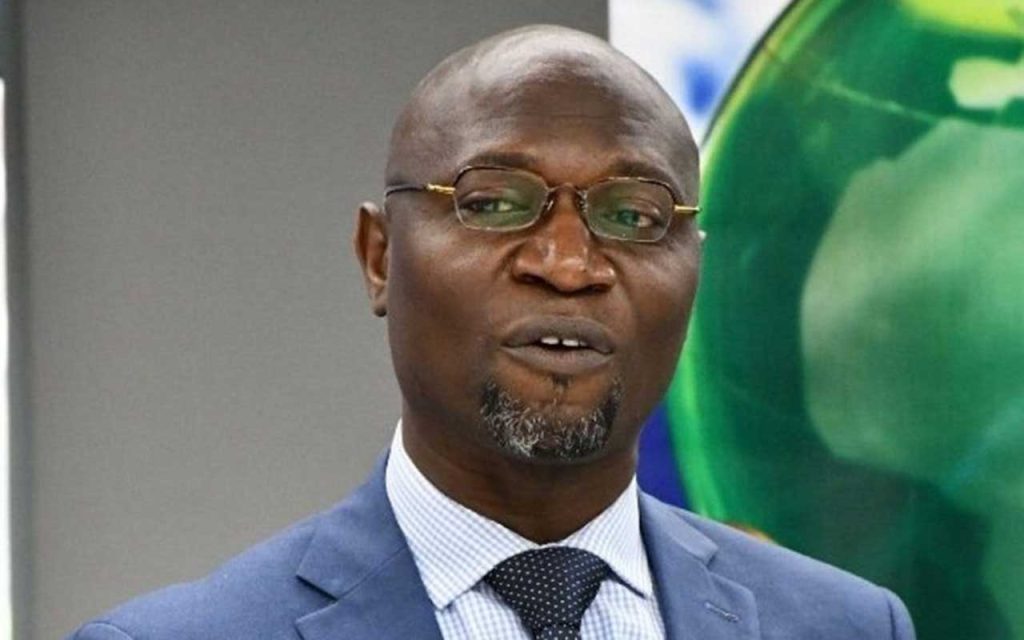
Dr Emomotimi Agama, the Director-General of SEC, said this while speaking on The Role of Capital Markets in Closing Financing Gaps for Climate Adaptation presented at the African Development Bank (AfDB) meeting.
He therefore urged Project developers and private sector actors to present bankable, pipeline-ready projects with robust environmental and social metrics in a bid to closing financing gaps for climate adaptation.
Agama said that African capital markets could be achieved through market integration, aligning standards and adopting International Sustainability Standards Board (ISSB).
“Closing the climate adaptation financing gap in Africa is not a distant aspiration but a development imperative, and one that demands our collective ingenuity and capital.”
“By integrating our markets, aligning standards, adopting the ISSB framework, and mobilising institutional capital across borders, we can build a climate-resilient future for all Africans,” Agama said.
He noted that Africa which contributes less than four per cent of global greenhouse gas emissions, bears over 25 per cent of climate-related losses.
“Experts estimate our continent faces an annual climate adaptation financing shortfall of up to $100 billion by 2030.
“The 2022 Africa Economic Outlook by the AfDB estimated that the continent needs around $500 billion of climate finance by 2030.
“Africa will also need to invest more than three trillion dollars in mitigation and adaptation by 2030 in order to implement its Nationally Determined Contributions.
“These figures are more than statistics, they translate into lost livelihoods in the Sahel, vanishing fish stocks in the Gulf of Guinea, and more frequent flooding in Lagos and Nairobi,” he said.
According to him, these figures reflect a deepening divide between vulnerability and resilience.
“The stark reality is undeniable. Africa, contributing minimally to historical emissions, faces severe impacts of a changing climate which includes devastating droughts threatening food security, rising sea levels, engulfing coastlines, and intensifying storms disrupting lives and economies,” he said.
Agama added that the 2023 United Nations Environment Programme Adaptation Gap Report said Africa needs between $212 and $387 billion annually for developing countries’ adaptation by 2030.
“Meanwhile, our current flows and
commitments are a mere fraction of this amount. For Africa specifically, the gap is immense, estimated to be up to 50 times current funding levels,” he said.
Agama said in 2017, Nigeria launched its sovereign green bond, the first in sub-Saharan Africa. Within months, it was oversubscribed by 2.5 times, driven by Nigerian pension funds and diaspora investors seeking both yield and impact.



