

BY PETER USMAN
The Bureau of Public Procurement (BPP), has decried persistent inefficiencies and violations in Nigeria’s budget and project implementation process, noting that uncoordinated and underfunded capital projects have become a conduit for corruption and fiscal irresponsibility.
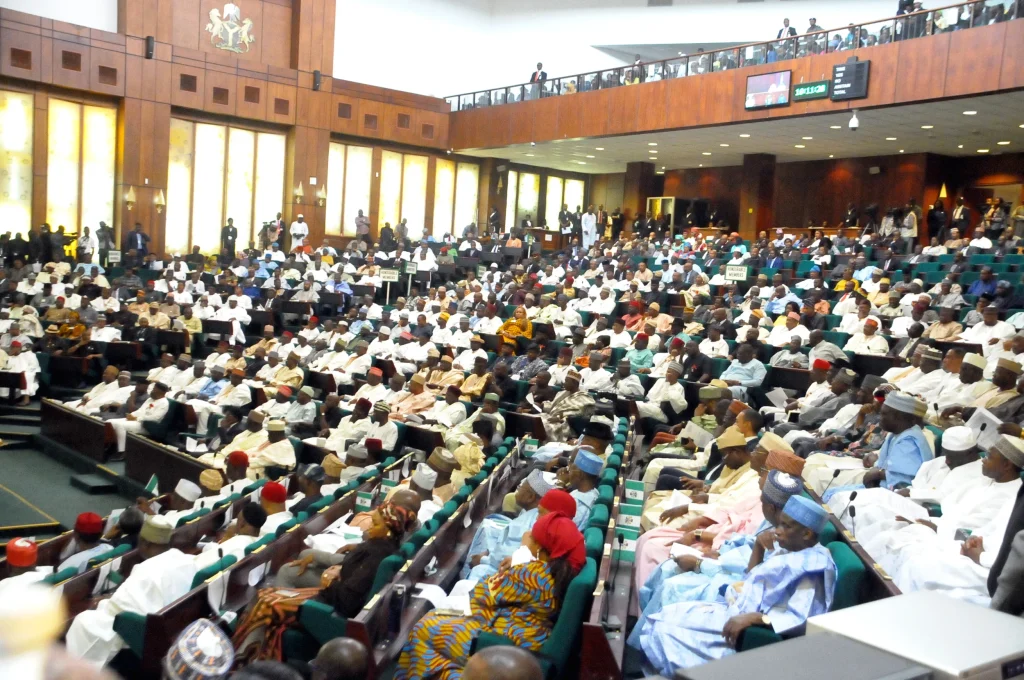
Speaking at the National Conference on Public Accounts and Fiscal Governance, organised by the Public Accounts Committees of the Senate and House of Representatives, the Director General of BPP, Mr. Adebowale Adedokun, said that projects should not be allowed to commence without adequate funding.
He however described the practice of allocating paltry sums to multi-billion-naira projects as a deliberate invitation for budget variations and corruption.
Adedokun called for urgent need to overhaul Nigeria’s project funding model and enforce accountability through judicial sanctions.
He said, “There are projects worth ₦10 billion or ₦5 billion, but what I see is that only ₦300 million is allocated. Already, it tells me that I’ll be asked for appropriation again, or to incur variation. That is wasteful and unacceptable,”
The DG stated that some federal projects have remained ongoing since the year 2000, yet continue to receive annual budget allocations without empirical evidence of progress.
Speaking further, Adedokun condemned the widespread disregard for global public finance standards, particularly the requirement that capital projects must have full funding from start to finish before they commence.
He lamented that, “In global standards, a project must already have funding from start to finish before execution. But here, people just award contracts without funds, and that’s a clear violation of the procurement act.”
Adedokun revealed that in recent months, the Bureau has discovered that some contracts were awarded and executed without any financial backing, a practice he described as “contrary to law” and “endangering the 2024 budget cycle.”
He urged all fiscal oversight bodies, including the EFCC, Fiscal Responsibility Commission, and Independent Corrupt Practices and Other Related Offences Commission (ICPC), to begin their monitoring efforts from the very start of the budget cycle, not midway or after funds have been disbursed.
“If we are serious about stopping waste and corruption, we must start monitoring at the beginning of the budget cycle. Not after projects have failed or funds have been misused,” he said.
The DG also criticised the failure of the judicial system to convict public officials who have been found guilty of procurement infractions, despite overwhelming evidence submitted by oversight agencies.
He said, “In the last seven months, the Bureau has recorded close to 500 infractions. Many of these require prosecution and judicial pronouncements, but when does the judiciary give any conviction?”
Adedokun warned that the absence of punitive consequences emboldens offenders and undermines the work of regulatory agencies. “People continue to do the wrong things because they know they won’t be punished,” he said.
He emphasised that Nigeria has historically failed to sanction public officers for procurement misconduct or budgetary recklessness, as he called on lawmakers and government institutions to embed the principles of prudence and discipline in all budget and procurement processes, urging institutional reforms and alignment with international standards.
The Director General proposed that ministries, departments, and agencies (MDAs) be required to present empirical evidence of what was achieved with previous budgets before being allowed to receive new appropriations.
“Let them show us, empirically, what they did with the last project before we approve another,” he said.



