

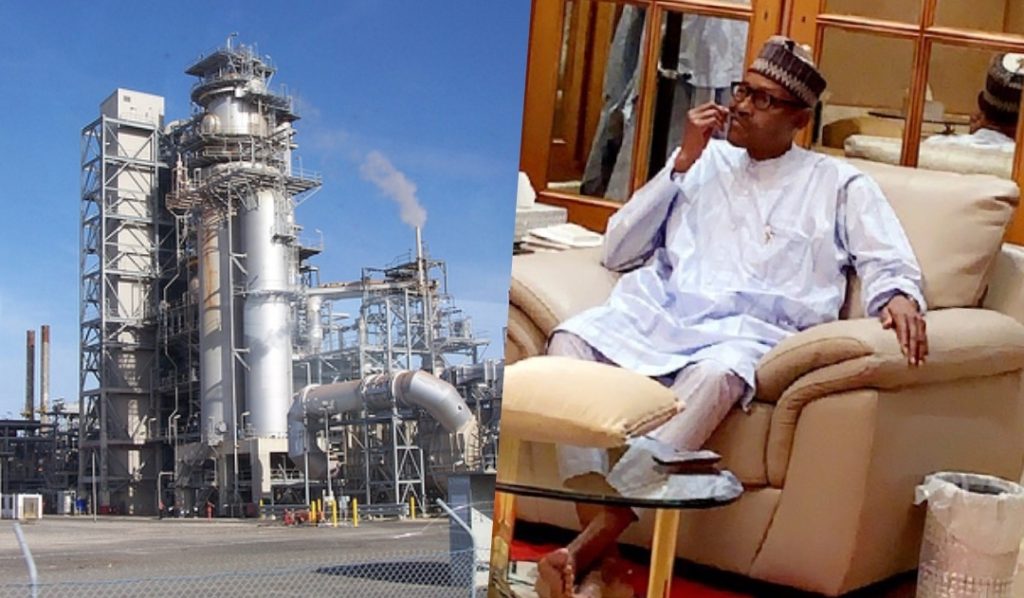
Was it a coincidence or both sides decided to say the truth at different fora? On Thursday July 10, 2025, Alhaji Aliko Dangote, president of the Dangote Group which included the 650,000 barrels per day capacity Dangote Refinery, while addressing members of the Global CEO Africa from the Lagos Business School at his Lekki refinery had expressed doubt that Nigeria’s refineries in Port Harcourt, Warri and Kaduna would work again.
Dangote’s pessimism was based on the fact that despite the humongous $18 billion spent on the refineries’ rehabilitation by the Nigerian National Petroleum Company Limited, NNPCL, and declared functional, they have refused to work.
The business mogul revealed that his refinery now has over 50 per cent of its output dedicated to Premium Motor Spirit (petrol), whereas the government refineries committed just 22 per cent of their production to petrol.
It would be recalled that Dangote had bought the Port Harcourt Refinery under the Olusegun Obasanjo administration but the sale was reversed a few months after Umaru Yar’ Adua came to power in 2007 and alleged that the previous government had sold the facilities below their costs as a parting gift to Dangote and his colleagues.
Said Dangote: “The refineries that we bought before, which were owned by Nigeria, were doing about 22 per cent of PMS. We bought the refineries in January 2007. Then we had to return them to the government because there was a change of government. And the managing director at that time convinced Yar’ Adua that the refineries would work.
“They said they just gave them to us as a parting gift or so. And as of today, they have spent about $18 billion on those refineries, and they are still not working. And I don’t think, and I doubt very much if they will work.”
Barely two days after, the Group Chief Executive Officer of the NNPCL, Bayo Ojulari, technically confirmed Dangote’s assertion on the Port Harcourt, Warri, and Kaduna Refineries when he said the oil behemoth was considering selling the refineries because the rehabilitation works were not yielding the desired results due to how obsolete the facilities have become over the years.
Ojulari spoke with Bloomberg at the 9th OPEC International Seminar on Thursday in Vienna, Austria, stating that Nigeria had invested heavily in the refineries without seeing any tangible results.
His comments were in sharp contrast with those of his predecessor, who told Nigerians in November 2024 that all the refineries would resume full operations.
Ojulari said: “We’re reviewing all our refinery strategies now. We hope before the end of the year, we’ll be able to conclude that review. That review may lead to us doing things slightly differently.
“What we’re saying is that sale is not out of the question. All the options are on the table, to be frank, but that decision will be based on the outcome of the reviews we’re doing now.”
The signs of the death knell of the nation’s four refineries were ominous over the years. When last November, the management of the NNPCL announced that the S1.5 billion rehabilitation programme of the Port Harcourt Refinery by the President Bola Tinubu administration had been completed and would soon begin fuel loading, many Nigerians doubted the sincerity of the announcement.
But presidential spokesmen and faithful of the ruling All Progressives Congress, APC, took on critics and described them as people who would never see anything good in whatever the government does.
Yet, the NNPCL and government spokespersons insisted that the 60,000 barrels per day Port Harcourt Refinery was ready, with loading operations in full swing.
The Port Harcourt Refineries consist of two units. The old plant (PHRC 1) has a refining capacity of 60,000 barrels per day (bpd) while the new plant (PHRC 2) processes 150,000 bpd.
The refinery was shut down in March 2019 for the first phase of repair works. Italian company, Maire Tecnimont, was to handle the review of the refinery complex while oil major, Eni, was the technical adviser.
Six months after the November 2024 product loading, the chickens came home to roost. The refinery was shut in May yet again for another round of maintenance.
In a statement the NNPC said: “This scheduled maintenance and sustainability assessment will commence on May 24, 2025. We are working closely with all relevant stakeholders, including the Nigerian Midstream and Downstream Petroleum Regulatory Authority (NMDPRA), to ensure that the maintenance and assessment activities are carried out efficiently and transparently.
“NNPC Ltd remains steadfast in its commitment to delivering sustainable energy security.”
Barely two months after, all facts indicate that not just the Port Harcourt Refinery but also the others in Warri and Kaduna cannot be revived.
Nigerians should be worried over how the Port Harcourt Refinery on which President Tinubu spent $1.5 billion (N2.4trillion) has suddenly gone bad to warrant sale.
Indeed, the problematic refineries have become a national embarrassment and even President Tinubu’s magic wand cannot solve the problem.
Since he took over power on May 29, 2023, he has reportedly spent over $3 billion on the refineries without tangible results.
The four ventures have become major drains on the nation’s purse and all efforts to rehabilitate them have always ended disastrously.
Between 2010 and 2023, the country spent at least N11.35 trillion spent on revamping the refineries as disclosed by the House of Representatives Ad Hoc Committee on the State of Refineries.
Instructively, former President Olusegun Obasanjo had sold the refineries to a group of private investors led by the President of Dangote Industries Limited, Alhaji Aliko Dangote, at $750m.
His successor, Umar Musa Yar’Adua, however, cancelled the sale and the money refunded to the buyers. This ugly experience must have prompted Dangote to build his gigantic refinery in Lagos.
Now that the refineries have been ascertained moribund, we believe it is high time the government sold them and saved the country from further waste of scarce resources.
“Now that the refineries have been ascertained moribund, we believe it is high time the government sold them and saved the country from further waste of scarce resources.”



