

BY JOHN DANJUMA
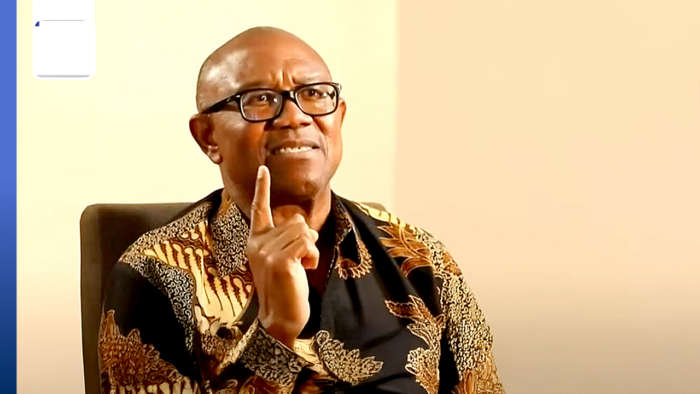
The Labour Party’s 2023 presidential candidate, Peter Obi, has sounded a powerful alarm over Nigeria’s deepening debt crisis — declaring that the country is heading down a dangerous fiscal path, where loans pile up but the lives of citizens remain untouched.
Obi’s concern follows the Senate’s recent approval of $21 billion, €2.2 billion, and ¥15 billion in new external loans, on top of a domestic bond issuance of ₦750.98 billion, all targeted for the 2025–2026 fiscal period.
“With these new loans, Nigeria’s total public debt has soared to ₦187 trillion, and we may cross ₦200 trillion before year-end,” Obi wrote on his verified X handle.
“That’s nearly 70% of our pre-rebased GDP, and over 50% even after rebasing. This is the highest debt-to-GDP ratio in our national history.”
But for Obi, the figures aren’t just frightening — they’re infuriatingly hollow.
“What do we have to show for this mountain of debt? Schools are failing, hospitals are barely functioning, electricity is unreliable, and insecurity is taking lives daily. If borrowing doesn’t uplift the people, then what exactly is it fixing?”
Reeling out the statistics, he said: Over 10,000 Nigerians killed and 672 villages sacked since May 2023, despite rising security budgets — from ₦2.98 trillion in 2023 to ₦4.91 trillion in 2025; 135,000 km of roads remain unpaved across the country; Power generation stuck at under 5,000 MW for over 200 million Nigerians; 133 million citizens, or 63% of the population, are classified as multi-dimensionally poor and over 650 children have died from malnutrition in Northern Nigeria, with Doctors Without Borders sounding the alarm.
“In a country this rich in resources, no child should die hungry,” Obi said.
“What we’re witnessing isn’t just an economic failure — it’s a human tragedy.”
While Obi emphasized that borrowing can be a powerful tool for development, he insists it must be strategic, transparent, and impactful.
“This pattern of borrowing without results is reckless. It’s not just about numbers — it’s about lives being wasted and dreams being deferred.
“We are not just borrowing money — we are borrowing the future of our children and spending it without caution. That’s not governance. That’s intergenerational theft.”
Obi called on the current administration to change course — urgently:
“Nigeria must return to a path of fiscal discipline. Cut the waste. Block the leakages. Invest in people. Rebuild the productive base of this economy.
Every naira borrowed must be matched by a visible result in the lives of our citizens.”
He concluded with a familiar but deeply resonant plea:
“A New Nigeria is not a luxury — it is a lifeline. But we cannot build it on debt, denial, and disconnection. We must lead with responsibility, govern with conscience, and act with humanity.”



