

By Linus Obogo
I could not but sneer at the buffoonery of the once SAN-stripped former Attorney-General, Mr. Michael Aondoakaa’s barefaced lies and mischief as he struggled strenuously to offer insights on the never-ending-Bakassi saga on national television.
Recall he was also once, in a concurrent judgment by the Federal High Court and the Court of Appeal declared as unfit, incompetent and improper to be gifted the office he occupied then as Attorney-General and Minister of Justice in the administration of the late President Umaru Yar’Adua.
In the long, winding corridors of Nigeria’s political tragedy, the name Bakassi resounds not as a mere geographical expression but as a bleeding wound carved into the soul of a betrayed people. And now, like a ghost from the ruins of justice, emerges Michael Aondoakaa SAN—former Attorney General—whose recent utterances on national television, laced with brazen falsehoods and patronizing self-righteousness, have reopened the gashes of an old wound yet to scar. In the annals of official perfidy, his statements shall go down as a shameful monument to selective memory, legal opportunism, and the cold-blooded art of revisionist historiography.
To suggest, with such scandalous ease, that the Cross River State government forfeited its ancestral inheritance by mere absence, is to insult not only the dignity of a state grievously wronged, but to debase the truth itself. What a grotesque distortion. What an audacious fabrication! His words are not only contradictory to the solemn assurances of his own predecessor, Chief Bayo Ojo SAN—who once gave a sacred pledge that no economic loss would befall Cross River State—they are a slap in the face of every displaced Bakassi indigene now consigned to the limbo of statelessness. The former Attorney General speaks not like a servant of justice, but like an architect of its derailment.
It is astonishing—nay, infuriating—that a man who stood at the very altar of the nation’s legal conscience could now dance so gleefully upon the graves of broken promises. That he could, with such glib disdain, declare that Cross River waived its rights simply because no official received the visiting commission, is the height of wicked wit. Did he not know—or perhaps, did he choose to forget—that decisions had long been made in shadowy conclaves far from Calabar’s gates? That the so-called consultation was but a cosmetic charade, a ritual of form over substance, performed only to give legitimacy to a foregone conclusion? To rebuke a state for not playing along with a prewritten tragedy is not law; it is farce wrapped in the robe of law.
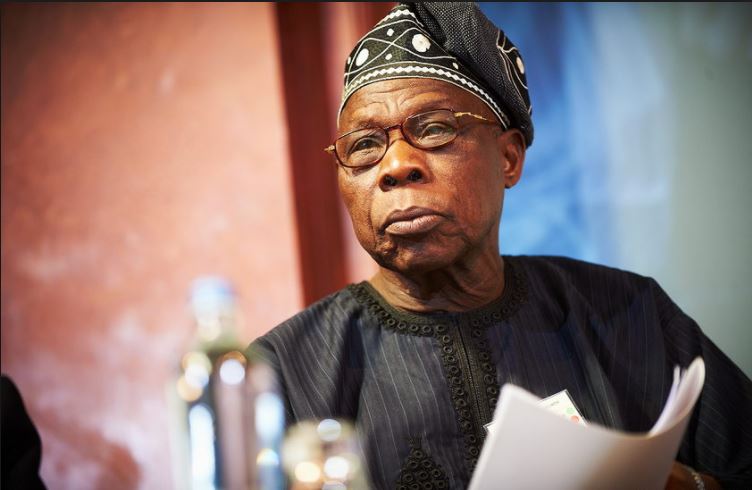
But more despicable still is the duplicity of the government under President Olusegun Obasanjo, whose hands guided the pen that signed away a sovereign limb of Nigeria’s heritage. The Green Tree Agreement—an accord as infamous as it is ignoble—was consummated without recourse to the National Assembly, in abject violation of Section 12 of the 1999 Constitution. It was an imperial decree passed off as democratic action. It was not a treaty ratified by law, but a covenant with constitutional sin, bearing the signature of a presidency that saw itself above both people and parliament. That such a grievous mutilation of the federation occurred under the cover of executive secrecy is a tale that future generations must read with righteous fury.
And oh, how swift was Nigeria to obey the ruling of the International Court of Justice! With a zeal unmatched in the annals of global diplomacy, the government leapt to carry out an excision that most nations would have wrestled with for decades. While other sovereigns bristle and bicker over border rulings, Nigeria raced, headlong and breathless, to divest her own children of their homeland—so fast, in fact, that the Guinness Book of World Records may well reserve a page for this unprecedented haste in self-emasculation. It was as if a prize was promised in silence, for who among them could betray their own faster?
Let it be known that the ceding of Bakassi was no act of legal inevitability; it was the orchestration of an elite cabal, a phalanx of bureaucratic conspirators who strangled the will of the people beneath a canopy of international appeasement. The then listless, insipid and insouciant National Assembly, the Boundary Commission, the Council of State, the then Ministry of Justice—all played their roles in this unholy theatre. The cries of the displaced, the pleas of the voiceless, the protests of patriots—they all fell on ears stuffed with the cotton of geopolitical convenience. Justice was not blind; it was gagged and dragged from the courtroom to the slaughterhouse.
Today, as Michael Aondoakaa mounts the pulpit of television to preach a gospel of falsity, we must rise—not in polite disagreement but in thunderous repudiation. We must not allow the soot of deception to blacken the memory of what truly transpired. Let Bakassi be remembered not merely as a peninsula lost, but as a shrine of Nigeria’s moral collapse. Let the names of those who bartered it away be etched into the scroll of infamy. And let those who today attempt to whitewash their complicity be hounded by the ghosts of Bakassi, whose displaced children still wander, stateless, dreamless, rootless—betrayed by the very nation that once cradled them.
This, then, is not just a rebuttal. It is a requiem. A requiem for a people denied, and a rebuke for those who wrapped treason in the language of law.
Obogo is Chief Press Secretary and Special Adviser on Media and Publicity to Governor Bassey Edet Otu.


