

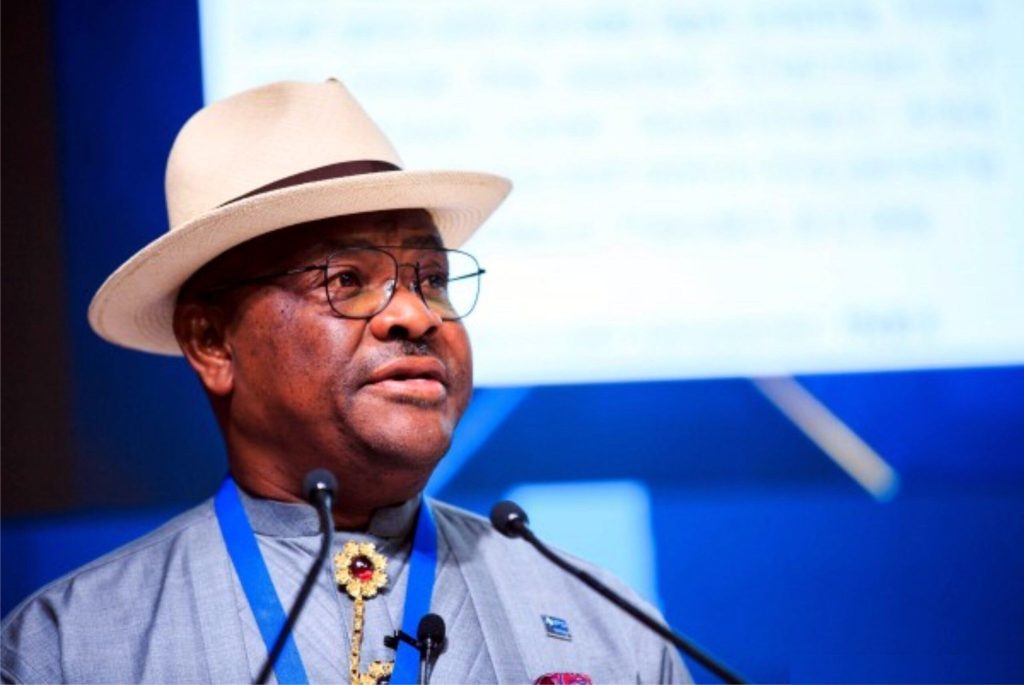
The Minister of the Federal Capital Territory (FCT), Nyesom Wike, has emerged as the country’s most paradoxical political figure, simultaneously critiquing his party and collaborating with its rival in power.
In a recent media chat, Wike, former Rivers State Governor and prominent stalwart of the opposition Peoples Democratic Party (PDP), sought to clarify his controversial alliance with the ruling All Progressives Congress (APC). Dismissing accusations of duplicity, Wike pushed back against comparisons with Janus, the two-faced god of Roman mythology.
“I didn’t defect. I never supported Atiku. And I’m not two-faced like the Roman god Janus,” Wike declared unapologetically, insisting that his political actions are guided by strategy rather than betrayal.
Observers have dubbed this approach “the Wike doctrine”: an audacious attempt to fight the system from within, reshape it from above, and test the bounds of ideological loyalty in a deeply polarized political climate.
Dr. Lydia Ebere, a political historian at the University of Nigeria, described Wike’s current position as unprecedented.
“Wike is reinventing what it means to be in opposition,” she said. “He’s no longer just a regional power broker—he’s positioning himself as a national strategist, leveraging federal influence while reengineering his party from the inside.”
Since assuming office as FCT Minister under President Bola Tinubu’s APC-led administration, Wike has remained a card-carrying member of the PDP. But he has not hesitated to launch internal critiques, blaming the party’s woes on what he calls “buccaneers and vampires”—a reference to defectors and internal actors whom he accuses of wrecking the PDP’s credibility.
“The party is in crisis because it ignored the rules. I’ve stayed in the PDP to fight for justice. The others? They ran,” Wike stated.
Taking a swipe at politicians who bounce between PDP, APC, and the Labour Party, Wike labelled them “personal ambitionista,” subtly casting himself as the last principled man in a sea of opportunism.
Rumours of a quiet political alliance between the PDP and APC during the recent Rivers local government elections surfaced during the interview. Wike neither confirmed nor denied the speculations but hinted at a broader philosophy of collaboration.
“If leaders from both parties sit down and say, ‘Let’s not fight,’ is that bad?” he asked, suggesting that peace might sometimes require pragmatism over partisanship.
Analysts suggest Wike may be experimenting with what could become a model of post-partisan stabilization, especially in politically volatile regions like Rivers State where clashes between party loyalists often turn violent.
For Wike, the mission seems no longer about rescuing Nigeria—a slogan associated with past PDP presidential hopefuls—but rebuilding it through a “functional centre.” Party loyalty, he argues, should be secondary to national stability, peace, and constitutional governance.
Whether this doctrine gains traction or alienates him further within the PDP remains to be seen. But one thing is certain: Nyesom Wike is no longer playing by the old opposition rulebook. He’s writing a new one—and challenging Nigeria’s political class to either adapt or get left behind.



