

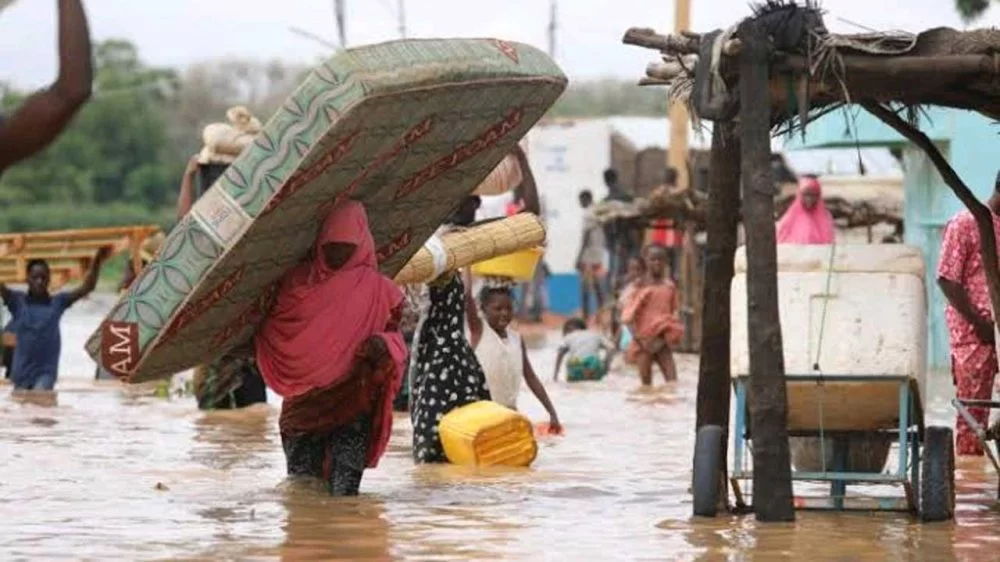
Sunday Matthew Taggah, our Kaduna State Correspondent, reports on the plight of hapless citizens as the rainy season reaches its peak.
Residents of Kaduna State are grappling with the devastating aftermath of recent flooding, weeks after the federal government had warned them to prepare ahead.
On July 31, 2025, the Federal Ministry of Environment, in a flood prediction bulletin released by the Erosion, Flood, and Coastal Zone Management Department, had warned that several locations in Kaduna State including Buruku, Jaji, Kachia, Kaduna, Kafanchan, Kauru and Zaria were high-risk areas expected to experience heavy rainfall capable of triggering floods between July 31 and August 4, 2025.
The prediction unfortunately materialised, with parts of Kafanchan and Kauru Local Government Areas worst hit. Residents have reported damage to homes, farmlands, and infrastructure, with many now displaced and in urgent need of assistance.
The affected residents have continued to appeal to the Kaduna State Government for urgent intervention to complete abandoned road and drainage projects in flood-affected communities, warning that further delays may lead to increased damage, injuries, and loss of lives.
“We are calling on the government to complete the drainage projects left unfinished in our community. The flooding is getting worse, and people are injured almost daily,” said Aliyu Abba, a resident of Kafanchan.
“The stagnant water is also becoming a breeding ground for mosquitoes, thereby increasing malaria cases,” he added.
In response to nationwide flood risks, the federal government had earmarked ₦6 billion in the 2025 budget for erosion and flood control projects under the Federal Ministry of Environment. The initiative forms part of the broader Economic Recovery and Growth Plan (ERGP), aimed at strengthening environmental resilience and mitigating disaster impacts.
However, affected communities in Kaduna are now calling for immediate intervention, urging both federal and state authorities to provide relief materials and implement permanent flood control measures to prevent future disasters.
Given this development, residents of Kauru Local Government are now demanding accountability from their representatives. They are calling on their federal lawmaker, Hon. Zakari Muktar Chawai, to account for any budgetary allocation or intervention from the Ministry of Environment to address the pressing challenge.
“Now that Kauru Local Government Area has been identified as a flood-prone zone, what steps is our Federal Representative, Hon. Zakari Muktar Chawai, taking in response to this development?” asked Mr. Yarison Emmanuel, a concerned resident.
Meanwhile, in Kafanchan, residents have attributed the deadly flooding in parts of Jema’a Local Government Area to abandoned and poorly executed road and drainage projects. According to eyewitnesses, the flooding claimed lives and injured over 30 persons, who are currently hospitalized in Kafancha.
Community members lamented that the ongoing erosion and damage could have been mitigated had the projects initiated during the tenure of former Governor Nasir El-Rufai and awarded to a contractor known as Farm Track been completed.
As affected communities await relief, they continue to urge both state and federal governments to act swiftly, not only to provide emergency assistance but also to complete critical infrastructure that could prevent future tragedies.
For example, the contract awarded by the Governor El-Rufai administration to Farm Track covered about 28 kilometres, but less than 10 kilometres were completed before the project was halted under the current administration of Governor Uba Sani.
“We the people of Kafanchan are calling on the government to come to our aid,” said Aliyu Abba, a resident. “Houses are collapsing due to erosion, and the drainage holes are so wide and deep that people are breaking their legs trying to cross them.”
Abba added that the contractor had abandoned the site and removed their equipment, leaving the community vulnerable. “Erosion is accelerating. People cannot access their homes, and stagnant water has led to increased mosquito breeding and rising malaria cases. We’ve been pleading, but nothing has been done,” he told New National Star.
The residents expressed fear over rising floodwaters, which have started washing away bridges and damaging road networks in remote communities. Members of the Kauru Youth Advocacy for Good Governance urged local and federal representatives to intervene urgently to save lives and restore infrastructure.
Meanwhile, some residents of Kauru are demanding accountability from their federal representative, Hon. Zakari Muktar Chawai, asking for a breakdown of interventions or funds received under the Ministry of Environment’s ₦6 billion 2025 flood and erosion control initiative.
Ambassador Jacob Moses and Yarison Emmanuel emphasized that the list published online by the Nigerian Hydrological Services Agency (NIHSA) is intended to trigger government emergency response mechanisms and empower local authorities to prepare proactively for flood-related emergencies.
The flood-prone areas in Nigeria for 2025 were identified by NIHSA — a statutory agency under the Federal Ministry of Water Resources,” said Yarison.
Also, is mandated to monitor hydrological data, issue flood alerts, and publish annual flood outlooks based on hydrological modeling and ground-level assessments.
In April 2025, NIHSA released its Annual Flood Outlook (AFO), which identified 1,249 communities across 176 Local Government Areas (LGAs) in 30 to 33 states, including the FCT, as high-risk flood zones. Another 2,187 communities in 293 LGAs were listed as moderate risk.
Said Yarison: “The outlook now includes more granular, community-based forecasting to ensure that early warnings are specific and actionable. So, if Kauru LGA appears on this flood-risk list, it is based on robust data and projections. This means urgent action is required from both local authorities and elected representatives of Kauru at the state and federal levels.”
He stressed the need to reactivate local flood control mechanisms and ensure that the interventions earmarked by NIHSA and other relevant agencies are deployed promptly to affected communities in Kauru.
According to local sources, the ravaging effects of flooding in Kauru LGA are becoming unbearable for rural dwellers. Several roads and bridges have already been destroyed, including a community bridge in Kiffin, while the Binawa Bridge is reportedly at the brink of collapse. The Fadan Chawai Road has been overtaken by floodwaters, and Kamaru Road is now inaccessible.
If current conditions persist, several rural communities across Southern Kaduna and other parts of the state risk being completely cut off, as NIHSA had warned.
In response, the Kaduna State Emergency Management Agency (KADSEMA) said the government has rolled out a number of proactive flood control and emergency preparedness measures, in anticipation of the severe weather predicted by the Nigerian Hydrological Services Agency (NIHSA).
According to KADSEMA Director-General, Abubakar Hassan, the following steps have been taken:
– Inauguration of the 2025 Flood Emergency Operations and Response Strategic Team, alongside a Tactical Response Team, tasked with coordinating early warnings, evacuations, and emergency interventions.
– Evacuation advisories issued to at-risk residents in lowland and riverbank communities, urging them to move to higher ground.
– Dredging of key water channels across flood-prone areas to enhance water flow and reduce the likelihood of overflow.
– On-the-spot risk assessments and community sensitization campaigns carried out to prepare local populations and raise awareness of early warning signs.
– Collaboration with the National Emergency Management Agency (NEMA) to align strategies and strengthen response capabilities across Kaduna.
“We are not leaving any community behind. Our teams are on the ground in all high-risk LGAs, assessing damages and working closely with local leaders to ensure swift action,” Mr. Hassan said, adding, “Preventing loss of life and property is our top priority.”
These comprehensive efforts reflect Kaduna State’s commitment to safeguarding lives and property through strategic planning, infrastructure reinforcement, and community engagement.
The state’s multi-agency approach underscores Governor Uba Sani’s commitment to inclusive disaster preparedness, ensuring that rural communities like Kauru and Jema’a receive equal attention and support in tackling flood-related emergencies.


