

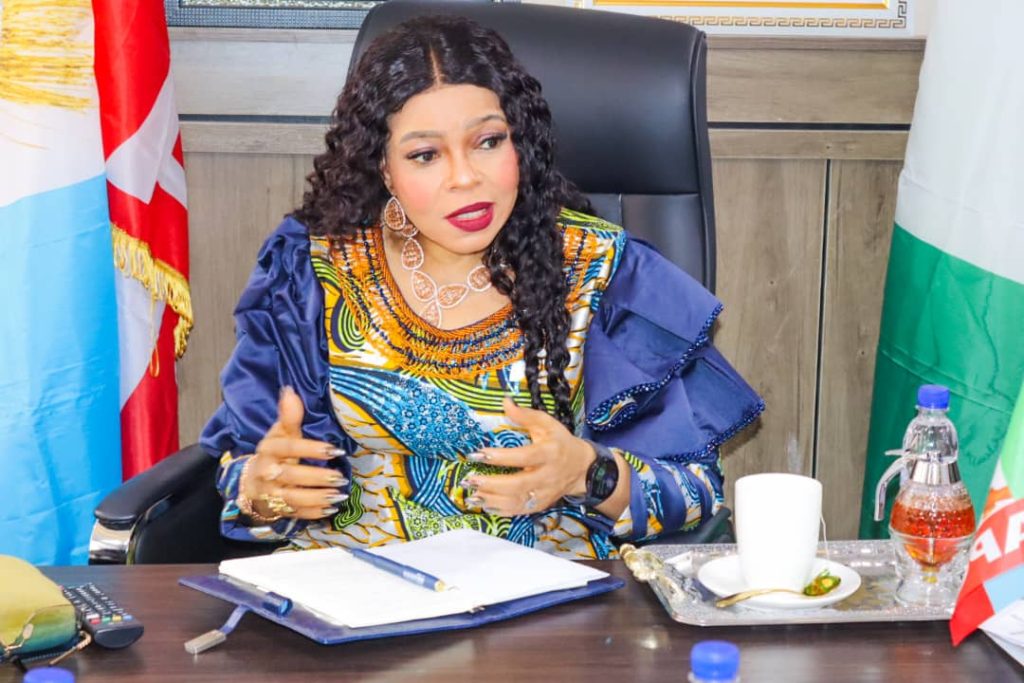
BY JOHN DANJUMA
The All Progressives Congress (APC) National Woman Leader, Dr. Mrs. Mary Idele Alile, has made a bold and unambiguous call for a constitutional amendment to guarantee reserved seats for women in Nigeria’s National Assembly.
According to her, this is not just a political reform but a moral necessity—a deliberate act to correct decades of structural exclusion that have kept Nigerian women at the margins of national decision-making.
Dr. Alile insists that without a legal guarantee of representation, the country will continue to suffer the loss of women’s voices, ideas, and leadership in shaping the laws that govern over 200 million citizens.
“In the heart of every democracy lies a simple truth: representation is the lifeblood of justice. Yet, in Nigeria’s National Assembly, the presence of women is so scarce that their voices often echo like whispers in a crowded hall. For Dr. Alile, this is not merely a statistic—it is a moral wound.”
“A country that silences half of its population can never hear the full truth about itself,” she warns.
“Today, Nigeria stands at a moral crossroad. Other African nations, once considered behind us, have raced ahead in gender inclusion. Rwanda, emerging from a history of conflict, now holds the world record for women in parliament—over 60%—not because women begged for space, but because the nation decided it could not heal or prosper without them. Senegal and South Africa followed suit, reaping the rewards of laws and policies shaped by both halves of humanity.”
Dr. Alile’s argument is not wrapped in sentiment; it is anchored in justice and responsibility. “Reserved seats are not a gift to women—they are an obligation of a fair society,” she insists. She paints a vivid picture of the obstacles Nigerian women face: political godfatherism that shuts them out, financial demands that choke ambition, societal stereotypes that mock their capabilities, and a political climate that too often rewards intimidation over integrity.
“We lose more than elections when women are kept out,” Dr. Alile says softly. “We lose ideas that could save lives, we lose compassion in policy-making, we lose balance in governance.”



