

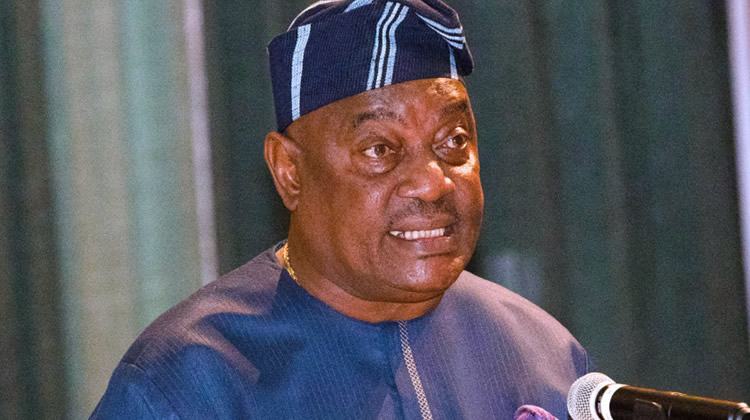
BY OBINNA NWACHUKWU
The news of the demise of former Inspector-General of Police, Dr. Solomon Ehigiator Arase, yesterday in Abuja took me (and I believe, many others) by surprise. It shook me to the marrow.
Dr. Arase was a gentleman to the core and a good example of what a Police officer should be.
He was born on June 21, 1956, in Owan West Local Government Area, Edo State, and grew up in a family that valued education and discipline
He studied Political Science at the Ahmadu Bello University, ABU, Zaria, graduating in 1980, laying the foundation for his career in public service.
He later earned a Law degree from the University of Benin, enhancing his understanding of legal and civil frameworks.
He also obtained a Master’s degree from the University of Lagos, further strengthening his academic and professional credentials. He completed advanced studies at the National Defence College, combining academic excellence with strategic and professional police training.
Dr. Arase was recruited into the Nigeria Police Force on December 1, 1981, marking the beginning of a distinguished law enforcement career. Thereafter, he served as Commissioner of Police in Akwa Ibom State and Assistant Inspector-General in charge of Intelligence, overseeing critical security operations.
The late IGP Arase participated in a United Nations peacekeeping mission in Namibia, gaining international experience in law enforcement and security.
He was a Fellow of the Nigerian Defence Academy, reflecting his dedication to professional development and strategic leadership.
Arase was appointed Inspector-General of Police in April 2015, taking charge of the nation’s top policing body.
As IGP, Arase introduced reforms into the Police Force.
The news of his death was confirmed by his family in a statement on Sunday, 31st August, 2025.
He died at age 69 after an undisclosed illness at professional police training.
When Arase was appointed Inspector-General of Police in April 2015, taking charge of the nation’s top policing body, he introduced reforms including the Police Complaints Response Unit to address misconduct and improve public trust in the police.
He created the Intelligence Response Team, IRT, to manage high-profile crimes and enhance operational efficiency.
He issued a directive banning officers from searching citizens’ phones, strengthening civil liberties and human rights. He advocated for forensic development, community policing, and improved welfare for rank-and-file officers, modernising Nigeria’s policing approach.
He chaired a task force in Edo State enforcing anti-Community Development Association laws, ensuring accountability and compliance in local governance.
Arase was appointed Chairman of the Police Service Commission, PSC, in January 2023, serving until June 2024. In that capacity, he promoted merit and transparency in the Force.
He championed merit-based recruitment and transparency, aiming to professionalise and depoliticise police appointments and promotions.
The deceased founded the Solomon Ehigiator Arase Foundation, providing scholarships in medicine, engineering, security studies, and other fields for youth development.
He focused particularly on supporting children of deceased police officers, ensuring they had access to education and opportunities. Arase retired from the Nigeria Police Force on June 21, 2016, but remained active in public service until his passing, leaving a legacy of reforms, public service, youth empowerment, and dedication to improving policing in Nigeria.
Shortly after the announcement of his death, tributes have started pouring in with many praising his exemplary lifestyle
Even though the pressure from politicians could sometimes derail most of their genuine efforts, he remains one of the best.
May his gentle soul RIP.
Mazị Uche Okeudọ described him as “probably the best performing IGP in recent history.”
Arase is remembered as a reformer, patriot, and visionary leader who left a lasting imprint on policing, governance, and social impact in Nigeria.
He rose to the zenith of his profession with a blend of intellect, discipline, and a firm belief in justice, education, and youth empowerment.
For many, his passing marks the loss of one of the most respected figures in Nigeria’s security and public service landscape.



