

BY GLORIA AKUDORO
More than 13,000 Nigerian families live each day in anguish, uncertain whether their missing loved ones are alive or dead. According to the International Committee of the Red Cross (ICRC), at least 23,659 people remain missing across the country, their disappearance a lingering scar of conflict, displacement, and humanitarian crisis.
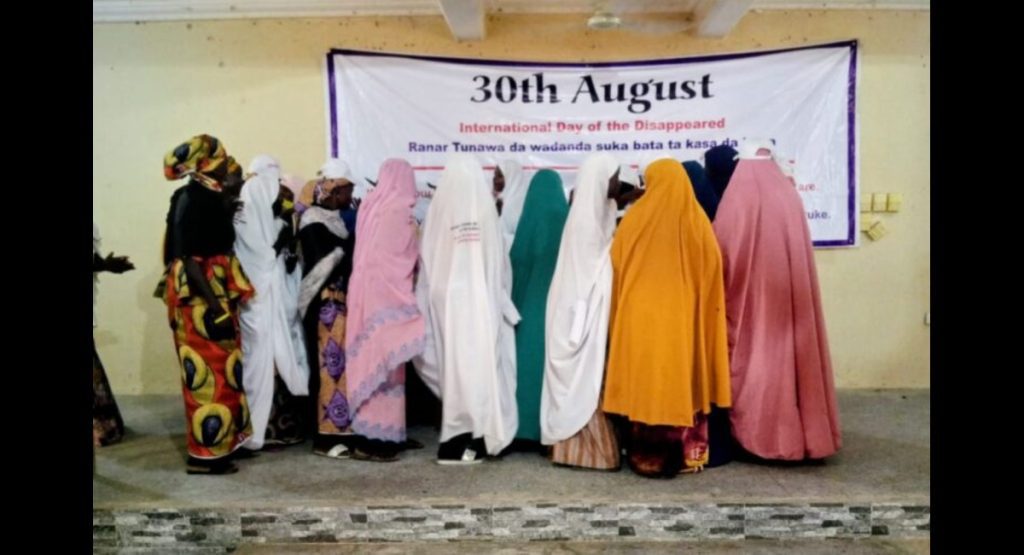
The ICRC disclosed the figures on Sunday to mark the International Day of the Disappeared, a global reminder of the pain carried by families whose relatives have vanished without trace. The organisation said disappearances in Nigeria are largely connected to armed conflict, natural disasters, forced migration, and population displacement, all of which have battered communities in the North-East and other vulnerable regions over the last decade.
Team Leader for the Protection of Family Links at the ICRC office in Damaturu, Mr. Ishaku Luka, said women and children are the most affected. Of the families still seeking answers, 68 percent are headed by women, many of them widows or mothers who now shoulder both grief and the responsibility of survival. He added that 59 percent of those missing were minors at the time they disappeared, highlighting the vulnerability of children in crisis situations.
“In every case of a missing person, there is a family suffering behind the statistics. The uncertainty is not just emotional; it carries economic, legal, and psychosocial consequences. Families of the missing deserve acknowledgement, care, and support,” Luka said.
The problem is particularly acute in Yobe State, which accounts for more than 2,500 missing-person cases, most of them from Gujba Local Government Area. Gujba has long been a hotspot of Boko Haram insurgency and remains plagued by sporadic attacks, abductions, and population displacement.
Disappearances have become one of the darkest legacies of Nigeria’s battle with insurgency and insecurity. Since Boko Haram launched its armed campaign in 2009, the North-East has endured mass abductions, killings, and displacements. Entire villages have been emptied, children separated from families, and women taken captive.
While military operations have reclaimed territory from insurgents, the humanitarian fallout remains staggering. Thousands of Nigerians are still unaccounted for, their families left in limbo without information or closure. In addition to insurgency, seasonal flooding, natural disasters, and unsafe migration routes have contributed to the tally of the missing, particularly in states like Borno, Adamawa, and Yobe.
Humanitarian experts say these disappearances ripple beyond immediate families, destabilising communities already weakened by poverty, conflict, and displacement. Without clarity about the fate of loved ones, many families cannot make legal claims to property, inheritance, or even official recognition of loss. Children left behind often struggle with trauma, education disruption, and economic hardship.
Despite the enormity of the crisis, the ICRC insists that the search for the missing cannot be abandoned. Luka explained that the organisation continues to work closely with the Nigerian Red Cross Society (NRCS) to trace, document, and reunite families with their relatives.
“Between January and June this year, the ICRC recorded 451 new cases of missing persons in Nigeria. Within the same period, it was able to close 515 cases after confirming the status of those missing, and successfully reunited seven separated children with their families.
“For families, even one case resolved represents a measure of relief. But with nearly 24,000 people still unaccounted for, progress remains slow compared to the scale of the crisis.
“Time does not mend wounds. Recognition, answers, and respect do. Families must be assured that their loved ones are not forgotten and that their pleas are acknowledged,” Mr. Rashid Hassan, Head of the ICRC Sub-delegation in Damaturu, stressed.
The ICRC cautioned that families of the missing should not be left to cope with their plight in isolation. Many of the women now searching for their husbands or children are also struggling with displacement, poverty, and stigma. The psychological burden is compounded by the absence of official closure, leaving families unable to mourn or move on.
According to the ICRC, to help address this, the organisation and the NRCS have been providing psychosocial support, livelihood assistance, and community orientation programmes. These interventions are designed to help families build resilience while continuing the search for their loved ones. Mental health services have been particularly critical in Borno and Adamawa, where trauma linked to abductions and violence is widespread.
Still, the organisation argues that humanitarian efforts alone are insufficient. Disappearances, it says, require greater commitment from state authorities, local communities, and parties to conflicts to prevent new cases and to ensure that existing ones are resolved.
The ICRC has urged both government institutions and communities to take stronger responsibility in tackling the crisis. This includes better documentation of missing persons, clearer legal frameworks for families, and more coordinated efforts to protect vulnerable populations during conflicts and disasters.
“Behind every missing person is a story, a father, a mother, a child, a sibling. Acknowledging them is the first step towards healing,” Hassan noted.



