

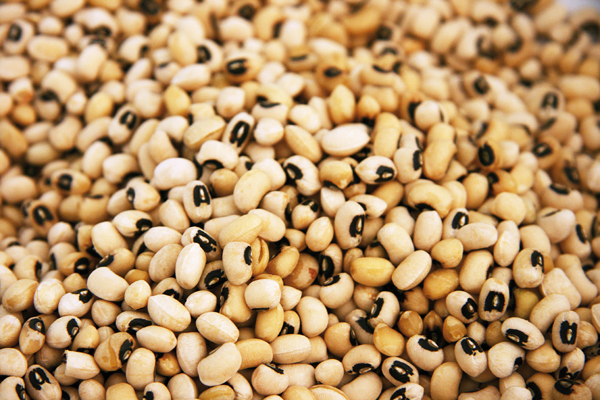
There is a growing concern about preservation of beans by farmers in the Northern part of Nigeria.
In the past few weeks, many video clips have surfaced online showing farmers in that part of the country using cement to preserve beans.
In some of the clips, men and women, boys and girls, could be seen mixing large quantities of the staple food item with powdered cement on concrete floors hitherto used for sun drying their products. Thereafter, the beans are packed into jute bags and taken to their stores pending purchase by merchants from across the country.
We feel that those in charge of agriculture in all Northern states, health authorities and food regulatory agencies, especially the National Agency for Food and Drug Administration and Control, NAFDAC, should move to curb the dangerous trend before all farmers in that region embrace the practice.
And for consumers, we call for special care in beans preparation. Those who pushed the clips onto social media even advised people to parboil and throw away the water twice or more before cooking.
The new dimension in beans treatment brings to the fore the use of unsafe chemicals not only for treating fruits but also in planting across the country. Aside from vendors using chemicals to force-ripen fruits, thereby making them unsafe for human consumption, reports of the use of pesticides that have been banned in other countries are rampant in beans preservation in Nigeria.
One prominent pesticide is Sniper, a toxic chemical containing 2.2 dichlorovinyl dimethyl phosphate, DDVP. The chemical has been used in many suicide cases. Many farmers were reported to have been using the dangerous insecticide to protect beans from weevils.
The particular attention given to beans should be understood against the backdrop that it is one of Nigeria’s staples. Most homes can hardly abstain from beans meal in one form or the other daily.
Besides, the food item is rich in protein and vital nutrients for growth and development of healthy children.
But crude preservation methods have had dire consequences on Nigeria. For instance, some years ago, the European Union, EU, banned importation of Nigerian beans into the continent for alleged preservation with dangerous chemicals.
More importantly also, the government at all levels should address the use of pesticides banned by the EU by our farmers. A report indicated that about 40 per cent of the registered pesticides in Nigeria have been withdrawn from the European market.
The report noted further that between 2015 and 2019, “about 822 pesticides were registered in Nigeria by NAFDAC of which 515, about 63 percent, are classified as highly hazardous pesticides, HHPs. China had the largest share of 50 percent (244) in the origin of HHPs followed by India (128).”
We believe that the authorities should not leave our farmers to the delicate and necessary methods of beans preservation and even cultivation. The farmers’ desperation to preserve their products is due to the perennial loss of about 40 percent of grains and fruits like mangoes, citrus and tomatoes.
“We believe that the authorities should not leave our farmers to the delicate and necessary methods of beans preservation and even cultivation. The farmers’ desperation to preserve their products is due to the perennial loss of about 40 percent of grain and fruits like mangoes, citrus and tomatoes.”



