

BY KINGSLEY JEREMIAH
Nigeria’s aspiration to raise daily crude oil output to three million barrels has become one of the central goals of the country’s energy policy. Yet, beyond the pipelines, rigs, and platforms that define the industry, it is the strength of the relationship between oil companies and host communities that will determine whether this goal can be met. Regulators and operators alike have come to realise that sustainable production requires more than technical capacity; it demands authentic partnership with the people who live on the land and waters where oil wealth is extracted. This recognition, now embedded in the Petroleum Industry Act (PIA), is beginning to transform the oil sector, particularly in the Niger Delta where decades of neglect, pollution, and broken promises have fuelled resentment and unrest.
The host community provisions of the PIA are widely described as a game-changer, a deliberate shift away from a history of tension toward one of collaboration. According to recent figures from the Nigerian Upstream Petroleum Regulatory Commission (NUPRC), about 102 Host Community Development Trusts (HCDTs) have already been set up, with over N97 billion and $149 million remitted by Settlors into the trust fund accounts. These resources are intended to finance critical infrastructure, create skills acquisition opportunities, and provide employment for residents of oil-producing areas. When effectively managed, they offer a route to the peace and stability required for uninterrupted operations and for the attainment of Nigeria’s ambitious production target.
One of the latest examples of this new era of collaboration emerged with Petralon Energy, an indigenous oil and gas company, which announced the establishment and incorporation of HCDTs for the Ogoloma and Koniama communities in Rivers State. The announcement coincided with the company’s celebration of a milestone: the transformation of the Dawes Island Field into a producing asset, 22 years after it was first awarded as a marginal field and more than four decades since its discovery by Chevron in 1979. For years, the asset symbolised squandered opportunities, languishing unused while Nigeria’s production base struggled to grow. But when Petralon assumed operatorship three years ago, it applied a strategy that married community partnership with operational excellence. By June 2025, the successful completion of the DI-2 well had signalled the field’s revival, and the company’s approach now stands as a blueprint for others in the sector.
Unlike operators who treat licenses merely as corporate entitlements, Petralon Energy positioned its license as a privilege granted by the state and facilitated by community goodwill. From the onset, it made a conscious effort to embed itself within the cultural and social fabric of its host communities. In October 2022, when the company formally presented Petroleum Prospecting License No. 259 to the people of Ogoloma and Koniama, the event went far beyond a technical handover. It was a communal ceremony filled with cultural display, music, and traditional authority. The Amayanabo of the Ancient Ogoloma Kingdom, Emmanuel Tamunoigbeindebia Ibiagolika, and the Amayanabo of Okochiri Kingdom, Michael Ateke Tom, graced the occasion alongside lawmakers, government representatives, and regulators. The message was clear: oil operations would proceed hand-in-hand with the people’s heritage and aspirations.
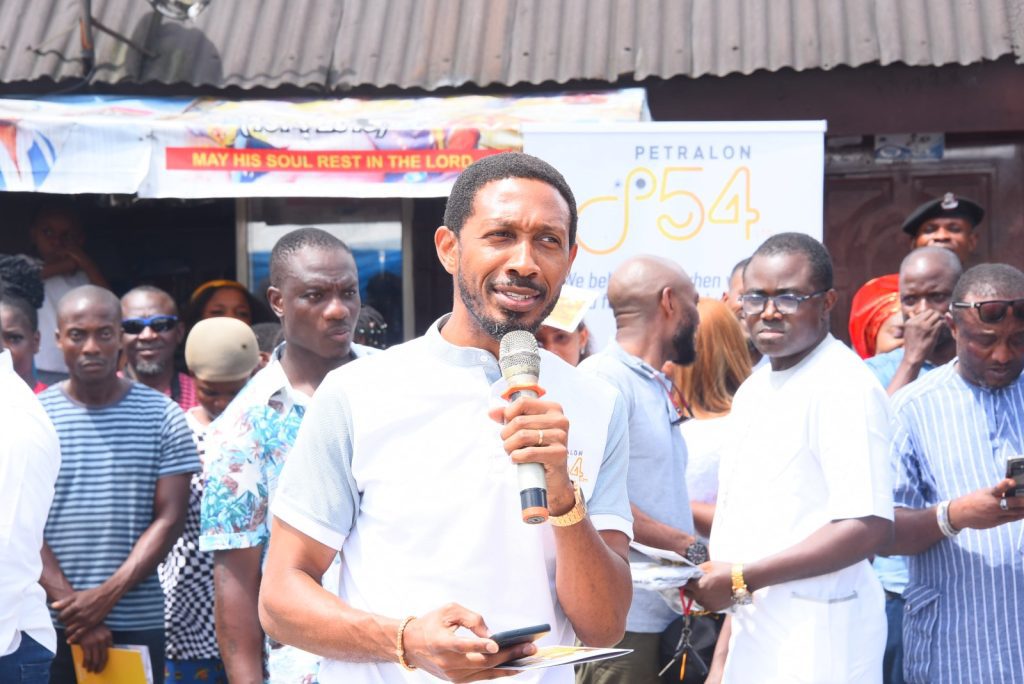
At that ceremony, Petralon’s founder and chief executive, Ahonsi Unuigbe, promised the community leaders that the company was not there to extract without giving back. He pledged mutual prosperity built on trust and cooperation. Community elders, in turn, declared their readiness to support the company, convinced by what they described as a long-term, mutually beneficial vision. This cultural and symbolic foundation soon translated into tangible actions. Petralon rolled out a series of corporate social responsibility initiatives, but the most defining was the establishment of the Host Community Development Trusts for Ogoloma and Koniama. While the PIA mandated such trusts, the company’s version went further, embedding transparency, community control, and sustainability into its design.
The genius of the approach lay in its departure from the traditional oil company model where corporate headquarters dictated development priorities. Instead, Petralon invested in sensitisation and enlightenment programmes, beginning as early as July 2024, to ensure that the communities fully understood the structure and benefits of the HCDTs. Youth groups, women’s associations, elders, and traditional leaders were all educated on how the trusts would work and how they could actively shape priorities. The outcome was transformative. The communities themselves drafted Community Development Action Plans, identifying projects that reflected genuine needs rather than external assumptions. One community representative, Chief L.T.I.I. Alalegbo, summed it up when he said the sensitisation showed that Petralon had a real desire to elevate the people of Ogoloma.
Formal incorporation of the trusts soon followed, backed by a framework for management that emphasised professional oversight. Petralon committed to training trustees, managers, and advisory committees in project management and accountability. Before funds would be released for projects, the company and communities would develop a 12-month roadmap serving as both guide and monitoring tool. This attention to structure and sustainability aimed to ensure that resources reached intended beneficiaries without leakage or politicisation.
Beyond the trusts, Petralon also expanded on earlier CSR initiatives that predated the PIA. These included a Micro Credit & Entrepreneurial Development Scheme to boost small businesses and a Post-Primary Scholarship Programme to support education. One of the most forward-looking interventions has been the Future Leaders Programme, designed to cultivate the next generation of professionals in the energy sector. By targeting high-achieving students in fields like Geology, Petroleum Engineering, and Gas Engineering, and offering them mentorship, training, and exposure, Petralon demonstrated an understanding that human capital is as vital as infrastructure in driving long-term development. For the selected students, the programme was not just financial assistance but a life-changing platform that could define their careers and, by extension, the future of Nigeria’s oil and gas industry.
The measurable proof of Petralon’s strategy lies in its operational success. Dawes Island, once written off as a dormant asset, is now producing again, contributing to national output at a time when Nigeria desperately needs reliable sources of foreign exchange. Petralon holds 100 per cent interest in Petroleum Prospecting License 259, covering the field, and has invested significantly to move from well tests in 2022 to sustained production in 2025. This revival mirrors the methodical, professional approach the company applies to community relations: a focus on long-term sustainability, transparency, and shared value.
The timing is critical. Nigeria is battling declining output from mature fields, oil theft, pipeline vandalism, and divestments by international oil companies. The federal government’s ‘Project One Million Barrels’ initiative is designed to increase production by one million barrels per day, but achieving this requires operators to squeeze more out of assigned assets and to do so without disruption. That, in turn, demands community stability. Petralon’s model shows that when host communities feel genuine ownership, oil assets can be developed without the costly shutdowns, protests, or sabotage that have plagued the industry for decades.
In this sense, Petralon positions itself not merely as a profit-seeking operator but as an economic ambassador. Its leadership insists that the company carries a responsibility not just to shareholders but to the country at large. By integrating community trust-building with technical excellence, Petralon demonstrates that indigenous companies can meet global standards while tailoring solutions to Nigeria’s unique environment. Its strategy also highlights the broader truth that Nigeria’s oil future may well depend on local firms that understand local realities and can build the trust that foreign operators have often struggled to secure.
As Petralon consolidates its success at Dawes Island and looks to expand production further, its integrated model of development and partnership could serve as a template for revitalising other neglected assets. The Nigerian upstream sector is dotted with marginal and dormant fields that, with the right investment and community relations, could become productive again. If replicated widely, such an approach could unlock significant volumes of oil, helping the nation approach its three million barrels per day target while also spreading prosperity more equitably across the Niger Delta.
In the final analysis, the story of Petralon Energy underscores a lesson often overlooked in Nigeria’s oil narrative: barrels and dollars may dominate policy discussions, but peace, trust, and human development are the real determinants of sustainable output. Oil may flow from wells and reservoirs, but the stability that keeps it flowing comes from people—communities that must be partners, not bystanders, in the industry’s progress. Nigeria’s production ambitions, and indeed its economic stability, will depend not only on investments in technology and infrastructure but on investments in people, trust, and shared futures. In that sense, community partnership is not just an accessory to oil production but the very foundation upon which the nation’s energy security must be built.
*Kingsley Jeremiah is an energy analyst



