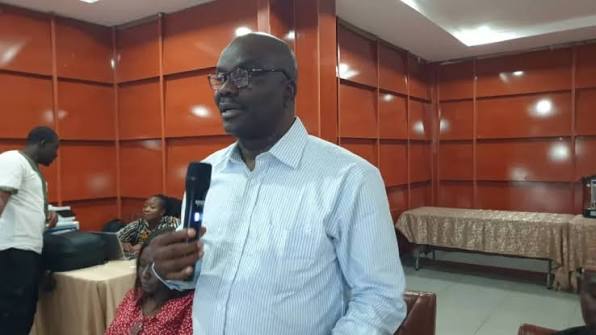
In this interview with Sunday Matthew Taggah, Kaduna State Correspondent of New National Star, Luka Binniyat, spokesman for the Middle Belt Forum, talks on the raging controversy between former governor Nasir el-Rufai and his successor. Excerpts:
As a proud son of Southern Kaduna, how do you assess Nasir El-Rufai’s recent media outing after leaving office?
For a character like El-Rufai who ruled Kaduna State with what can be described as unarguably the most tyrannical, intolerant, and divisive leadership in the history of the state to go on national TV and make such utterances is a reflection of his questionable moral standing. Frankly, it raises concerns about his mental wellbeing.
How can he so easily forget the pain, trauma, and division he left behind just two years ago? He inflicted undemocratic harm on the people of Kaduna State and, by both his actions and inaction, enabled the mass murder of innocent citizens especially in Southern Kaduna while siding with violent herdsmen.
El-Rufai was nothing short of a plague that befell Kaduna State. He has no credibility to question Governor Uba Sani, regardless of the current administration’s shortcomings. Criticism must come from a place of sincerity and credibility, and El-Rufai possesses neither.
His legacy in Southern Kaduna is a tale of sorrow, blood, and repression. He silenced dissent, undermined traditional institutions, and sowed division along religious and ethnic lines. What then gives him the audacity to talk about governance with a straight face?
El-Rufai’s recent interview on Channels TV attracted widespread reactions, particularly from Southern Kaduna and Middle Belt groups. As the spokesperson of the Forum, how do you assess the truthfulness of the former governor’s claims?
The former governor’s outburst was not motivated by patriotism or a genuine concern for the worsening security situation in Kaduna and the wider North. Rather, it was laced with political mischief, hate, and a desperate bid to portray the current administration as weak and incompetent. It was a reckless attempt to incite public revolt against both the Kaduna State and Federal Governments.
That said, it is true that terrorism, banditry, and lawlessness still persist in the North. But El-Rufai has no moral standing to lament it. He is doubly guilty—if not more—of emboldening these terror groups. In 2016, El-Rufai personally admitted that he traced Fulani killer-herders to Niger, Chad, and Mali and paid them compensation to stop killings in Southern Kaduna. Who does that? Instead of arresting and prosecuting them, he rewarded mass murderers.
Are you saying his past actions invalidated any point he tried to make in that interview?
Absolutely. You cannot light a fire, walk away, then return later pretending to be a firefighter. El-Rufai oversaw the most divisive, oppressive, and bloody period in the recent history of Kaduna State. He consistently demonized Southern Kaduna leaders, dismantled traditional institutions without dialogue, and ruled through fear. He lacks the moral authority to now position himself as a crusader of truth or justice.
Furthermore, his claims about population statistics, political representation, and insecurity were riddled with inaccuracies and dangerous generalizations. El-Rufai is not just irresponsible in speech—he is also revisionist in intent.
Biniyat emphasized that the people of Southern Kaduna will continue to speak up and resist all forms of misgovernance and historical distortions.
We are a people of history, heritage, and hope. El-Rufai’s era may have wounded us, but it did not break us. We stand today more united, more informed, and more determined to defend our rights within a democratic Nigeria.
El-Rufai claimed that during his eight-year tenure as Governor of Kaduna State, he “dealt decisively” with leaders and people of Southern Kaduna because they believed he was a religious fanatic. In his words: “They can think what they think. I don’t tolerate nonsense; governance is not a joke. When you’re governing 10 million people as I did in Kaduna, you must discriminate between ‘A’ and ‘B’. Nobody can blackmail me because he is a Christian; the law doesn’t apply to him.” How do you react to this, sir?
El-Rufai speaks with a condescending, pharaonic arrogance and unrestrained bigotry. His open disdain for the majority-Christian population of Southern Kaduna is appalling. Even the most politically illiterate person who harbors similar prejudice would show more caution. But not El-Rufai—he lacks even the basic instinct of political tact.
He governed with hate. He trampled on the dignity of Southern Kaduna elders, clergy, traditional rulers, and civil society leaders who dared to resist his tyrannical style. He weaponized state power to jail and silence dissenting voices while shielding and empowering Fulani militia leaders who were clearly linked to the bloodshed across our communities.
The fact that he made such a divisive, inflammatory statement on national television shows just how little he has learned — or cared — about unity in diversity. In politics, you gather people, not scatter them. But El-Rufai did the exact opposite—he ruled by division and left Kaduna worse than he met it.
His desperation for relevance and power now drives him to open fresh wounds. His legacy is not one of development but of a deeply polarized state, battered by religious and ethnic distrust. He should be seeking forgiveness, not arrogantly defending the indefensible.
El-Rufai also claimed that he treated leaders in Southern Kaduna the same way he treated members of the Shiite Islamic Movement of Nigeria (IMN), led by Sheikh Ibrahim El-Zakzaky. He said people in Southern Kaduna feel entitled to behave in certain ways. Do you believe this claim?
El-Rufai has always had a warped sense of justice — punitive and selective. His statement is not just false, it is insulting and revealing of a deeply vindictive mindset. First, his comparison of the peaceful, law-abiding people of Southern Kaduna to the embattled Shiite sect—whom he publicly despises—says everything about how little regard he had for our people.
Let’s be clear: El-Rufai is a known Wahhabi Sunni Muslim. He views the Shiite sect with disdain, likely even worse than non-Muslims. His cruelty towards them was evident in how he responded to the December 2015 massacre in Zaria, where soldiers clashed with IMN members. The Shiite movement alleged that over 1,000 of their members were killed. El-Rufai, in a cold dismissal, said it was “only” 320. That kind of insensitivity is chilling.
Now, turning around to say he treated Southern Kaduna leaders the same way? That’s not a defense; it’s an admission of systematic persecution. He jailed elders, humiliated clergy, silenced journalists, and crippled traditional institutions—all because they refused to be pawns in his oppressive regime. These so-called “entitled people” are respected community leaders who dared to stand up for justice, inclusion, and human dignity.
To El-Rufai, anyone who questions his authority is “entitled” and must be dealt with. That’s not leadership—that’s tyranny. And equating citizens’ constitutional rights with insubordination exposes his anti-democratic mindset.
El-Rufai’s governance was marked by selective denial of opportunities, especially to Southern Kaduna, while rewarding loyalists who shared his ideological leanings. His so-called fight against corruption was a smokescreen for political suppression.
He also claimed that Christians make up less than 25% of Kaduna State’s population and that they are only dominant in eight local government areas within Southern Kaduna. What’s your take on this?
That’s another blatant falsehood. Demographic data in Nigeria is heavily politicized and outdated, but all credible independent assessments, including those by global NGOs and research institutions, consistently show that the Christian population in Kaduna State is near parity with the Muslim population. Some estimates even put Christians at over 45%.
El-Rufai accused Southern Kaduna leaders of corruption and claimed he stopped a few privileged individuals from receiving government funds, citing monthly payments of $20,000 for medical check-ups as an example. He justified this as a way of halting the misuse of public resources. How true is this?
These allegations are yet another deliberate attempt by El-Rufai to tarnish the image of respected leaders from Southern Kaduna. The claim that individuals received $20,000 monthly is not only outrageous but unsubstantiated. Where are the names, the payment records, or audits to back such a claim? If indeed such payments existed, why didn’t he initiate legal action against those involved?
By making such claims on national television, what do you think the former governor hoped to achieve?
El-Rufai’s motive is clear: to rewrite history, incite division, and distract from the atrocities and failures of his administration. He wants to provoke outrage and polarize the public, perhaps to position himself for relevance in national politics or to deflect from ongoing investigations.
By demonizing Southern Kaduna leaders and citizens, he attempts to justify the injustices meted out during his tenure. But Nigeria is watching, and history cannot be rebranded with propaganda. His narrative won’t ease the pain, loss, and marginalization that people suffered under his rule.
What is your call to the government of Kaduna State, the Federal Government, and the people of Southern Kaduna?
First, to the Kaduna State Government: it must resist the temptation to inherit the biases of the previous administration. Governor Uba Sani must lead with justice, inclusiveness, and transparency—without fear or favor.
To the Federal Government, particularly its security agencies: ensure equity and protect all regions of the country equally. The issues facing Southern Kaduna are not just regional—they are national, because injustice anywhere is a threat to peace everywhere.
To the people of Southern Kaduna: stay united, vigilant, and peacefully assertive. We must invest in education, community development, and political participation. Let us rise above provocation and continue to pursue justice through constitutional means.
We will not be defined by victimhood but by resilience and vision.