

BY JENNIFER EZIMAKOR
The Federal Government says it has set in motion plans to economically empower no fewer than 10 million women as part of its drive to achieve a $1 trillion economy.
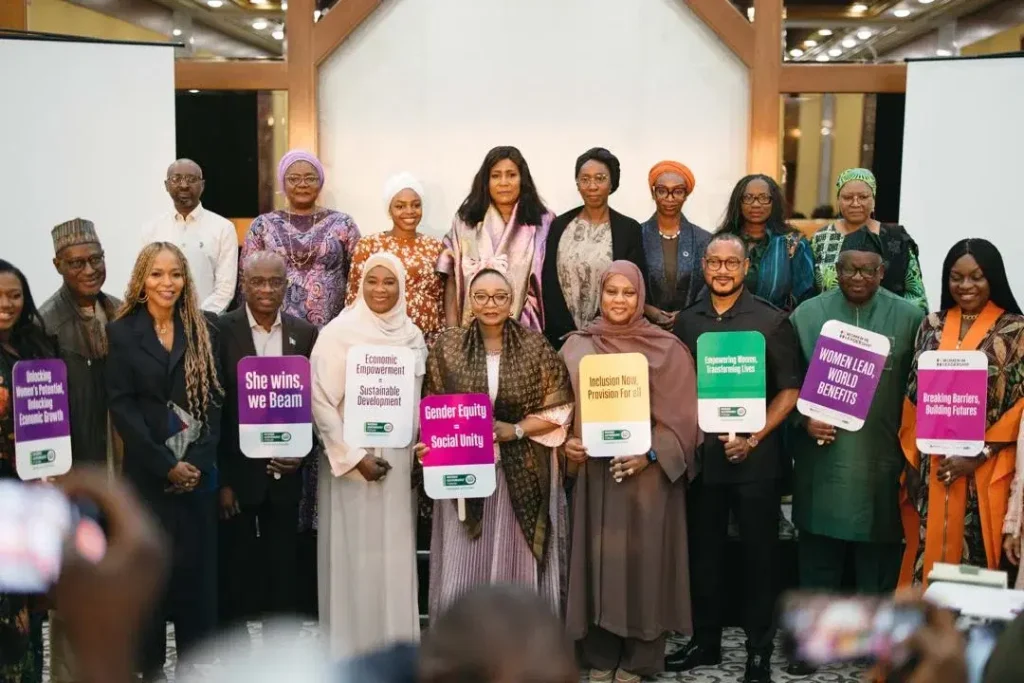
Minister of Women Affairs and Social Development, Imaan Sulaiman-Ibrahim, disclosed this in New York at a high-level sideline event of the 80th United Nations General Assembly (UNGA). The event was themed “Scaling Women’s Economic Empowerment: Financing Inclusive Growth for Peace, Development, and Human Rights—Lessons from Nigeria for Women Project.”
Vice President Kashim Shettima, who departed Abuja on Sunday, is representing President Bola Tinubu at the General Assembly. He was accompanied by the Minister of Foreign Affairs, Yusuf Maitama Tuggar and is scheduled to deliver Nigeria’s national statement on 24 September which will outline the country’s contributions to international cooperation, regional and global stability, as well as measures to confront the impact of climate change.
Speaking at the session, Sulaiman-Ibrahim said women’s empowerment was being pursued through targeted projects and programmes, with the Nigeria for Women Project (NFWP) serving as the central platform.
“In phase one, we mobilised over 460,000 women into Women Affinity Groups across multiple states. These groups have collectively saved an average of N4.9 billion of their own money and have inter-loaned significantly to expand businesses, cover health costs, and pay school fees,” she said.
According to the minister, more than 330,000 women have accessed livelihood grants, while thousands have been linked to financial institutions, national identity, and health insurance schemes. Following a successful pilot in six states, the project has now been scaled to all states.
She explained that the Women Affinity Groups created under the initiative had become platforms of voice, social capital, and economic agency, reshaping communities and lowering household vulnerability.
Highlighting the government’s wider strategy, Sulaiman-Ibrahim said the empowerment programmes had been consolidated under the Renewed Hope Social Impact Interventions – 774 (RH-SII774), a gender-responsive framework expected to directly impact more than 50 million Nigerians across all local governments.
Governor Abdulrahman Abdulrazak of Kwara State, represented by Governor Hyacinth Alia of Benue, described women’s empowerment as both a moral and economic necessity. He said the Nigeria for Women Programme had shown what sustained and targeted financing could achieve, noting that it now covers 15 states with commitments from 32.
Minister of State for the Federal Capital Territory, Dr Mariya Mahmoud, praised President Tinubu for his support for inclusivity, while Zamfara State Governor Dauda Lawal said his administration had prioritised women as the main beneficiaries of empowerment initiatives.
Other attendees include: Plateau State Governor Caleb Mutfwang, Minister of Housing and Urban Development Ahmed Dangiwa, Zamfara First Lady Huriyya Lawal, as well as diplomats and academics.
The Tinubu administration has earlier this year set a target of making Nigeria a $1 trillion economy by 2030 under its Renewed Hope Agenda. In April, Vice President Shettima inaugurated an interministerial committee to drive the process.



