

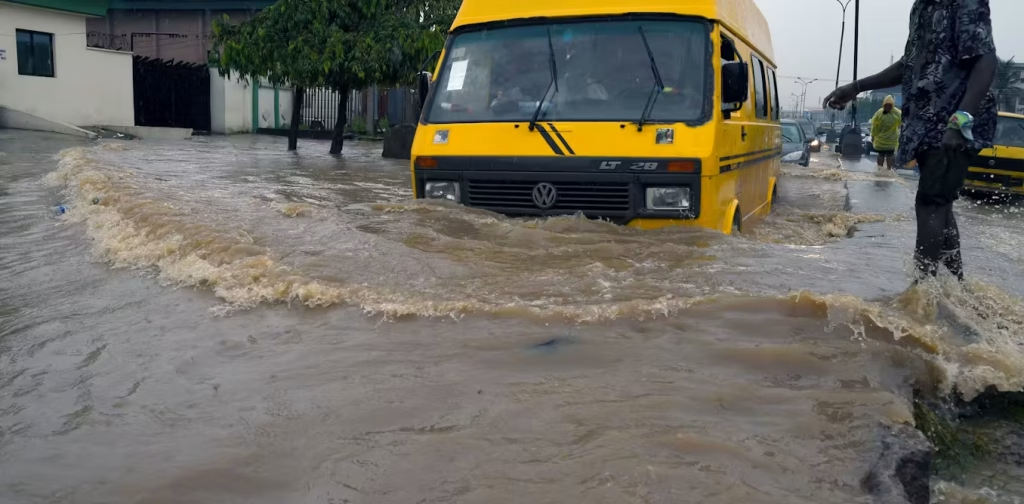
For the umpteenth time, two weeks ago the National Flood Early Warning Centre issued alerts on looming floods across 11 states in the country.
It warned of torrential rains and rising levels in the Gongola, Benue and Niger Rivers. The agency urged residents on floodplains to relocate to safer places and avoid another season of preventable tragedy.
The alerts predicted states and locations where there would be heavy rainfalls. They are Akwa-Ibom (Edor, Eket, Ikom, Oron, Upenekang); Bauchi (Tafawa-Balewa, Azare, Jama’are, Kari, Misau, Jama’a); Ebonyi (Abakaliki, Echara, Ezilo); Cross-River (Ogoja Edor, Obubra); Nasarawa (Keana, Keffi, Wamba); Benue (Agaku, Buruku, Gboko, Igumale, Ito, Katsina-Ala, Ugba, Vande-Ikya); Kaduna (Jaji, Kafancha, Birnin-Gwari, Zaria) and Katsina (Bindawa, Bakori, Daura, Funtua).
Others are Kebbi (Bagudo, Birnin-Kebbi, Bunza, Gwandu, Jega, Kalgo, Kamba, Kangiwa, Shanga, Ribah, Sakaba, Saminaka, Yelwa, Gauri-Banza); Kano (Bebeji, Gezawa, Gwarzo, Kano, Karaye, Tundun-wada, Wudil, Kunchi); Niger (Kontagora, Rijau, Ringim); Plateau (Mangu); Taraba (Donga, Takum); Jigawa (Diginsa, Gumel, Dutse, Gwaram, Hadejia, Miga); Yobe (Machina, Potiskum); Zamfara (Anka); Sokoto (Sokoto, Wamakko); Borno (Biu); and Gombe (Bajoga).
The warnings became necessary as devastating floods had been recorded in Ogun, Gombe, Lagos, Plateau, Anambra, and Delta States in the preceding month.
Flooding has become perennial in Nigeria, claiming lives and destroying farms and properties. One notable disaster occurred on September 10, 2024 when the Alau Dam in Borno State collapsed and submerged the community by 70 percent. Not fewer than 150 persons were killed while 419,000 others were displaced and submerged the community 70 percent.
The National Emergency Management Agency, NEMA, reported that so far this year, no fewer than 191 lives have been lost to floods across the country, while 94 people remain missing.
Niger State topped the chart with 163 deaths; Adamawa State, 26 while one death each was reported in Borno and Gombe States.
The floods this year, according to NEMA, have affected 134,435 people across 20 states and 47 local government areas. About 48,056 people have been displaced, while 239 were injured; 9,499 houses damaged and 9,450 farmlands destroyed.
The affected states are Abia, the Federal Capital Territory (Abuja), Adamawa, Akwa Ibom, Anambra, Bayelsa, Borno, Delta, Edo, Gombe, Imo, Jigawa, and Kaduna.
Others are Kano, Kogi, Kwara, Niger, Ondo, Rivers and Sokoto.
Last year, 5,264,097 persons were affected by floods; 1,237 died while 1,243,638 were displaced across 35 states and 401 local government areas.
Also, 116,172 houses were destroyed while 1,439,296 hectares of farmlands were affected.
Since the flood alerts were issued two weeks ago, many State governments such as Lagos and Delta have been working to reduce loss of life and property. Such efforts as drainage clearing and embankment construction were aimed at preventing terrible scenes of previous years when crocodiles, snakes and other reptiles were flushed into many homes in Lagos State.
We note that last August, the National Economic Council, NEC, had approved N3 billion each to the 36 states and the Federal Capital Territory; N1.5 billion to the Federal Ministry of Budget and National Planning; N1.5 billion to the Federal Ministry of Environment; N1.5 billion to the Federal Ministry of Water Resources and Sanitation; and N10 billion to the National Emergency Management Agency as intervention funds to support nationwide flood mitigation and response efforts.
We commend these efforts and urge that further steps should be taken regularly to minimize perennial flood disasters across the nation.
“Flooding has become perennial in Nigeria, claiming lives and destroying farms and properties. One notable disaster occurred on September 10, 2024 when the Alau Dam in Borno State collapsed and submerged the community by 70 percent. Not fewer than 150 persons were killed while 419,000 others were displaced and submerged the community 70 percent.”



