

BY GLORIA AKUDORO
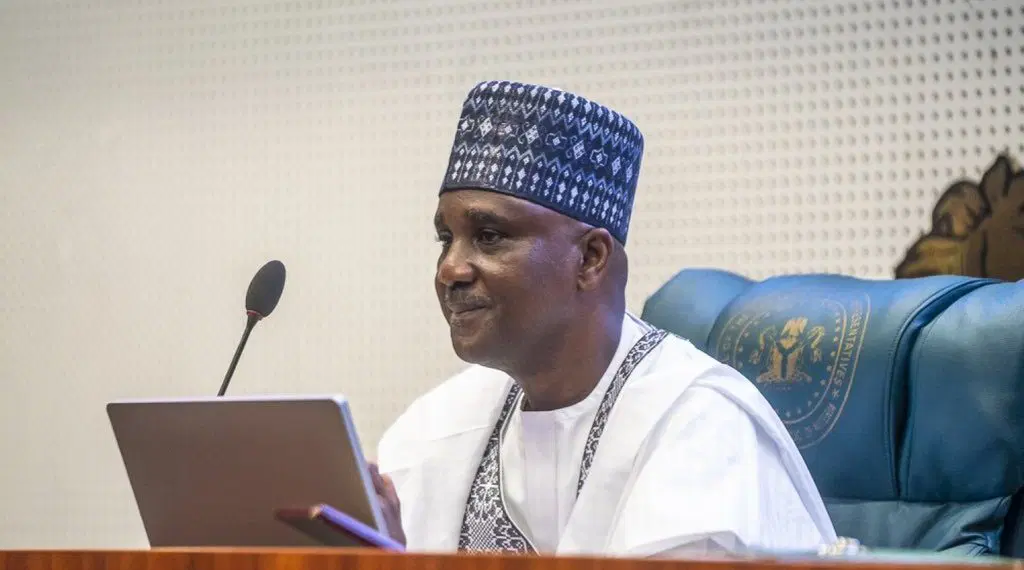
The Speaker of the House of Representatives, Hon. Tajudeen Abbas, has raised the alarm over Nigeria’s worsening energy access crisis, disclosing that more than 85 million Nigerians still live without electricity.
According to him, over 60 million Nigerians rely heavily on generator-based power supply, costing an estimated $22 billion annually in off-grid diesel generation.
Abbas, represented by the Chairman of the House Committee on Renewable Energy, Hon. Afam Victor Ogene, at the Third Technology Ecosystem Dialogue Summit (TED 2025) in Abuja, reaffirmed the National Assembly’s commitment to driving Nigeria’s energy transition, green job creation, and inclusive renewable energy policies.
He said: “We are committed to building a policy environment that empowers innovators, entrepreneurs, and investors in the renewable energy space. Renewable energy must become a national development strategy, not just a sectoral intervention.”
He emphasized that the House Committee on Renewable Energy has, over the past year, worked with the Rural Electrification Agency (REA) and other stakeholders through initiatives such as the Distributed Access to Renewable Energy Scale-Up, the Nigeria Electrification Project (NEP), and performance-based grants for clean energy deployment. These efforts have powered schools, health centres, small businesses, and households nationwide.
Speaker Abbas stressed the need for innovative financing, noting that localized, flexible, and blended finance solutions are crucial to scaling renewable energy adoption. He also highlighted the role of digitalization in improving transparency, efficiency, and sustainability of Nigeria’s energy systems.
He said: “Digital monitoring can reduce operational downtime by up to 30%, and mobile-enabled payment systems can boost revenue collection efficiency to over 90 percent.”
The lawmaker further disclosed that the Committee is spearheading the Green Jobs and Assets Bill, designed to institutionalize green job creation and embed climate-friendly practices into Nigeria’s development agenda.
In his remarks, a representative from REA emphasized the agency’s focus on four pillars – integrity, interoperability, local value, and inclusion. He said reliable energy is essential for productivity, livelihoods, and national growth.
“Access to energy is not just about electricity. It is about powering schools, hospitals, and local enterprises. Technology alone is not enough — we must build inclusive, sustainable systems that place communities, especially youth and women, at the center of energy policy,” he said.



