

BY JENNIFER EZIMAKOR
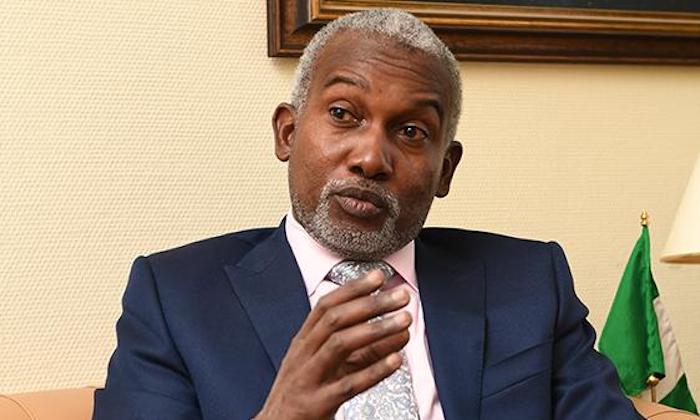
Nigeria’s Foreign Affairs Minister, Ambassador Yusuf Maitama Tuggar, has called for a stronger alignment between the country’s foreign policy and its economic ambitions, urging a more strategic approach to diplomacy, regional integration, and policy intelligence.
The minister praised the Nigerian Economic Summit Group (NESG) while speaking at the 31st Nigerian Economic Summit (NES #31) in Abuja, describing it as “A cornerstone of Nigeria’s development architecture and a vital pillar of governance and reform.” He commended the NESG and the Federal Ministry of Budget and Economic Planning for sustaining more than three decades of public-private dialogue that has shaped the country’s economic direction.
“Over the past thirty years, the Summit has evolved from an annual event into an institution of renewal—an arena where ideas meet action and where the public and private sectors chart a shared future for Nigeria,” Tuggar said.
He described the theme of this year’s summit, ‘The Reform Imperative: Building a Prosperous and Inclusive Nigeria by 2030,’ as timely, noting that Nigeria is in a critical phase where reforms are essential to stabilise the economy and restore investor confidence. He said President Bola Ahmed Tinubu’s administration is pursuing “bold, pragmatic, and people-centred reforms” under the Renewed Hope Agenda, which are beginning to improve fiscal and monetary stability.
“These reforms are catalysing growth, enhancing investor confidence, and reigniting the productive capacity of this great nation. Most importantly, they are beginning to deliver results that are visible not just in data, but in the lived experiences of our citizens.” the minister said.
Tuggar emphasised that Nigeria’s foreign policy must actively support its economic goals. He outlined the Ministry’s focus on unlocking trade corridors, attracting investment, and strengthening partnerships through economic diplomacy, guided by Nigeria’s 4D Foreign Policy Doctrine: Democracy, Development, Demography, and Diaspora.
“Under President Tinubu’s leadership, Nigeria’s foreign policy is defined by strategic autonomy. We pursue partnerships of purpose, not alliances of obligation. Nigeria must reject binary ideological alignments and instead embrace issue-based relationships that advance national interest. We are too significant a nation to engage in bandwagon diplomacy.” Tuggar said.
He stressed the need to deepen regional cooperation, pointing to the newly launched West Africa Economic Summit as an important step toward boosting industrialisation, trade, and infrastructure across the region.
“Nigeria’s prosperity is tied to West Africa’s progress. The more we invest in regional value chains and policy harmonisation, the more resilient and competitive we become as a bloc.”
Tuggar also highlighted lessons from emerging economies like Mexico, Indonesia, Korea, Türkiye, and Australia (MIKTA), as well as the East Asian “Flying Geese” model of industrialisation. He said Nigeria has the scale and capacity to lead a similar economic formation in Africa but must earn that position through sound policies, investment, coordination, and credible institutions.
He called for stronger collaboration between government, academia, civil society, and research institutions to build a pipeline of evidence-based strategies. “We must invest in policy intelligence. Geopolitics today is the realm of weaponised interdependence—we must be smarter, faster, and more strategic.”
Reaffirming the Ministry’s commitment to a results-driven foreign policy, Tuggar said Nigeria’s diplomacy must directly benefit its people, whether through trade under AfCFTA, investment facilitation, climate finance, or amplifying Africa’s voice globally.
He noted in closing, “Our challenge is to turn dialogue into delivery. If we align our ambition with implementation, Nigeria will not only reform but lead; regionally, globally, and in the hearts of our people.”



