

BY JENNIFER EZIMAKOR
The Women Advocates Research and Documentation Centre (WARDC) has renewed calls for stronger national policies and investment in menstrual health, gender equality, and girls’ empowerment as the world marks the 2025 International Day of the Girl Child.
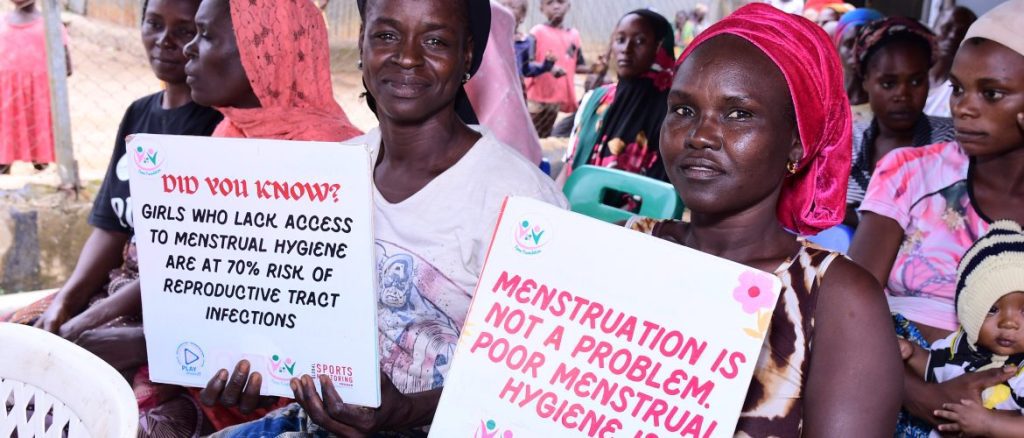
Aligning with this year’s national theme set by the Federal Ministry of Women Affairs, ‘The girl I am, the change I lead: Girls on the front lines of crisis,’ the group urged governments and communities to address period poverty, promote menstrual hygiene, and uphold the dignity of girls, particularly in rural areas.
In a statement, WARDC’s Founding Director, Dr. Abiola Akiyode-Afolabi, said that empowering girls through health, dignity, and justice is essential to achieving gender equality and sustainable development.
“We must break the culture of silence and stigma surrounding menstruation and ensure no girl is left behind simply because of a natural biological process,” she said.
Akiyode-Afolabi noted that despite progress in education and healthcare, millions of Nigerian girls still face period poverty or the lack of access to sanitary products, proper hygiene facilities, or menstrual education.
“Reports show that one in ten girls in Africa misses school during her period, and up to 25 per cent of Nigerian schoolgirls lack access to safe menstrual hygiene products. In rural areas, the situation is even worse because water and sanitation facilities are often nonexistent,” she said.
WARDC explained that period poverty leads to far-reaching consequences, including frequent absenteeism, psychological distress, infections, and, in some cases, early school dropout and child marriage.
The organisation also commended Bauchi State for establishing a Menstrual Bank, which provides free sanitary products to schoolgirls and women in underserved communities.
“The Bauchi Menstrual Bank is a bold and commendable innovation. It reflects a deep understanding of the link between menstrual health, education, and girls’ empowerment. We call on other state governments to replicate and expand this model nationwide,” Akiyode-Afolabi said.
The group further urged increased budget allocations for girls’ health and hygiene programmes, as well as community sensitisation and male engagement to end menstrual stigma.
“Menstrual health is not just a woman’s issue—it’s a national development issue. Girls cannot lead change if they are denied dignity. Empowering them with education, safety, and health is the foundation of a stronger society,” she added.
As part of the global observance of the International Day of the Girl Child, WARDC reaffirmed its commitment to advancing the rights and voices of girls through legal advocacy, policy influence, research, and community mobilisation.
“When girls are empowered, societies thrive. Girls are not just victims of crisis; they are leaders, innovators, and change-makers. Let us rise to this moment, fight stigma, and protect every girl’s right to live with dignity,” Akiyode-Afolabi concluded.
Globally, menstrual health has gained recognition as a human rights and public health issue, closely tied to education, gender equality, and economic opportunity. In Nigeria, however, the lack of a national menstrual health policy continues to hinder consistent implementation of programmes across states, leaving many girls—especially in rural areas—vulnerable to stigma, absenteeism, and poor reproductive health outcomes.
Founded in 2002 by human rights lawyer Akiyode-Afolabi, WARDC is a Nigerian non-governmental organisation that promotes women’s rights, social justice, and democratic governance through advocacy, legal reform, and community engagement.



