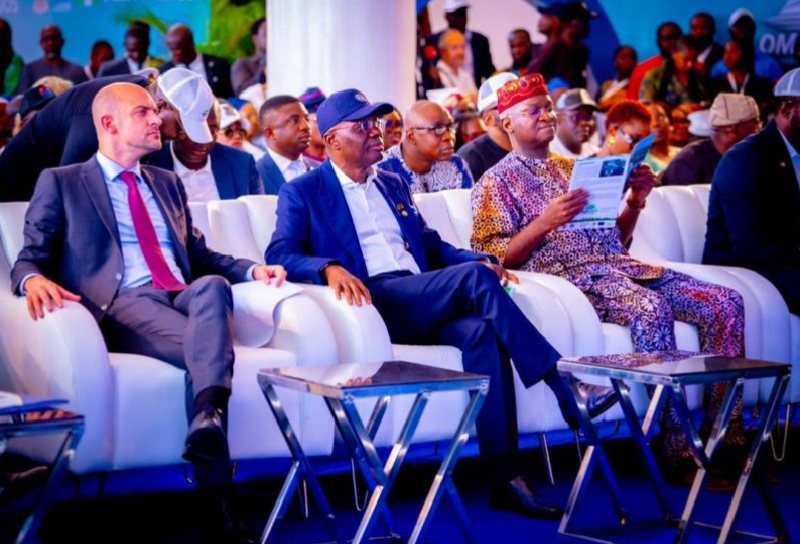
In a bold step towards transforming Lagos’ transportation landscape, Governor Babajide Sanwo-Olu at the weekend unveiled the long-awaited Omi Eko project, an ambitious $410 million initiative set to revolutionize water mobility in Africa’s most populous city.
By 2030, the Lagos State Government plans to deploy over 70 electric-powered ferries and upgrade 20 jetties and terminals across its inland waterways, part of a grand vision to ease road congestion, promote clean energy, and create a smarter, more sustainable transport system.
The Omi Eko project, meaning “Water of Lagos”, marks a turning point in the state’s efforts to integrate road, rail, and water transport into one seamless ecosystem. Governor Sanwo-Olu described it as a cornerstone of his administration’s integrated mobility strategy aimed at delivering a safer, greener, and more efficient Lagos.
“We are building a water-based economy that works for all, from operators to passengers, from private investors to citizens,” Sanwo-Olu said.
He revealed that Lagos has also established Africa’s first water waste monitoring and data centre to enhance commuter safety and real-time visibility on waterways. This, he noted, builds on the state’s recent hosting of Africa’s first electric powerboat race, a testament to its growing commitment to environmental innovation.
Damilola Emmanuel, Special Adviser to the Governor on Blue Economy and General Manager of the Lagos State Waterways Authority (LASWA), described Omi Eko as the largest inland waterways investment on the continent.
Tracing the evolution of Lagos’ water transport system from the tenure of former Governor Babatunde Fashola, Emmanuel credited Sanwo-Olu with “bringing life to the master plan and turning vision into reality.”
According to him, the project will introduce 70 hybrid-electric ferries to drastically cut emissions while improving access and affordability. The ferries, he said, will be handed over to private operators, with the government focusing on regulation, safety, and infrastructure.
Planned upgrades include 20 modernized jetties, dredging and channelization of 15 routes for safer navigation, and training programs for operators to ensure high service standards.
Emmanuel also acknowledged critical support from international partners including the European Investment Bank (EIB) and the European Union (EU), alongside the Lagos State House of Assembly and Civil Service.
“This is no longer a dream, we are living the dream. As Lagos learns to move with its waters, it will discover the rhythms of its prosperity,” he said.
The European Union Ambassador to Nigeria and ECOWAS, Gautier Mignot, praised the Omi Eko initiative, describing it as part of the EU’s Global Gateway Strategy for the Abidjan–Lagos transport corridor.
“Africa’s fast-growing cities like Lagos present challenges and opportunities. Scaling public transport systems sustainably will transform mobility for millions,” Mignot said.
He added that the project is expected to cut carbon emissions by 41,000 tons of CO₂ annually, while 25 million passengers will save up to three hours of travel time daily at peak periods — a game-changer for urban commuting in the megacity.
The French Minister for Europe and Foreign Affairs, Jean-Noel Barrot, also hailed Omi Eko as a product of deepening Nigeria–France cooperation, describing it as a symbol of climate resilience and innovation.
“These unique electric ferries will thrive amid rising sea levels and suppress carbon emissions,” Barrot said.
Chairman of the Lagos State House of Assembly Committee on Transport, Hon. Temitope Adewale, assured that the Assembly remains committed to supporting the project through enabling legislation.
“To residents and commuters, this project is yours to own. Be assured of our Committee’s backing to ensure Omi Eko’s success,” Adewale said.