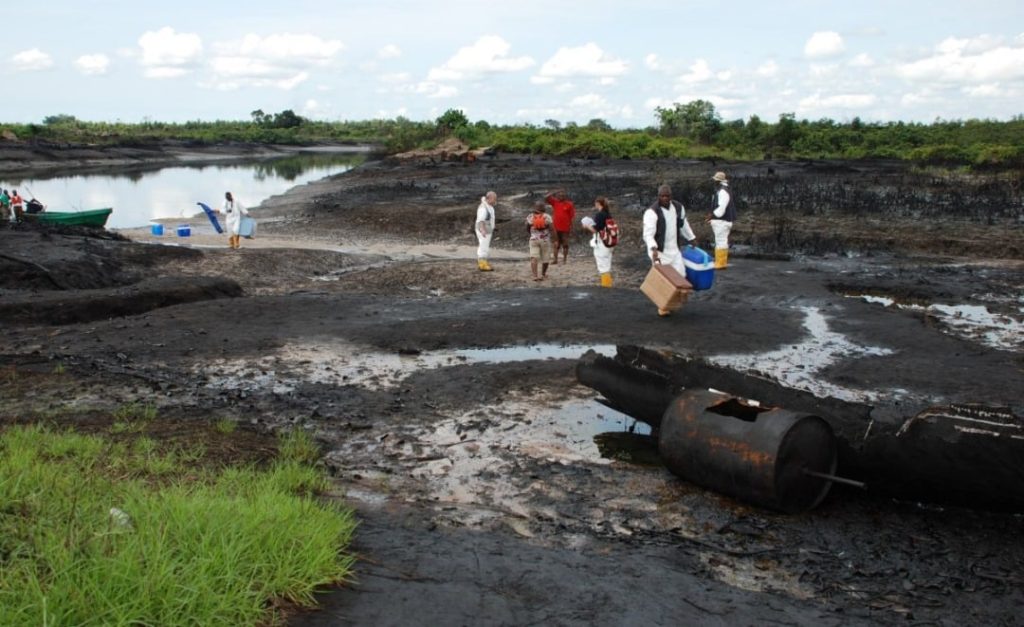
The House of Representatives Ad Hoc Committee investigating oil spill remediation and the Hydrocarbon Pollution Remediation Project (HYPREP) has raised alarm over alleged financial misconduct and irregular contract awards in the N100 billion Ogoni clean-up project.
At a tense session in Abuja, lawmakers confronted HYPREP officials with documents suggesting that 39 contracts, each worth about N.5 billion, were awarded in 2022 without approvals from either the Bureau of Public Procurement (BPP) or the Federal Executive Council (FEC).
The committee, chaired by an unnamed lawmaker, condemned what it described as “selective tendering” that excluded open competition and ignored due process.
“We have evidence that 39 companies were awarded N2.5 billion contracts each—N100 billion in total—without passing through proper channels. This is completely unacceptable,” one visibly angry member declared.
Lawmakers demanded that HYPREP submit a comprehensive list of all contractors, their directors, qualifications, and justification for selection. They also faulted the agency’s financial reports, which listed only Advance Payment Guarantees (APGs) with no proof of subsequent disbursements or project completion.
HYPREP Project Coordinator, Prof. Clement Gimu, admitted that full documentation was not ready but pledged to furnish the committee with complete records at the next hearing—a response lawmakers deemed unsatisfactory.
The probe deepened when the committee discovered that many of HYPREP’s financial and audit documents lacked official signatures. The chairman queried the agency for submitting unauthenticated papers.
“You can’t come before the House with unsigned documents and expect to be taken seriously,” he said.
An attempt by a HYPREP official to withdraw the documents was rebuffed, with lawmakers reminding the delegation that they were under oath and bound by their submissions.
The committee further slammed HYPREP for failing to provide bank statements, general ledgers, and project budgets. When the agency claimed the documents were with the Auditor-General’s Office, the chairman dismissed the excuse.
“Every responsible agency must keep duplicate financial records. Saying you handed everything to auditors is suspicious,” he said.
The committee ordered HYPREP to produce certified copies of all financial records within a week, including payment histories, approval letters, bank statements, and evidence of project completion.
Lawmakers stressed that the Ogoni clean-up symbolised decades of environmental justice and could not be tainted by corruption.
“This project is being watched globally. The people of Ogoni have suffered enough. We will not let this turn into another failed national promise,” one member warned.
To unravel the controversy, the committee summoned the Minister of Environment, along with officials from the BPP and the Ministry of Finance, to appear on October 28.
“This is not a witch-hunt,” the chairman said. “We’re simply ensuring that every naira spent on remediation is properly accounted for.”