

BY GLORIA AKUDORO
The Federal Government on Tuesday expressed commitment to unlocking the 10 Gigawatts (10GW) of stranded generation capacity to drive industrial growth, job creation, and regional energy exports through strategic partnerships and investments.
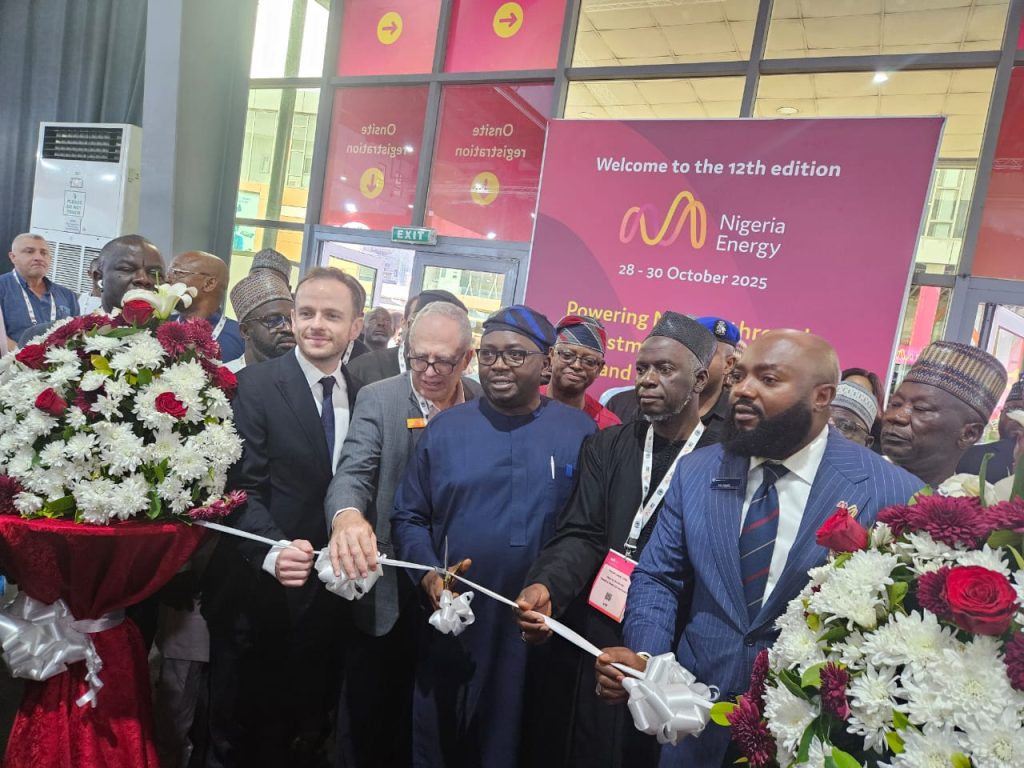
The Minister of Power, Adebayo Adelabu, stated this at the Nigeria Energy Forum 2025 in Abuja, while attracting investors’ confidence with the federal government’s eagerness to leverage these significant untapped resources to drive inclusive growth.
He said: “In Nigeria today, we have over 10 GW of stranded generation capacity. Energy that could power industries, create jobs, and even support electricity exports to our neighboring countries through the regional power pool.
“We are therefore open to strategic partnerships to mobilize the necessary investments and unlock this potential. Our market fundamentals are improving, our policy environment is clear, and the national leadership is committed to creating the enabling conditions for long-term investment and innovation.”
The Minister further restated the government commitment to reposition the Nigerian power sector for sustainability, efficiency, and growth through a comprehensive, multi-pronged approach.
This approach, he said, spans critical pillars which include legislation, policy reforms, infrastructure development, energy transition and access expansion, and local content and capacity development with each designed to address structural challenges, unlock private capital, and enhance service delivery across the electricity value chain.
The Minister who spoke on the topic, “Powering Nigeria through Investment, Innovation, and Partnership,” said the theme captures the essence of national collective aspiration to build a resilient, inclusive, and sustainable energy future, adding that the theme speaks not only to the urgent need for capital infusion but also to the transformative role of collaboration, especially with the private sector in driving progress.
“In the Nigeria power sector, this theme reflects our unwavering commitment to harnessing strategic investments, deploying cutting-edge technologies, and fostering strong partnerships both local and global to deliver reliable, affordable, and cleaner energy for all Nigerians. A vision that aligns seamlessly with the Renewed Hope Agenda of President Bola Ahmed Tinubu, GCFR, which emphasizes economic revitalization through enterprise, innovation, and shared prosperity,” he affirmed.
In furtherance of this administration’s commitment, the Minister said that in order to advance Nigeria’s energy transition and access goals, the federal government is leveraging bilateral funding and development finance to de-risk investments and attract private participation for access expansion across underserved and unserved communities, educational institutions, healthcare facilities, and government institutions.
He explained that “In the past two years, over $2 billion has been mobilized through key facilities, including the $750 million World Bank DARES program for off-grid and mini-grid expansion, the $500 million NSIA RIPLE platform to unlock private capital for renewables, and the $190 million JICA fund to complement DARES. Collectively, these interventions are accelerating renewable energy deployment and expanding reliable, affordable power across the country.”
Adelabu underscored the accomplishments and introduced initiatives propelling Nigeria’s power sector forward, notably the Electricity Act of 2023, which establishes a comprehensive governance and regulatory framework for the Nigerian Electricity Supply Industry (NESI). Additionally, the Integrated National Electricity Policy, sanctioned by the Federal Executive Council in February 2025, and the launch of specific national programs designed to hasten the viability, expansion, and modernization of the national grid, among other policies, aim to ensure a sustainable power supply.
“Lastly, the Federal Government has operationalized the Presidential Metering Initiative (PMI) to close the national metering gap and improve sector viability. Already, N700 billion has been secured from FAAC to deploy 1.1 million meters by end of 2025, and 2 million annually over the next five years under the PMI. This complements the 3.2 million meters being procured through the World Bank’s DISREP program, positioning Nigeria to close the metering gap within five years and strengthen transparency and revenue assurance across the value chain.
“As we commence today’s forum, let me once again emphasize to our investors, financiers, and innovators that Nigeria’s power sector remains open and ready for business more than ever before. We recognize that achieving the scale of investment required to transform the sector requires greater private sector participation across the entire value chain, particularly in the transmission segment. A useful reference is South Africa’s ambitious $25 billion transmission grid expansion initiative, which seeks private developers to deliver 14,000 kilometers of new power lines and connect over 59 GW of new capacity within the next 14 years. This is remarkable when compared to Nigeria’s Presidential Power Initiative (the Siemens project) valued at $2.3 billion,” the Minister said.



