

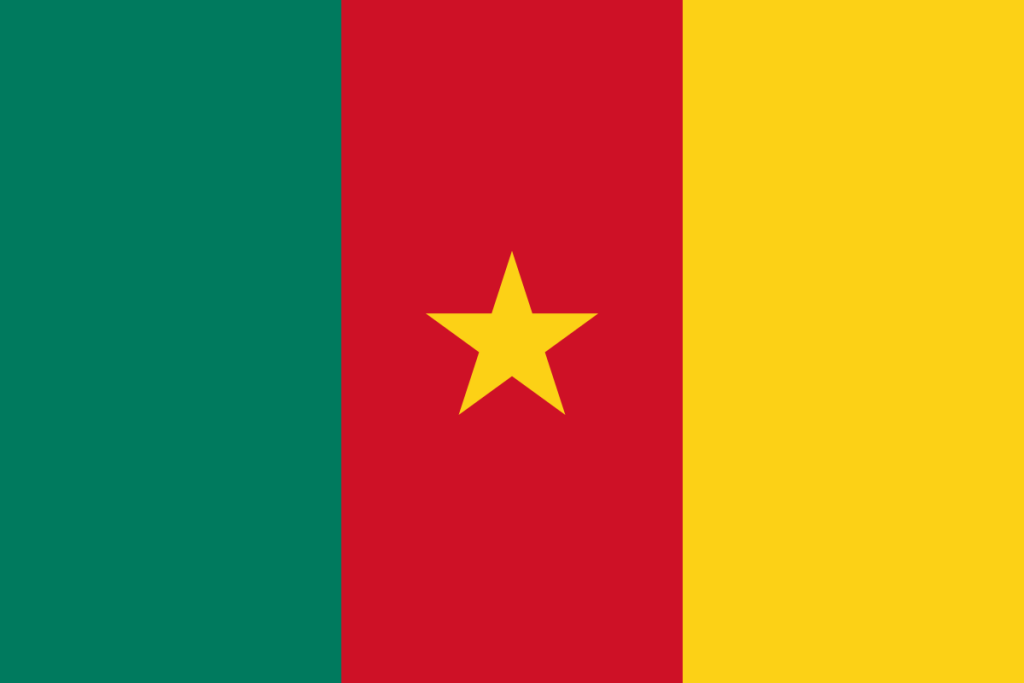
On Monday October 27, 2025, Cameroon’s Constitutional Council announced that Paul Biya, candidate of the Cameroon People’s Democratic Movement, CPDM, had been re-elected President of the country for an eighth term.
Biya, aged 92, has ruled the country since 1982 and is reputed to be the world’s oldest serving head of state and Cameroon’s second President since independence from France in 1960.
He holds the record of Africa’s second-longest-serving president, coming after Teodoro Obiang Nguema Mbasogo of Equatorial Guinea who has been in power since 1979.
For his record eight term, Biya was said to have secured 53.66 percent of the votes. Issa Tchiroma Bakary, the candidate of the Cameroon National Salvation Front, CNSF, came second with 35.19 percent of the votes.
About 4.6 million Cameroonians reportedly voted out of over eight million registered voters, that is 57 percent, compared with 53.85 percent in 2018 and 65.82 percent in 2011.
Under Cameroon’s Constitution, Biya, the newly elected president, must be sworn in within 15 days of the official announcement of the results. This means that he will begin his record eight term on November 10, 2025.
The swearing-in ceremony takes place in the presence of the members of Parliament, the Constitutional Council and the Supreme Court.
Biya’s so-called victory at this year’s election has once again brought to the fore Africa’s unending problem of sit-tight leaders, many of them battling old age and failing health.
Despite his deteriorating health, Biya had announced that he had accepted his party’s decision to field him against Bello Maigari, 78, the country’s former prime minister and immediate past Tourism Minister, who would run on the platform of the National Union for Democracy and Progress.
Biya’s victory came about essentially because of institutional weaknesses and a lack of democratic accountability. The contest was undoubtedly tough for his challengers because Biya and the ruling CPDM had over the years had a firm grip on all government institutions, including the judiciary and the electoral commission.
There were reports of crackdowns on opposition party members, journalists, and civil society leaders.
We believe Biya’s victory does not augur well for the continent as this will embolden other ageing leaders to continue to cling to power rather than leave the stage for vibrant younger ones who can advance the course of their countries better.
Indeed, Africa has been plagued by sit-tight leaders for too long. Among them are Yoweri Museveni who has ruled Uganda since 1986; Paul Kagame of Rwanda, who came to power in 2000; Denis Sassou Nguesso of the Republic of Congo who was President from 1979 to 1992 and came back and remained in power since 1997.
Others are Isaias Afwerki of Eritrea, since 1993; Ismail Omar Guelleh of Djibouti, 1999, Faure Gnassingbé of Togo, 2005, and Alassane Ouattara of Ivory Coast since 2010.
All these leaders have perpetuated themselves in power after successfully altering their countries’ constitutions on term limits. For instance, in 2008, Biya’s party engineered a constitutional amendment that abolished a two-term presidential limit.
Omar Bongo of Gabon achieved a similar feat in 2003 to make himself life president. He died of cardiac arrest after ruling for 43 years from 1967 to 2009.
The trend has become worrisome to political observers. Said Dr. Bukola Saraki, former president of the Senate of the Federal Republic of Nigeria:
“These are not merely political anomalies; they are symptoms of institutional fragility.
“This erosion of institutional checks and balances has had profound consequences.”
We believe it is high time African leaders addressed this syndrome.
“We believe Biya’s victory does not augur well for the continent as this will embolden other ageing leaders to continue to cling to power rather than leave the stage for vibrant younger ones who can advance the course of their countries better.”



