

*Policy cause fuel price hike, deepen hardship, say critics
*Government insists move will protect local refineries
BY SAM OTUONYE
A fresh wave of outrage has greeted the Federal Government’s decision to impose a 15 percent ad valorem import duty on automotive gas oil (diesel) and premium motor spirit (PMS), popularly known as petrol.
The policy, approved by President Bola Tinubu, has sparked fears of a looming fuel price hike and worsening hardship for Nigerians already grappling with rising living costs.
In a letter dated October 21, 2025, Tinubu’s private secretary, Damilotun Aderemi, conveyed the President’s approval to the Federal Inland Revenue Service (FIRS) and the Nigerian Midstream and Downstream Petroleum Regulatory Authority (NMDPRA).
According to reports, the President’s approval followed a request by the FIRS to apply the 15 per cent duty on the cost, insurance and freight (CIF) of imported fuel products to align import costs with domestic realities.
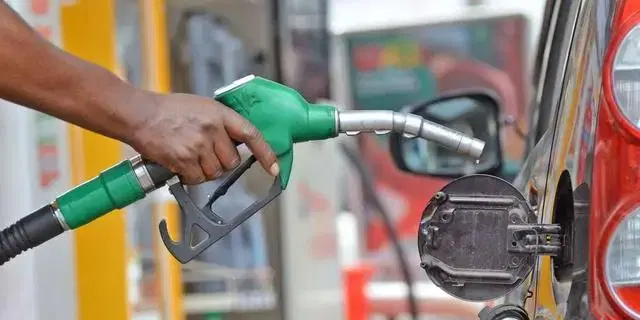
With the new policy, petrol and diesel prices could rise sharply. Analysts project that a litre of petrol, currently selling between N950 and N960 in Abuja, may climb above N1,000 once the duty takes effect. Diesel could also jump from N1,120–N1,140 per litre by an estimated N99.72 kobo.
This escalation will likely push up transportation costs and the prices of goods and services nationwide, given Nigeria’s heavy dependence on fuel for logistics and power generation.
Data from the Nigerian Midstream and Downstream Petroleum Regulatory Authority show that between August 2024 and October 2025, total PMS supply stood at 21.68 billion litres. Of this, only 6.67 billion litres (31%) came from local refineries, notably Dangote Refinery, while 15.01 billion litres (69%) were imported, underscoring the nation’s dependence on foreign fuel sources.
As of October 21, 2025, the landing cost of imported fuel stood at N839.97 per litre, slightly cheaper than Dangote Refinery’s ex-depot price of N877 per litre, according to figures from the Major Energy Marketers Association of Nigeria. This means the import duty could make locally refined petrol more competitive.
The import duty approval comes amid FIRS’s recent directive to banks, stockbrokers, and financial institutions to deduct a 10 per cent withholding tax on interest from short-term securities, a move that also stirred mixed reactions in economic circles.
Meanwhile, a chieftain of the All Progressives Congress (APC) in Delta State, Chief Ayiri Emami, has faulted the new import duty, warning that it would worsen the plight of ordinary Nigerians.
Speaking at a press conference in Abuja, Emami said the policy would “hurt the masses, not marketers.”
“Anybody advising Mr President to impose a 15 percent tax on petroleum right now is not doing him any good. Whatever tax you put on petroleum goes straight back to the people on the streets. Nigerians are already hungry and struggling,” Emami said.
The FIRS, however, defended the initiative as part of ongoing reforms aimed at protecting domestic refineries and stabilising the downstream sector.
Its chairman, Zacch Adedeji, said the measure would “operationalise crude transactions in local currency, strengthen local refining capacity, and ensure a stable, affordable supply of petroleum products across Nigeria.”



