

BY JOHN DANJUMA
The Senate Ad-Hoc Committee investigating crude oil theft and sabotage in the Niger Delta has uncovered what it described as “staggering” losses amounting to over $300 billion in unaccounted crude oil proceeds.
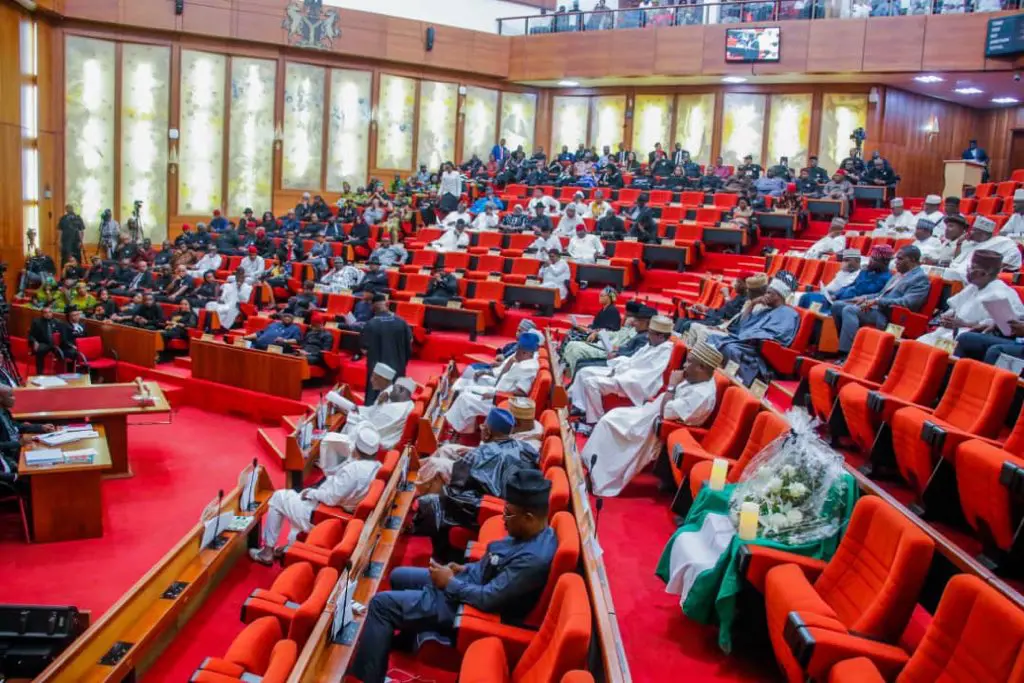
Presenting the committee’s interim report at Wednesday’s plenary, the chairman, Senator Ned Nwoko (Delta North), said preliminary findings revealed “systemic irregularities, poor measurement standards, and weak enforcement” across Nigeria’s oil and gas sector.
“The findings so far exposed deep-rooted inefficiencies in crude oil accounting and export measurement. The losses are monumental,” Nwoko said.
He disclosed that the 40-page interim report recommended urgent reforms to curb oil theft, strengthen accountability, and recover lost revenues.
Among the recommendations were that the Nigerian Upstream Petroleum Regulatory Commission (NUPRC) enforce globally recognised crude oil measurement standards at all production sites and export terminals.
The report also urged the Federal Government to equip security agencies with modern surveillance systems, including unmanned aerial vehicles (UAVs), to monitor pipelines and coastal routes; establish a Maritime Trust Fund to improve maritime safety; and create special courts for the prosecution of oil thieves.
Other proposals included full implementation of the Host Communities Development Trust Fund under the Petroleum Industry Act (PIA) and the handover of abandoned oil wells to the NUPRC for proper management and utilisation.
However, a section of the report recommending that the committee be empowered to “track, trace, and recover” stolen crude oil and proceeds immediately drew debate among lawmakers.
Senator Abdul Ningi (Bauchi Central) praised the report as “detailed and commendable” but cautioned against granting recovery powers to the committee.
“We can track and trace, but recovery is beyond the powers of the Senate. That function lies with agencies like the EFCC or ICPC,” he argued.
Ningi cited consultant findings referenced in the report which estimated crude oil revenue shortfalls of $81 billion between 2016 and 2017, and over $200 billion in unaccounted proceeds from 2015 to date.
Supporting his position, Senator Solomon Adeola (Ogun West), Chairman of the Senate Committee on Appropriations, said the recovery of funds should remain the prerogative of the executive arm.
“The committee should furnish more details—companies, figures, and locations—but actual recovery must be handled by appropriate agencies,” he noted.
Also speaking, Senator Ibrahim Dankwambo (Gombe North), a former Accountant General of the Federation, called for a deeper forensic probe to identify the actors, affected wells, and rig-by-rig losses.
“It is a complex web involving companies, individuals, and illegal refineries. We need precise data to break it,” he stated.
Senator Enyinnaya Abaribe (Abia South) urged patience, saying the Senate should receive the interim report and await the committee’s final submission.
In his ruling, Senate President Godswill Akpabio commended Nwoko and his team for their “thorough and courageous work,” but agreed that the Senate’s role should stop at investigation and policy recommendation.
“Our duty is to track and trace. Recovery is the mandate of executive agencies. Nonetheless, this report is a wake-up call,” Akpabio said.
He described the estimated $300 billion losses as “staggering” and reflective of the urgent need for tighter oversight and comprehensive reforms in the petroleum sector.
The Senate, thereafter, adopted the interim report and directed the Ad-Hoc Committee to continue its investigation and present a final report with detailed findings and actionable recommendations.



