

…Claims funds went to lawmakers
…Commission faces sanctions over undocumented expenditure
BY SAM OTUONYE
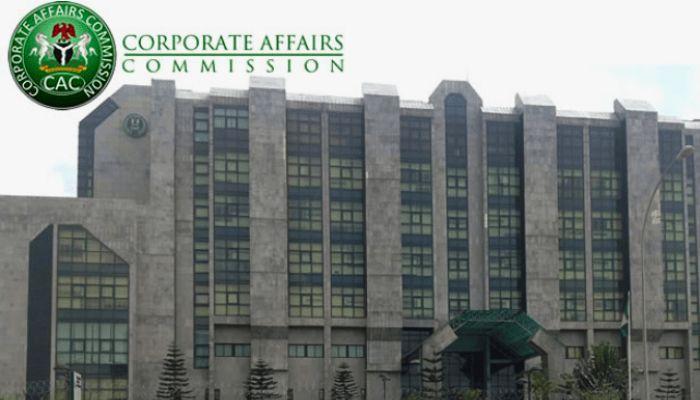
The Corporate Affairs Commission (CAC) has been indicted by the Auditor-General’s 2022 report for spending over N118.75 million without supporting documents or approvals, raising concerns about its internal controls and the integrity of public finance management.
According to the audit, sampled payment vouchers totalling N118,752,826 were processed by the CAC without invoices, local purchase orders, memos, or any documentation required under the Financial Regulations (2009).
A news platform reported that the CAC attempted to justify the spending by claiming that much of the money was used to fund oversight visits by federal lawmakers to its offices nationwide. But the Auditor-General rejected the explanation, stating that the lack of documentation constituted a clear violation of financial regulations.
The findings, contained in an 808-page audit report covering January to December 2022, highlight systemic breaches, weak accountability mechanisms, and unexplained expenditure approved under controversial circumstances.
The report noted that CAC violated FR 603(i), which mandates full documentation for every payment, and FR 415, which warns that government funds should not be spent merely because they are budgeted.
“The federal government requires all officers responsible for expenditure to exercise due economy. Money must not be spent merely because it has been voted,” the regulation states.
The Auditor-General emphasized that payments made by CAC without documentation expose the agency to risks of diversion of public funds and payment for services not rendered.
The CAC did not dispute the undocumented spending but claimed that a “considerable portion” went to National Assembly committees for oversight visits. It also said reports from those visits were not returned because they were for National Assembly use.
The revelation highlights a long-standing but rarely documented practice in which MDAs fund the oversight activities of lawmakers who are supposed to scrutinise them—an arrangement anti-corruption experts say undermines accountability and fosters conflicts of interest.
Despite acknowledging CAC’s response, the audit concluded that it was unsatisfactory. The findings therefore remain valid until the commission fully implements the recommended corrective actions.
The Auditor-General directed the CAC Registrar-General to appear before the Public Accounts Committees of the National Assembly to account for the N118.75 million spent without proper documentation. The Commission was also ordered to recover the entire amount, remit it to the treasury, and submit proof of remittance to the Committees.
Failure to comply, the report warned, would trigger sanctions under Paragraph 3106 of the Financial Regulations, which states that any officer who makes an irregular payment must be given 21 days to offer an explanation. If unsatisfactory, the amount must be recovered and the officer removed from the schedule.
The audit also revealed that six CAC vehicles were unaccounted for, allegedly due to interference from its supervising ministry.
According to the report, the vehicles were found in the custody of the Federal Ministry of Industry, Trade and Investment (FMITI). Five were reportedly in the personal use of the minister, while one was traced to the Special Assistant to the Permanent Secretary. Adeniyi Adebayo was minister in 2022, the audit year.
There was no documentation to justify the transfer or use of the vehicles, suggesting that FMITI may have used its supervisory role to appropriate the assets without due process.
This act contravened several federal regulations, including: FR 2001, which requires accounting officers to ensure effective control of government vehicles; FR 112(i), mandating the safeguarding and maintenance of all government assets; Establishment Circular Ref. No. SGF.19/S.52/V/720 (2017), requiring retiring officers to return government property; Circular Ref. No. SGF.6/VIII (2008), which prohibits ministries from requesting or accepting vehicles or financial support from agencies they supervise.
The audit attributed these lapses to weaknesses in CAC’s internal controls and identified risks such as diversion of public property and undue ministerial interference.
CAC management claimed the vehicles were temporarily deployed to FMITI as “project vehicles,” but the Auditor-General dismissed this explanation, noting the absence of supporting documents.
The Registrar-General was directed to account for the vehicles, explain why CAC resources were used for ministry activities already covered by its own budget, recover the six vehicles, and submit evidence to the Public Accounts Committees. Non-compliance would attract sanctions under Paragraph 3106 of the Financial Regulations.
The audit further revealed that CAC paid N123,941,739.14 in legal fees to external solicitors without securing mandatory approval from the Attorney-General of the Federation.
According to Establishment Circular Ref. No. SGF/PS/CIR/625/1 (16 July 2003), ministries and agencies must obtain clearance from the Attorney-General before engaging external legal practitioners. All claims for professional fees must also come with a letter of instruction, a report of services rendered, and relevant court documents.
The audit found that no such documentation existed for the payments.
It warned that weak internal controls expose the commission to risks such as hiring unqualified solicitors, inflated payments, or outright loss of public funds.
CAC management defended the expenditure, citing CAMA 2020, which empowers the Registrar-General as the accounting officer responsible for controlling and disbursing the commission’s funds. It also referenced financial regulations allowing statutory bodies to develop operational policies where internal rules are absent.
The Auditor-General rejected the defence, stating the findings remain valid until corrective measures are implemented.
The audit directed the Registrar-General to appear before the Public Accounts Committees to account for the N123.94 million, recover and remit it to the treasury, and present evidence to the Committees.
Failure to comply, it added, would attract sanctions under Paragraph 3106 of the Financial Regulations.



