

…Tasks DisCos on speedy distribution
BY GLORIA AKUDORO
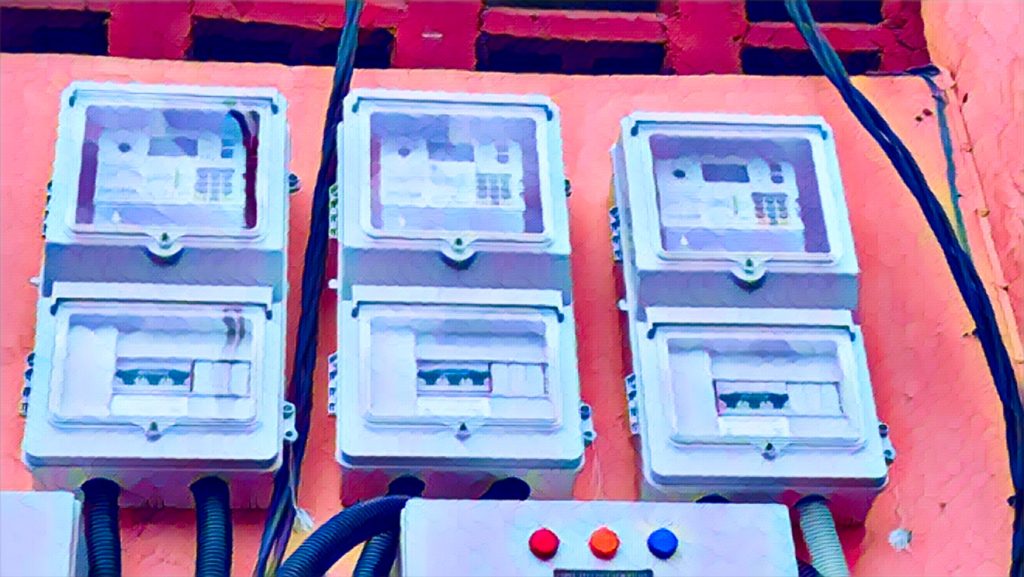
The Nigerian Electricity Regulatory Commission (NERC) has disclosed that between 600,000 and 700,000 meters are currently available nationwide and urged electricity distribution companies (DisCos) to accelerate their meter rollout and improve publicity.
NERC explained that the federal government has already invested in these meters, directing DisCos to ensure efficient and timely distribution.
The Commission’s Vice Chairman, Dr. Musiliu Oseni, revealed this during the 4th Nigerian Electricity Supply Industry (NESI) Stakeholders Meeting of 2025 in Abuja, where he addressed regulators, operators, and stakeholders on critical “crossroads” facing the sector.
Reacting to reports that some DisCos have achieved only 2 percent performance in refunds under the Meter Asset Provider (MAP) scheme, Oseni issued a stern warning, stressing that such lapses would attract strict sanctions.
The MAP initiative, launched by NERC to close Nigeria’s metering gap, curb estimated billing, and enhance transparency, came into effect on March 8, 2018, with implementation beginning on May 1, 2019.
Its initial costs, dependent on meter type and DisCo were capped at N36,991.50 for a single-phase meter and N67,055.85 for a three-phase meter (excluding VAT). These charges have since risen to N112,660–N146,500 for single-phase meters (depending on provider and location) and N186,878–N254,700 for three-phase meters.
However, the MAP programme is not free. Consumers either pay upfront or through a monthly Meter Service Charge (MSC). Private MAP companies finance, install, and maintain meters, with the costs recovered from customers.
At the meeting, Dr. Oseni proposed enforcing refunds through the national wholesale market structure.
“You still have your Operational Expenditure (OPEX) at the wholesale market level. If you refuse to refund customers, that money can be withheld from your OPEX until you have done so,” he said, insisting on strict timelines to guarantee compliance.
With the transition to State Electricity Regulatory Commissions in progress, Oseni warned DisCos to cooperate with state regulators, saying: “No licensee is bigger than their regulator.”
He also addressed recent misinformation about the tenure of NERC Commissioners, clarifying the “staggering principle” in Section 36 of the Electricity Act (EA). He explained that it applied only to the pioneer Commission, while subsequent Chairmen and Commissioners serve a single, non-renewable five-year tenure as provided in Section 36(1) of the EA.
In his presentation, NERC Commissioner for Corporate Services, Nathan Shatti, reviewed new data on MAP refunds and installations, highlighting poor compliance by some utilities. Abuja and Kano DisCos, he noted, achieved only 2 percent refunds.
“Stop behaving as if you are doing customers a favour,” Shatti cautioned.
Addressing the backlog of paid-for yet uninstalled meters, he rejected technical excuses, saying: “If your network is not ready for metering, do not collect people’s money.”
Shatti further noted that every uninstalled meter or faulty transformer results in losses for DisCos, stressing the need for them to prioritise installations and network upgrades. He also revealed that over 350,000 meters are yet to be migrated to the new Standard Transfer Specification (STS), urging immediate cleanup of obsolete data.
Also speaking, NERC Commissioner for Legal, Licensing and Compliance, Dafe Akpeneye, dismissed claims that thousands of meters could not be traced because customers allegedly relocated them without authorisation.
Drawing a comparison with the banking sector, he said that just as a “Post No Debit” order forces a customer to appear at their bank, DisCos must utilise their vending platforms to enforce compliance.
“If you don’t know where the meter is, the customer shouldn’t be able to vend,” he said.
“Issue a public notice that you cannot identify these meters. Block them from vending and take them off your system until the people concerned come forward,” Akpeneye added.



