

…Initiative effective January 1, 2026; warns against breach
BY SAM OTUONYE
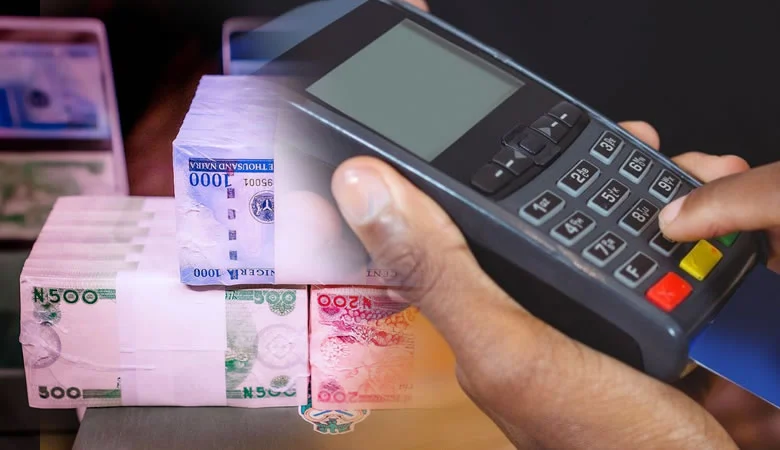
The Federal Government has announced a new digitisation programme that will transform treasury operations, eliminate paper-based processes, and enforce full transparency across Ministries, Departments and Agencies (MDAs) beginning January 2026, banning the use of physical cash for the payment of revenue and ordering the installation of Point of Sale (POS) terminals within 45 days.
This is according to an update issued by the Office of the Accountant-General of the Federation (OAGF) and obtained by journalists on Monday.
This means more of Nigeria’s actual revenue will be accounted for, helping fund national priorities, even as many countries have moved to fully digital treasury systems to reduce costs and improve efficiency.
According to the OAGF, the reforms were anchored on four new circulars issued. The circulars form part of a broader national strategy to modernise public finance, block leakages, deter corruption, and enhance Nigeria’s fiscal resilience using digital tools.
“The reforms introduce strict cashless collection, a new mandatory e-receipt system (FTeR) beginning January 1, 2026, and full-scale rollout of the Revenue Optimisation (RevOp) Platform—a unified digital ecosystem for monitoring, reconciling, and optimising government revenues,” it stated.
The Minister of Finance, Wale Edun, had revealed that billions of naira belonging to the Federal Government remained outside the Treasury Single Account (TSA) until as recently as August 2025.
In a circular dated 24 November 2025 and signed by the Accountant-General of the Federation, Dr. Shamseldeen B. Ogunjimi, the government expressed concern over the continued acceptance of physical cash at MDA transaction centres despite existing Treasury Single Account (TSA) and e-payment policies.
“The Federal Government has observed with great concern the continued physical cash collection of government revenues at various transaction centres of Ministries, Departments, and Agencies (MDAs). This action contravenes the provisions of the e-payment policy, Treasury Single Account (TSA) policy, and its Implementation Guidelines covered in extant circulars,” the circular stated.
He added that persistent violations of the rules had been recorded across agencies and warned that the practice must stop immediately.
The circular, therefore, directed that “collection and/or acceptance of physical cash (in naira or other currencies) for all revenues due to the Federal Government is strictly prohibited,” he noted.
In a separate circular dated 26 November 2025, the Accountant-General announced the rollout of the Federal Treasury e-Receipt (FTeR) system, which will take effect on January 1, 2026.
According to the OAGF, the FTeR will become the only valid and legally recognised receipt for all Federal Government transactions, replacing all paper-based and manually issued receipts.
The agency said the mandatory e-receipt marks a major shift in how citizens and businesses pay for government services, how payments are verified, and how MDAs account for inflows.
“This is a major shift in how Nigerians pay for government services and how such payments are verified. It directly affects citizens, businesses, MDAs, financial institutions, and digital service providers,” the OAGF stated.
The OAGF stressed that the circulars operationalise the Minister of Finance’s broader economic reform agenda—one focused on reducing human discretion, eliminating cash handling, enforcing full audit trails, and enabling real-time digital monitoring of government revenues.
The reforms are expected to boost efficiency, improve fiscal discipline, and support revenue mobilisation efforts as Nigeria deepens its shift toward a fully digital public finance architecture.
By eliminating physical cash collection and enforcing digital tracking through the RevOp and FTeR systems, the government reduces opportunities for diversion, under-reporting, and manipulation of receipts.
It said physical cash collection violated extant policies and “weakens the integrity of Federal Government e-collection and e-payment systems.”
The circular directed all MDAs and Federal Government-Owned Enterprises to immediately sensitise staff and the public on the ban and to display notices reading “NO PHYSICAL CASH RECEIPT” and “NO CASH PAYMENT” at all revenue collection points.
It added that any MDA currently collecting cash must, within 45 days, deploy functional POS terminals or other approved electronic devices at all locations.
To enforce compliance, it warned that accounting officers would be held responsible for any breach.
A second circular, dated 25 November 2025 and titled Immediate Cessation of Direct Deductions on MDAs’ Dedicated Collection Systems, focused on unauthorised deductions made by MDAs through customised payment platforms.
According to the document, the Treasury observed that MDAs were using front-end applications linked to various Payment Solution Service Providers, through which charges, fees, and commissions were deducted before the net amount was remitted to the Treasury Single Account.
It said the practice violated existing regulations and had resulted in “significant revenue leakages, which undermine the Federal Government’s efforts to achieve fiscal transparency.”
The circular ordered an immediate halt, stating that all revenues must be remitted to designated TSA or Sub-TSA accounts “without any deduction(s).”
It stressed that any fees arising from service provision must now be paid directly from Treasury accounts rather than being deducted at source.
All existing portals and PSSPs used for revenue collection must also be regularised with the OAGF on or before December 31, 2025. MDAs involved in public-private partnerships were advised to seek further guidance from the Treasury.
The document warned that non-compliant MDAs would have their access to the Government Integrated Financial Management Information System and TSA accounts disabled.



