

BY JOHN DANJUMA
The Senate has recommended the establishment of a National Youth Stabilisation Fund for conflict-affected regions as part of a broader strategy to tackle Nigeria’s worsening insecurity by addressing its root social and economic causes.
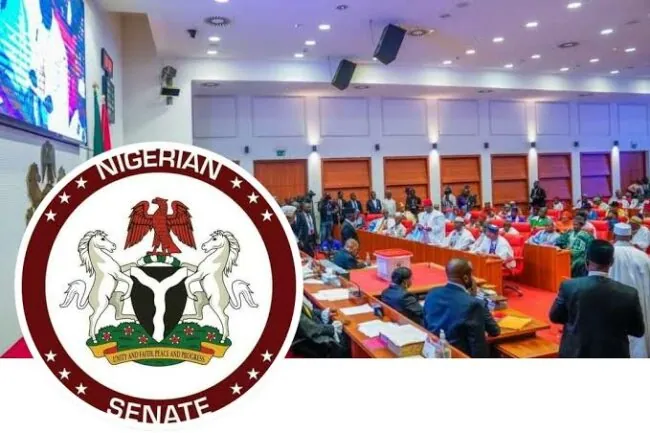
The recommendation is contained in the Interim Report of the Senate Adhoc Committee on National Security Summit, which was adopted at plenary on Wednesday following zonal public hearings across the country’s six geopolitical zones — North East, North West, North Central, South West, South East and South South.
The proposed fund is intended to address unemployment, poverty, hunger, drug addiction and radicalisation among young people, while supporting local economic recovery and strengthening community resilience in violence-prone areas.
Presenting the report, the Senate Leader, Senator Opeyemi Bamidele, said the committee’s findings underscored the urgent need for a shift from a security strategy driven largely by force to one that is preventive, inclusive and sustainable.
“The root causes of insecurity must be addressed deliberately and sustainably,” Bamidele said, noting that widespread joblessness and economic deprivation have made many young Nigerians vulnerable to recruitment by criminal gangs, insurgents and extremist groups.
According to the report, unemployment, corruption in governance, drug abuse, cultism, poverty, illiteracy, porous borders and religious radicalisation constitute the core drivers of Nigeria’s security crisis.
“There is an urgent need for the Federal Government to establish a fund to address the root causes of insecurity,” the committee stated, warning that reliance on military responses alone would remain insufficient in tackling complex and evolving threats.
The Senate also called for a fundamental overhaul of Nigeria’s security architecture, arguing that the country is “fighting 21st century crimes with 20th century tools.”
It urged security agencies to transition to intelligence-driven and data-led operations, incorporating digital intelligence, surveillance technology and early warning systems to proactively detect and disrupt security threats.
“All security agencies should deepen intelligence-driven operations by leveraging digital intelligence and data-driven analysis as the way forward,” the report said.
In addition, lawmakers stressed the need for stronger inter-agency collaboration, calling for enhanced synergy among the military, police, Department of State Services (DSS), Immigration, Customs, NSCDC, intelligence agencies, vigilante groups, as well as traditional and religious institutions.
The panel further proposed the establishment of joint operations centres nationwide to improve intelligence sharing, coordination and rapid response among security agencies.
On economic activities linked to insecurity, the Senate raised concerns over illegal mining, directing all unlicensed mining companies operating across the country to immediately halt operations and regularise their status with the Federal Government.
“The surge in unregulated and foreign mining activities, often in collaboration with some Nigerians, has been linked to insecurity in many communities,” the report warned, calling for a comprehensive national policy to regulate mineral exploitation.
The Senate also expressed concern over the activities of the Indigenous People of Biafra (IPOB) in the South East, citing loss of lives and property, erosion of traditional authority and a rise in out-of-school children.
It called for an end to the weekly sit-at-home order, urging state governments in the region to act decisively to restore normal economic and social activities.
“The Monday sit-at-home syndrome should be curtailed, if not completely stopped,” the lawmakers said.
Among other recommendations, the committee called for the identification, arrest and prosecution of sponsors of insecurity at both local and international levels, including the disruption of their funding networks.
It also advocated the restoration of ancestral lands, farmlands, shelters and cultural heritage sites occupied by insurgents, alongside the rebuilding and resettlement of affected communities with adequate compensation by all tiers of government.
Additional proposals include the creation of mobile courts to ensure speedy justice, protection of forests through modern surveillance technology and forest guards, empowerment of the NDLEA to curb drug abuse among youths, and renewed calls for state police.
The Senate further recommended the establishment of local security liaison committees at ward levels, strict adherence to the federal character principle to address marginalisation, and greater inclusion of traditional and religious leaders as recognised security stakeholders.
The panel concluded that only a holistic, people-centred approach that tackles both the symptoms and structural drivers of insecurity can deliver lasting peace and stability across Nigeria.



