

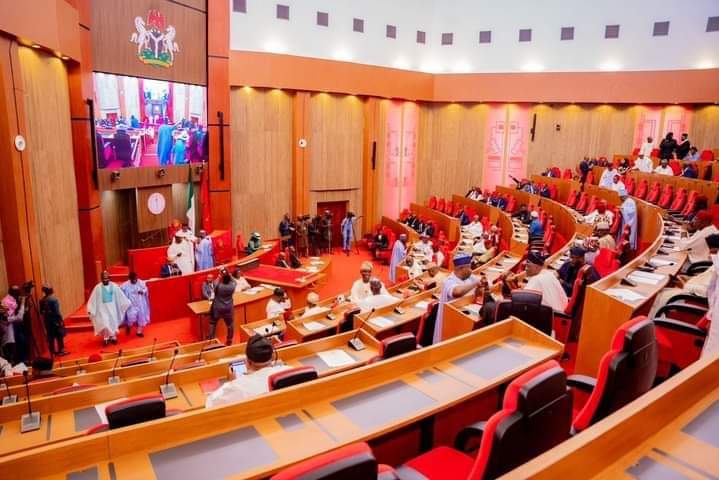
The Senate on Wednesday (today) passed the Electoral Act, 2022 (Repeal & Enactment) Bill, 2026 through third reading after detailed scrutiny of all 155 clauses.
The passage, which comes amid intense national debate over electoral reforms ahead of the 2027 general elections, saw a number of amendments adopted, while the majority of clauses were retained as originally proposed.
One of the major amendments approved by the lawmakers was the reduction of the timeline for the Independent National Electoral Commission (INEC) to publish a notice of election from 360 days to 180 days.
The amendment followed the adoption of a motion moved by Senator Tahir Monguno, who argued that the earlier 360-day requirement was no longer realistic.
Monguno explained that the reduction was necessary to enable INEC meet statutory requirements, noting that retaining the 360-day timeline would already put the commission behind schedule in view of the next general election.
He explained, “The reduction in date was necessary to enable INEC meet up with the requirements on publication of notice, saying that it was already late if the 360 days was taken into consideration regarding the next general election.”
The passage of the bill marks a key milestone in Nigeria’s electoral reform process, which has been the subject of prolonged deliberation in the National Assembly.
The Senate has been under increasing pressure to pass the Electoral Act Bill to provide a clear legal framework for INEC ahead of the forthcoming elections.
On Tuesday, lawmakers adjourned plenary to Wednesday after holding a closed-door session that lasted over four hours, without disclosing details of the deliberations.
Among the items listed on the Order Paper for the day was the consideration of the report of the Committee on Electoral Matters on the Electoral Act, 2022 (Repeal & Enactment) Bill, 2026 (SB. 903), sponsored by the committee chairman, Senator Simon Bako Lalong.
However, after the prolonged closed session, the Senate President, Godswill Akpabio, declined to provide details of the meeting.
He told lawmakers that the closed-door deliberations focused on matters concerning “the Senate in particular and the National Assembly in general.”
Akpabio said, “The Senate in a closed session deliberated on matters relevant to the workings of the Senate, in particular, and the National Assembly in general.
“Is this a true reflection of what transpired in the closed session?”
Thereafter, the Senate Leader, Opeyemi Bamidele, moved a motion for the suspension of other items on the Order Paper and adjournment to the next legislative day.
The motion was seconded by the Minority Leader, Abba Moro, leading to the adjournment of plenary.
According to reports before Wednesday’s passage, the bill’s journey through the Senate had been fraught with delays and procedural wrangling.
At various points, lawmakers retreated into closed-door sessions to review reports from committees, and progress was repeatedly stalled, drawing criticism from stakeholders who warned that prolonged delays could undermine election preparations.
There was growing concern as the National Assembly’s slow pace raised fears that critical reforms, including provisions on electronic transmission of results and other transparency measures, might not be in place ahead of the 2027 polls.
The Independent National Electoral Commission (INEC) has already finalised its timetable for the 2027 elections, but conceded that the final outcome of the Electoral Act amendment might affect some scheduled activities.
With the passage of the Electoral Act Bill by the Senate, the legislation will now be transmitted to the President for assent, after which its provisions will take effect.



