

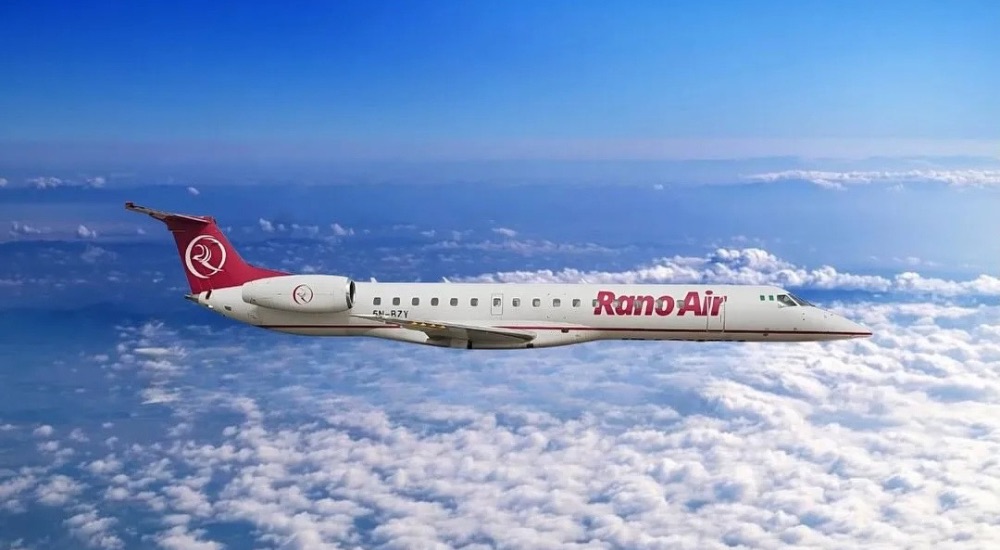
Rano Air has temporarily suspended some flight routes following a sharp rise in Jet
A1 aviation fuel prices, which has significantly increased operating costs.
The airline announced this in a statement on Friday, saying the fuel price surge has
made certain routes commercially unsustainable, forcing a reduction in operations
until conditions improve.
The development comes as Air Peace also reduced its Abuja–London flights to three
weekly services due to ongoing Jet A1 supply constraints, affecting a key
international route.
Rano Air said the suspension decision came after careful evaluation of the growing
financial burden caused by escalating fuel prices.
The airline noted that the sharp rise in Jet A1 costs has significantly strained flight
operations, making it increasingly difficult to maintain some services profitably.
“Rano Air wishes to inform the general public and our valued passengers that, due to
the unprecedented escalation in the cost of Jet A1 aviation fuel by over 300%, the
operational cost of sustaining some of our routes has become extremely challenging
and commercially unsustainable.”
Passengers on affected routes were advised to contact the airline for refunds,
rescheduling, or rerouting assistance.
The airline said its customer service team remains available to support affected
travelers.
Rano Air assured customers that suspended services would resume once operating
conditions improve.
The move reflects wider distress in Nigeria’s aviation market, where fuel costs
continue to erode route profitability.
Nigeria’s Jet A1 crisis has worsened in recent weeks as fuel price spikes and supply
shortages continue to disrupt airline operations nationwide.
Aviation fuel prices reportedly surged from approximately N900 per litre in late
February to over N3,000 per litre by April, according to the Airline Operators of
Nigeria.
Air Peace earlier reduced the frequency of its Abuja–London operations to three
weekly flights due to fuel supply constraints.
Nigerian airlines had threatened a nationwide operational shutdown from April 20,
2026, citing unsustainable fuel expenses.
President Bola Tinubu approved a 30% reduction in certain statutory aviation fees to
provide temporary relief.
The Federal Government also introduced capped Jet A1 pricing and a proposed 30-
day credit window for airlines.
While these interventions may ease short-term pressure, airlines continue to struggle
with elevated operating costs.
Fuel marketers including Adeyinka Adewole, MD/CEO of Raven Energy Nigeria, said
the Federal Government’s intervention may offer temporary relief but does not
address the structural drivers of Jet A1 price volatility.
They explained that aviation fuel pricing is largely determined by
international Platts benchmarks and the naira-dollar exchange rate, meaning global
oil trends and currency pressures remain the key cost drivers.
Adewole noted that the highest Jet A1 price he sold in Lagos was closer to N2,500
per litre, while other stakeholders who spoke also denied selling as much as N3,000
per litre among legitimate marketers, adding that prices have since moderated.
Marketers argued that direct price controls conflict with deregulation principles and
are unlikely to be sustainable.
They called for structural reforms, including tax reliefs, improved access to financing,
naira-based domestic fuel transactions, and stronger support for local refining,
including sales from the Dangote Refinery in naira to reduce dollar exposure.
They also questioned the feasibility of the proposed 30-day credit window for airlines
without stronger risk-sharing mechanisms.
They maintained that without deeper reforms across the aviation fuel supply chain,
current interventions will likely provide only short-term relief while price instability
persists.



