

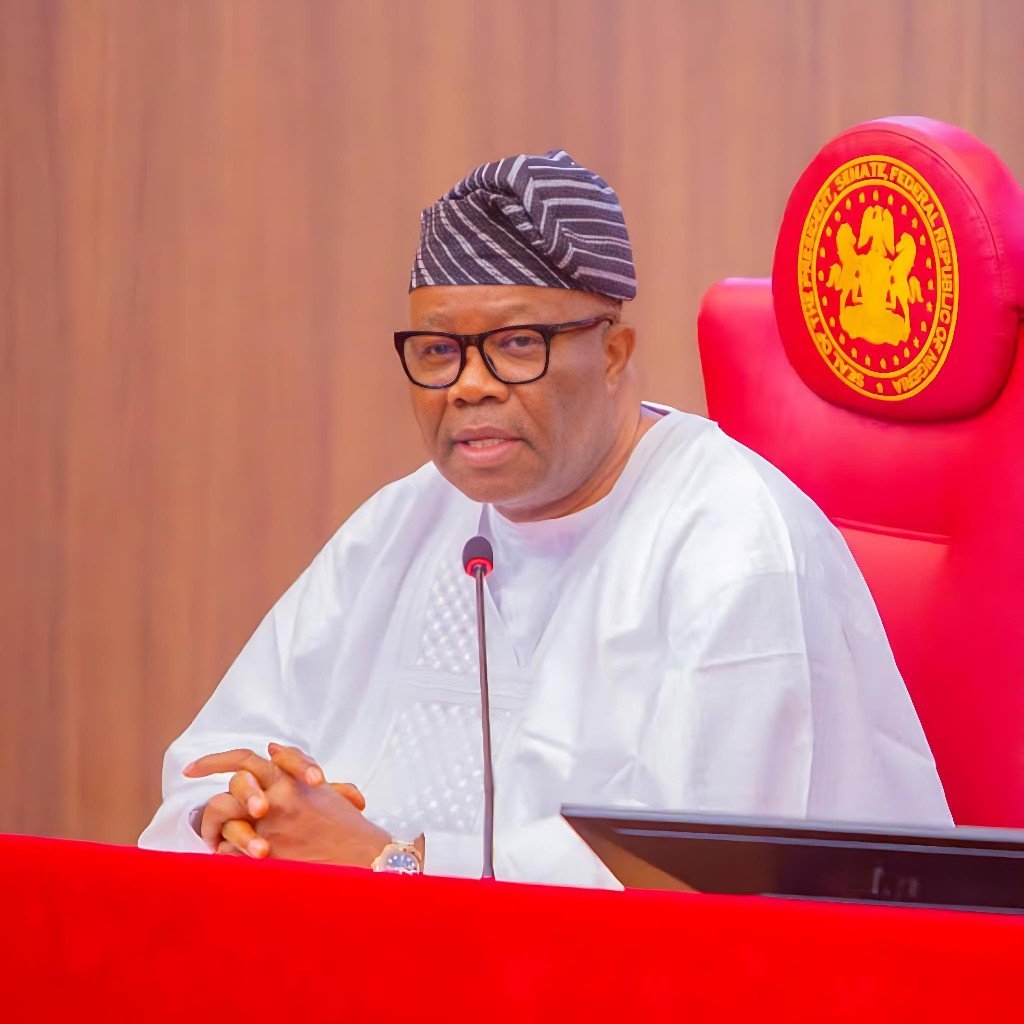
Senate President, Godswill Akpabio says Nigeria should not simply strive to
survive, but to lead Africa in agricultural innovation and food production.
Akapabio made the call yesterday at the opening of the maiden edition of
National Legislative Summit and Expo on Agricultural Colleges and Institutions
at the International Institute of Tropical Agriculture (IITA), Ibadan.
The theme of the summit is; “Unfolding the Potential of Agricultural Colleges
and Institutions through Collaboration and Innovation to Enhance Food Security
and Job Creation.”
Akpabio, who was represented by Sen. Ashiru Oyetola, the Deputy Senate
Majority Leader, said that Nigeria must move from dependence to
competitiveness.
Said Akpabio, “we must move from potential to performance. The story of great
nations teaches us that prosperity often begins from the soil.
“Many of today’s industrial giants first built strong agricultural foundations
before expanding into manufacturing and technology.
“Agriculture built economies before oil ever did. This summit, therefore, is not
simply about colleges and institutions. It is about the future of Nigeria.
“It is about whether we will rise to meet the demands of our time with courage,
intelligence, and unity of purpose,” he said.
The Senate President, however, said that the future belongs to innovators,
creators, problem-solvers and builders.
“Agriculture offers enormous possibilities for enterprise, wealth creation,
technological innovation and national impact. Do not despise the soil. Great
nations grow from it,” he said.
He, urged, researchers and academics, to help Nigeria with their ideas, saying
we need your discoveries, dedication and your patriotism now more than ever.
“The future of agriculture will not be determined merely by hoes and cutlasses,
but by research, technology, mechanisation, innovation, biotechnology, data
systems, irrigation science, climate adaptation and knowledge-driven
productivity.
“The farmer of the 21st century must become not only a cultivator of crops, but
also a manager of science, information, and enterprise.
“That is why agricultural colleges and institutions occupy a strategic place in
national development.
“These institutions are not ordinary schools. They are laboratories of national
survival. They are incubators of innovation. They are training grounds for the
food security architects of tomorrow.
“Train agro-entrepreneurs; reduce post-harvest losses; strengthen food
processing and value chains; create millions of jobs; and help Nigeria transition
from food insecurity to agricultural abundance,” he said.
According to the senate president, nations that neglect agriculture gamble with
hunger. Nations that invest in agriculture invest in stability, employment, peace
and sovereignty.
“Nigeria is richly blessed. We possess vast arable land, diverse ecological
zones, energetic youths, favourable climate conditions and one of the largest
agricultural markets in Africa.
“Yet we must honestly admit that we have not fully converted these blessings
into sustainable prosperity.
“For too long, our agricultural sector has remained largely dependent on
subsistence practices while our research institutions, colleges of agriculture, and
extension systems have not received the strategic integration and modernisation
they deserve.
Sen. Sharafadeen Alli, the Chairman, Senate Committee on Agricultural
Colleges and Institutions, said the summit is a collective effort to reposition
Agricultural Colleges and Institutions as strategic drivers of food security,
innovation, economic growth, youth empowerment and sustainable national
development.
Alli said, as a nation blessed with enormous agricultural potential, we must
strengthen our institutions to become centres of excellence capable of producing
skilled manpower, impactful research, modern innovations and practical
solutions to the food and employment challenges.
“This event has brought together distinguished senators, policymakers, heads of
institutions, development partners, researchers, private sector stakeholders,
investors, students and key actors within the agricultural value chain across
Nigeria and beyond.
“This reflects our shared commitment to advancing agricultural education and
institutional development.
“I commend IITA for hosting this historic national engagement and for their
continued contributions towards agricultural research and development in
Africa.
“This gathering is not merely ceremonial; it is a platform for meaningful
dialogue, strategic partnerships, legislative engagement, exploring innovation
exchange and for actionable policy recommendations that will strengthen
Agricultural Colleges and Institutions across the country,” he said.
The sub-teams of the summit are: Legislative Framework Development, Policy
Advocacy, Strengthening Institutional Collaboration: Enhancing Curriculum
and Training, Investment Attraction and Job Creation Strategies.
Participants at the summit were drawn from: Rubber Research Institute of
Nigeria, National Center for Agricultural Mechanisation, National Agricultural
Extension Research Liaison Services and Nigeria Institute of Oil Palm
Research.



