

By Joel Ajayi
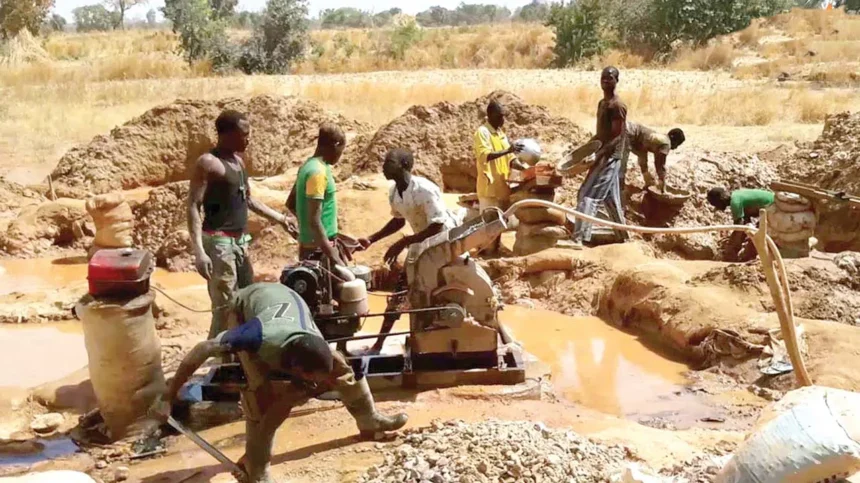
The Niger Ministry of Mineral Resources has taken firm steps to address allegations of illegal revenue collection and improve coordination among its local government (LG) coordinators.
The move was announced at a stakeholders’ meeting convened by the Permanent Secretary of the ministry, Idris Legbo, at the office of the Commissioner for Mineral Resources in Minna on Thursday.
Speaking at the meeting, Legbo said that the ministry received reports that some coordinators were allegedly extorting artisanal miners and collecting money in the ministry’s name without authorisation.
He warned that the ministry would not tolerate any act capable of damaging its image or frustrating efforts to reposition the mining sector for economic growth.
He added that any coordinator found engaging in illegal revenue collection would face immediate dismissal.
The permanent secretary also directed all coordinators to return their appointment letters and identity cards for correction and amendment.
He explained that the coordinators were mistakenly identified as ministry staff on their identity cards, whereas they only serve as Local Government Coordinators and not permanent personnel of the ministry.
“The coordinators were not appointed as revenue officers and therefore have no authority to collect money from miners or operators in their respective local government areas.
“Their primary responsibility is to monitor mining activities and report developments to the ministry for necessary action,” Legbo said.
He assured them that the ministry would investigate the issues the LG coordinators raised and hold discussions with the consultants.
“The ministry will visit various local government areas to assess the situation firsthand.
“The ministry is commitment to transparency, accountability and proper regulation of mining activities in line with the New Niger Agenda of Gov. Umaru Bago
It will be recalled that recently, some of the coordinators had raised concerns over poor communication and lack of cooperation between them and the ministry’s consultants.
They appealed to the ministry to intervene and encourage better collaboration among stakeholders to strengthen monitoring and improve revenue generation.
NFSS Reaffirms Commitment to Protect Kano’s Forest and Mineral Assets
The Kano State Command of the Nigeria Forest Security Service (NFSS) has reiterated its commitment to intensify efforts toward safeguarding the state’s forests, mineral resources, and other natural assets.
State Commander, Abdullahi Al’ameen, gave the assurance on Wednesday during a strategic visit to the Kano State Ministry of Mineral Resources, aimed at strengthening collaboration on the protection of natural resources.
Al’ameen said the engagement was designed to enhance coordination between the ministry and relevant security agencies in tackling illegal activities, environmental degradation, and other threats affecting forests and mining areas.
He stressed that NFSS personnel would work closely with the ministry, the Nigeria Police Force, the Nigeria Security and Civil Defence Corps (NSCDC), and other stakeholders to ensure effective protection of Kano’s natural wealth.
“Our personnel will collaborate with the ministry and other relevant security agencies to secure Kano’s forests,” he said.
He explained that the partnership would focus on community-based surveillance, routine patrols, emergency response support, and improved operational synergy across resource-rich communities.
According to him, the initiative forms part of broader efforts to strengthen institutional cooperation in addressing security challenges within mining corridors and forest zones.
Al’ameen further disclosed that 22 of Kano’s 44 local government areas are endowed with mineral deposits, particularly in rural communities, making their protection a priority for sustainable development.
Earlier, the Commissioner for Mineral Resources, Hamza Safiyanu, commended the NFSS for its proactive stance in safeguarding the state’s natural assets.
He noted that the protection of mineral resources requires sustained collaboration among government institutions, security agencies, and host communities.
Safiyanu added that such synergy would help curb illegal mining activities, promote environmental protection, and improve surveillance across mining sites in the state.



