

…Tinubu Records Sweeping Victory Across Several States
…Says True Democracy Belongs to the People at Grassroots
By Ameh George
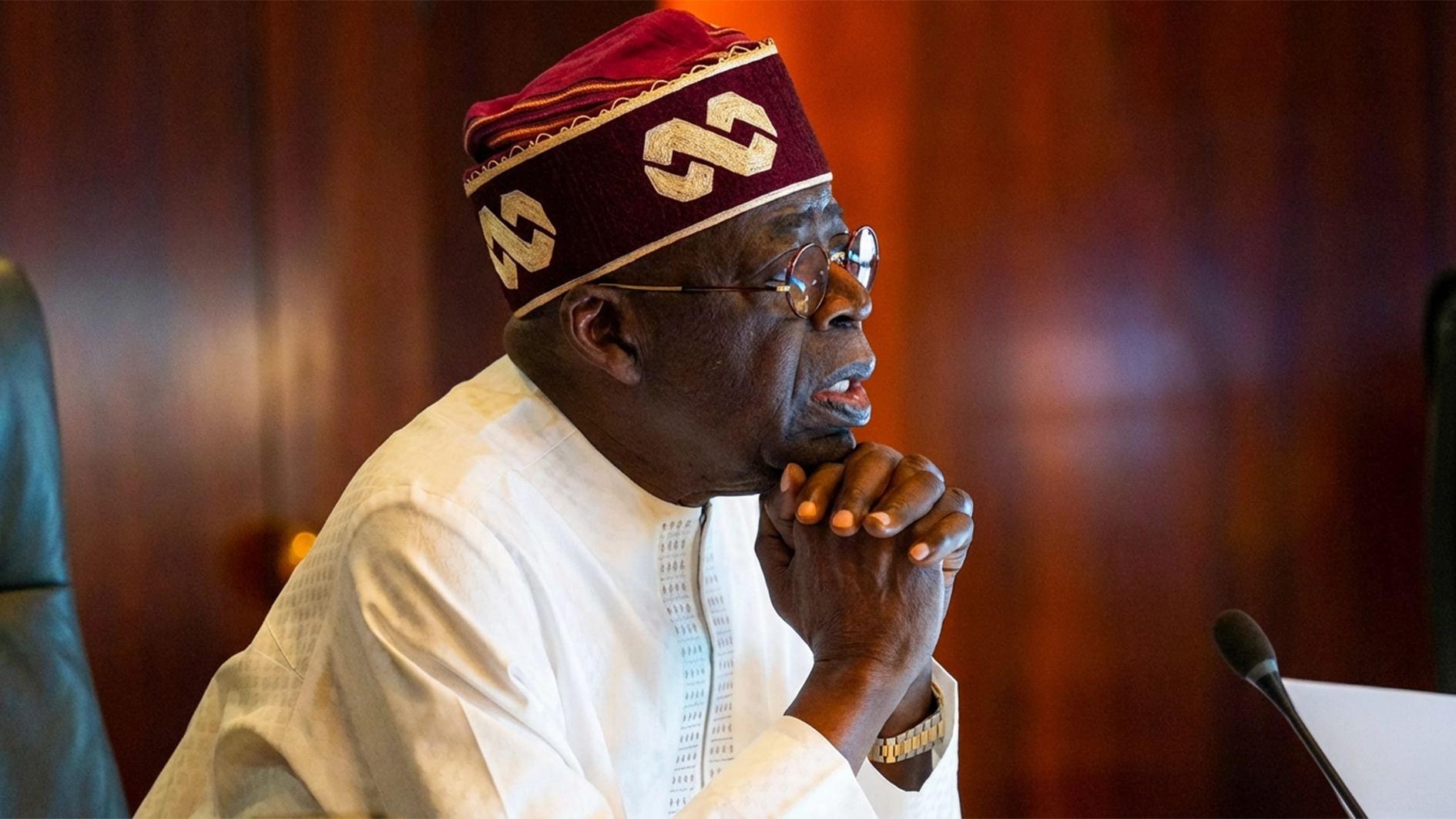
President Bola Ahmed Tinubu has described the conduct of the 2026 All Progressives Congress (APC) nationwide primary elections as a powerful proof of thriving internal democracy and deep grassroots engagement.
Speaking to reporters after participating in the presidential primary at his Ikoyi-Obalende Ward L2 in Lagos State, President Tinubu expressed high satisfaction with the organization and peaceful execution of the electoral process.
He emphasized that the direct involvement of ordinary party members served as the ultimate bedrock for sustainable democratic growth in Nigeria.
The president’s assessment of the 2026 APC primaries highlights several critical areas of party administration and national politics. He noted that true democracy belonged to the people at the local level, asserting that every single registered party member maintained a fundamental right to actively shape the party’s leadership direction.
President Tinubu highly praised the APC governors for their handling of the logistical and organizational tiers of the exercise, highlighting the smooth execution of ward congresses, local government congresses, delegate accreditation, and final membership validation.
Reflecting on the orderly atmosphere at the polling units, he noted that the transparency of the validation process allows observers to “rate democracy at a high level.”
Reacting to the overwhelming support shown by the party faithful at his voting ward, Tinubu stated that the enthusiasm of the crowd did not just excite him but “challenges me more” to deliver on his national mandate.
A statement by the Special Adviser to the President on Information and Strategy, Bayo Onanuga, indicated that the successful primaries served as a strategic milestone ahead of the upcoming 2027 general elections. Prior to the commencement of the voting, President Tinubu had issued a strong warning to all political actors and aspirants within the party to strictly avoid “do-or-die” politics. He encouraged them to exhaust consensus-building mechanisms first.
Where those failed, he insisted on transparent field primaries to ensure the willpower of the grassroots remained uncompromised.
Meanwhile, President Tinubu has recorded a sweeping victory across several states as the APC held its 2026 presidential primary election on Saturday. The exercise, which gathered momentum in the afternoon in most states, was presided over by governors who were officially mandated by the party to serve as collation officers.
In many of the results already announced, the president defeated Stanley Osifo, his lone challenger, who recorded zero votes in several states.
In Rivers state, Tinubu polled 280,468 votes, while Osifo recorded zero votes across the 23 LGAs of the state, according to Siminalayi Fubara, governor of the state.
It was a similar outcome in Edo, where Tinubu secured 131,096 votes, while Osifo got just one vote during the exercise held across the 192 wards in the state on Saturday.
Monday Okpebholo, the governor and returning officer for the election, described the exercise as peaceful and transparent.
Muhammadu Yahaya, governor of Gombe, who announced the outcome of the exercise, also said the APC in the state delivered every vote to Tinubu during the presidential primary held across the 11 LGAs.
Yahaya said Tinubu polled 450,516 votes while Osifo recorded zero votes, noting that the state has 550,516 registered APC members.
Osifo also recorded zero votes in Osun as Tinubu secured another landslide victory with 100,880 votes in the primary, which was described as peaceful by Adegboyega Oyetola, minister of marine and blue economy, who served as collation officer.
“This impressive turnout is not only historic but also a resounding affirmation of the confidence reposed by members of our party in the leadership, vision and Renewed Hope Agenda of His Excellency, President Bola Ahmed Tinubu, GCFR,” Oyetola said.
The president also recorded a clean sweep in Ebonyi, securing all 207,579 valid votes cast across the 13 LGAs, while his rival got zero votes.
Announcing the results in Abakaliki, Francis Nwifuru, governor of Ebonyi and collation officer for the state, said the exercise was held simultaneously across 171 wards and 13 LGAs, where the party has 215,490 members.
In Kwara, Tinubu also defeated Osifo, polling 310,990 votes while his lone challenger secured no votes.
Abdulrahman AbdulRazaq, who announced the results, said a total of 457,374 party members were registered for the exercise, while 310,990 members were accredited and participated in the voting process across the state.
The same scenario played out in Bayelsa as Tinubu garnered 277,192 votes to defeat Osifo, who polled five votes, according to Doriel Nduwi, the collation officer.
Similarly, in Zamfara, Tinubu secured 321,579 votes against the 42 votes recorded by Osifo.
Dauda Lawal, governor of the state, who announced the result, said a total of 322,435 accredited voters participated in the exercise.
“I therefore declare President Bola Ahmed Tinubu as the winner of the 2026 Zamfara State presidential primary,” Lawal said.
Meanwhile, the president received affirmations in some states where results have not been announced.
Uba Sani, governor of Kaduna, who personally monitored the primary across 255 political wards in the 23 LGAs, said party members turned out massively for the exercise.
He described the development as a strong demonstration of unity, loyalty, and confidence in the leadership of the APC and Tinubu.
Tinubu also received a similar affirmation in Imo as thousands of party members trooped out to cast their votes for his candidacy.
Speaking after the exercise, Hope Uzodimma, governor of the state, said it is very obvious that “President Tinubu has done enough to deserve a second term.”
“Look at what has happened at the grassroots, how it has been stimulated, starting from the membership registration, which was done electronically, to the validation of members,” the governor said.
“In just one ward, we had 35,000 people. It means that if only our party members vote for President Tinubu, he has already won the election.
“I want to thank President Tinubu for giving time to do politics the way it should be done. And I also want to thank our party members for coming out massively to vote for him as our candidate for the 2027 presidential election.”
However, contrary to the views expressed by President Bola Ahmed Tinubu and most APC state governors over the general conduct of the APC primaries nationwide and for the various elective offices, aggrieved aspirants and stakeholders condemn the primary elections as a sham. They allege that party power brokers and governors manipulated the process, sidelining valid candidates to impose unpopular consensus choices. They have raised specific grievances about the electoral exercise
Party Protesters argue that the so-called “consensus arrangement” is heavily engineered, allowing elites to handpick candidates rather than allowing genuine grassroots participation.
Incidents of voter suppression, harassment of supporters, and disruptions by armed thugs were reported across multiple states, including Lagos, Ondo, and Oyo.
Petitioners cite specific breaches of the Electoral Act and the party’s own constitution, arguing that delegates and party members were deliberately disenfranchised.
In Surulere and Lagos Mainland, violence erupted when election committees attempted to read out the names of 18 unopposed consensus candidates. Delegates actively destroyed ballot boxes in protest.
In Oyo State, five governorship aspirants (the APC G5) held a joint press conference in Ibadan to reject the primaries, citing widespread manipulation and an erosion of democratic trust.
As a fallout of the National Assembly primaries across states like Nasarawa, Adamawa, and Edo, dozens of serving lawmakers and aspirants who lost their return tickets submitted petitions. They argue that the disqualifications and last-minute withdrawals were deliberate attempts to muzzle opposition.
The aggrieved stakeholders are petitioning national leadership and civil society groups to investigate the primaries. Many have engaged legal teams to challenge the validity of selected candidates.
Several coalitions have warned the APC leadership that failure to address these allegations could trigger massive defections and hurt the party’s chances in the 2027 general elections.
The protesters are urging President Bola Ahmed Tinubu to intervene, calm tensions, and enforce democratic fairness to preserve the party’s unity.
The New National Star reports that a Federal High Court sitting in the Federal Capital Territory, (FCT) Abuja, on Thursday, May 21, had nullified INEC’s guidelines requiring political parties to submit their membership registers by May 10 ahead of the 2027 general elections. Justice Mohammed Garba Umar ruled that the commission lacks the statutory power to shorten or abridge the timelines explicitly outlined in the Electoral Act.
The Implications of the FHC ruling is that political parties now have until September 2026 to submit their updated membership registers and databases, matching the statutory 120-day pre-election deadline.
The ruling stemmed from a suit filed by the Youth Party, which successfully challenged INEC’s revised timetable for party primaries and candidate nominations.
By declaring INEC’s restrictions unlawful, the court has effectively widened the window for political parties to conduct primaries, submit candidates, and manage potential candidate substitutions and defections without being constrained by shorter internal deadlines.
Political analysts and civil society organizations have earlier expressed that the INEC May 10 deadline for the submission of updated party membership was meant to prevent dissatisfied party members from defecting to other party platforms.
They argued that early, restrictive membership submission deadlines were used by major political platforms to stifle internal opposition and lock disgruntled politicians into a single platform. However, this debate has shifted significantly following a landmark judicial ruling.
Also, according to legal experts and political observers, this ruling effectively reopens the political space, giving dissatisfied politicians who lose out in primary elections additional months to defect to alternative political platforms.
In what many have described as a face saving measure from the widely criticised process and what has been viewed as a strategy to delay or prevent disgruntled members from taking advantage of the recent High Court ruling to defect to other viable political parties to actualise their aspirations, the APC National Working Committee (NWC) specifically mandates that only figures officially declared and released by duly authorized party officials are valid.
Unofficial tallies circulating on social media or announced by unauthorized state officials are frequently dismissed as misleading or entirely fake. This is because the party frequently conducts primaries using a direct voting method (meaning votes are collated at the ward level and then moved up to the local government and national levels for verification), premature announcements can cause confusion. The most reliable ways to verify authentic APC primary outcomes from the national secretariat. The ultimate authority on releasing final, verified results is the National Working Committee (NWC) and the designated national collation centers, such as the one in Abuja.
Also, The official national leadership publishes authentic progressive updates and certified election returns. You can track these declarations on the Official APC Facebook Page and major broadcasting networks typically carry live broadcasts of the collation and official declaration processes to ensure public transparency.
Internal party democracy is widely considered the cornerstone of a functional democratic system. Because political parties are the primary vehicles for electing leaders and formulating government policies, any defects in their internal operations inherently translate into a defective democratic process for the broader society. The essence of true democracy relies on intra-party democracy through several core principles.
A healthy political party moves power away from a centralized leadership, “godfathers,” or internal cabals, placing it in the hands of its members. True internal democracy ensures party members have a direct voice in shaping policies and party ideologies, rather than simply endorsing decisions made at the top.
One of the most critical aspects of intra-party democracy is the process of selecting candidates for public office. When parties utilize open, fair, and transparent primary elections, it fosters healthy competition and brings forth candidates who actually reflect the preferences of the electorate.
Also, when party officials and standard-bearers are chosen democratically, they are more likely to remain accountable to their constituents rather than to external political sponsors. This legitimacy is essential for maintaining trust in government institutions.
When political parties lack democratic mechanisms such as in cases of candidate imposition or constitutional violations it frequently leads to internal instability, factionalization, and mass defections.



