

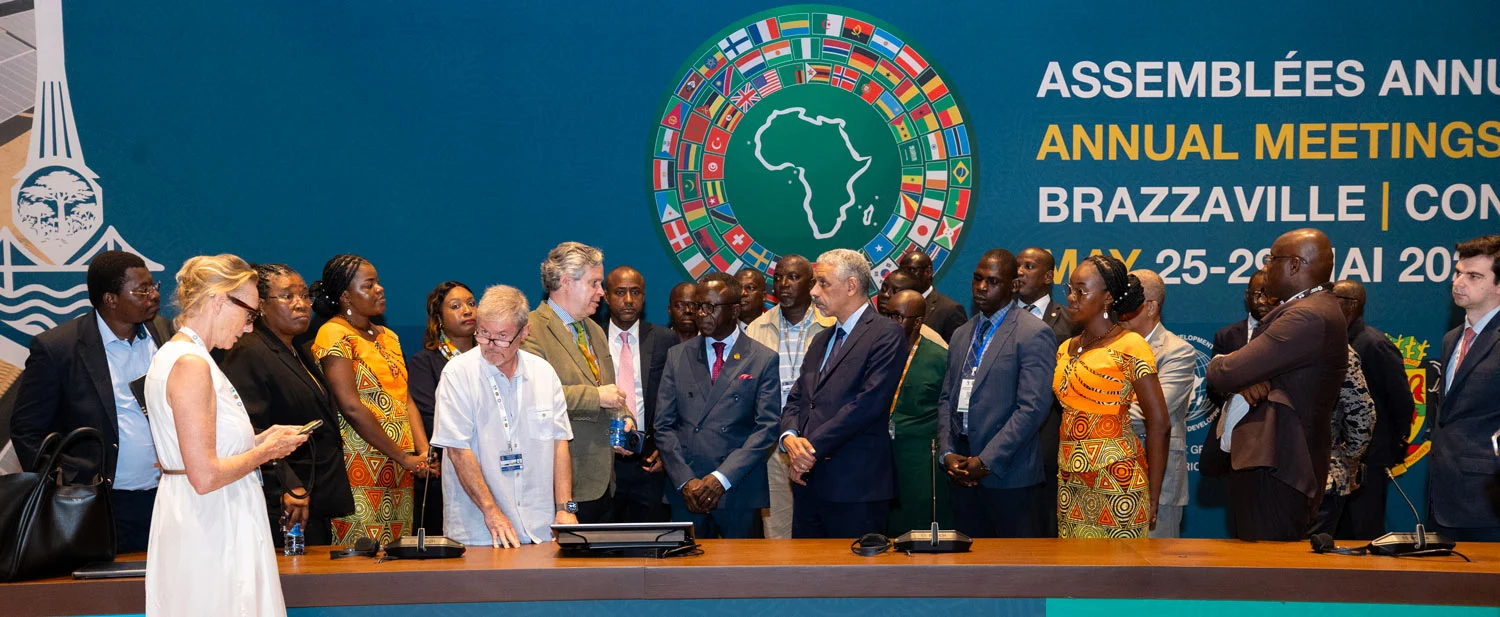
Over 3000 delegates are converging in Brazzaville, Republic of Congo as the 2026 Annual Meetings of the African Development Bank (AfDB) Group kicks off.
The meeting will focus on tackling Africa’s widening development financing gap in the face of growing global economic fragmentation.
Heads of State, Finance Ministers, Central Bank Governors and private sector leaders are expected at the meetings.
A statement from the bank According to the bank, said the four-day meeting which opened on May 25 would end on May, 29.
The AfDB said the meetings would mark the 61st Annual Meeting of the AfDB and the 52nd meeting of the African Development Fund (ADF).
According to the premier African development financial institution, delegates from the Bank’s 81 member countries would deliberate with the theme: “Mobilising Africa’s Development Financing at Scale in a Fragmented World.”
The Bank said the theme reflected growing concerns over declining aid flows, rising borrowing costs and tightening global financial conditions.
According to the Bank, Africa currently faces an annual development financing gap estimated at $400 billion.
It said the continent required huge investments in infrastructure, energy, food security, climate adaptation and job creation.
“This year’s meetings will be the first under the leadership of Sidi Ould Tah, who assumed office in September 2025.
“One of Tah’s early achievements is securing an 11 billion dollar replenishment for the African Development Fund in December 2025.
“The concessional fund supports low-income and fragile African countries through grants and soft loans.
“With 24 African countries pledging about 182.7 million dollars toward the replenishment process,” it said.
The bank said a major focus in Brazzaville would be the New African Financial Architecture for Development (NAFAD).
According to the AfDB, the initiative seeks to mobilise Africa’s estimated four trillion dollars in pension funds and sovereign wealth assets.
NAFAD was endorsed by African Union leaders during their summit in Addis Ababa in February 2026.
The framework aims to strengthen Africa’s financial sovereignty and expand investments in infrastructure and small businesses.
The meetings will also feature policy dialogues, consultative sessions and knowledge-sharing events.
A major highlight will be the inauguration of the 2026 African Economic Outlook report on May 26.
The report provides economic forecasts and policy analysis for African countries and regions.
It is regarded as one of Africa’s leading economic reference publications for governments, investors and development institutions.



