

…PFN Decries Spread of Attacks to previously Safe zones in South-West, others
…President Tinubu Assures Abducted Children Will not be abandoned
By Ameh George
Recent coordinated attacks across Kwara State, including a midnight assault on the Yashikira community in Baruten and the killing of worshippers at a prayer ground in Ekiti, have escalated public concern.
Armed assailants launched coordinated assaults at Ori-Oke Ajaiye, on the outskirts of Ikiran village in Ekiti Local Government Area of Kwara State, also setting parts of the Emir’s palace on fire and abducting multiple residents. Simultaneously, heavily armed men invaded an outdoor prayer ground during a night vigil, firing sporadically resulting in three deaths and abduction of 15 worshippers.
The New National Star reports that bandits also attacked schools in the Oriire Local Government Area of Ogbomoso, Oyo State, abducting dozens of students and teachers. The tragic aftermath included demands for mass ransoms, protests from locals, and the beheading of a mathematics teacher.
The recurring kidnappings, attacks on traditional institutions, and raids on rural communities have sparked protests and widespread criticism of states’ security framework, prompting demands for stronger federal intervention and state policing.
The attacks in Kwara State and other places were promptly condemned by the Pentecostal Fellowship of Nigeria (PFN), describing them as an escalating security breakdown across the country, warning that several states, including Oyo, Benue and Plateau, have effectively become “killing fields” amid rising cases of banditry, kidnappings and violent attacks.
The PFN National President, Bishop Francis Wale Oke, was emphatic that Nigeria was facing a deepening crisis of insecurity that had reached “intolerable and unacceptable levels,” adding that the nation appeared to have lost a collective sense of value for human life.
The recent abductions and killings have intensified calls for state police and regional security outfits, with factions of the Oodua People’s Congress (OPC), Yoruba activist Sunday Igboho and traditional hunters urging the Federal Government to empower local groups to confront armed gangs in the South-West.
Also, the group led by the National Coordinator of the OPC, Gani Adams, condemned the killings and abductions. Adams seized the opportunity to renew calls for state police as the only solution to address the incessant killings and kidnappings across the country.
The Muslim Ummah of South West Nigeria (MUSWEN) similarly condemned the recent abduction of pupils and teachers in Oriire Local Government Area of Oyo State, describing the incident as a brutal attack on education and the future of the country.
The group also decried the killing of one of the abducted teachers, Mr Michael Oyedokun, whose death was confirmed by Oyo State Governor Seyi Makinde after a video linked to the incident surfaced online.
The group also urged the Federal Government and the Oyo State Government to adopt a more proactive and comprehensive strategy in tackling insecurity.
The Oyo State Council of the Nigeria Labour Congress (NLC) also condemned the recent bandit attack and abduction them as serious threats to public safety and peace in the affected areas.
While commending security agencies and state governments for ongoing rescue efforts and measures aimed at restoring calm, the union called for intensified operations to secure the release of the abducted victims.
Despite the outcry, hundreds of abductees remain held in bandit camps across Nigeria, with mass kidnappings frequently reported in regions like Zamfara, Kaduna, Niger, and Oyo states. Captives endure severe conditions, and families face exorbitant, life-threatening ransom demands. While security forces and local vigilantes continually launch tactical rescue operations, countless victims remain in peril.
According to Amnesty International, at least 1,100 individuals were abducted in northern Nigeria over a brief three-month period. The crisis has led to widespread school closures as communities face extreme vulnerability to violence.
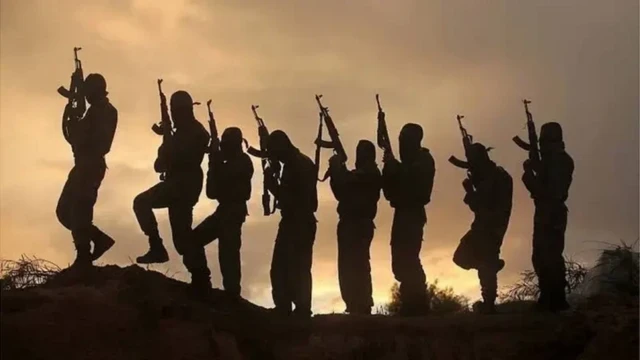
The United States Commission on International Religious Freedom, USCIRF, has disclosed that no fewer than 30,000 armed Fulani militants are currently operating across Nigeria.
The USCIRF’s report titled “Nonstate Violators of Religious Freedom in Nigeria: Fulani Militants,” said armed Fulani militants are the ones worsening insecurity and religious freedom violations in several parts of the country.
The report, which was released in May 2026, described the armed groups as some of the deadliest non-state actors responsible for violent attacks across the Middle Belt and Southern Nigeria.
The USCIRF stated that the militants operate in clusters ranging from 10 to 1,000 fighters, carrying out coordinated assaults that have led to thousands of deaths, mass displacement and heightened religious tensions.
The Commission noted that the attacks linked to Fulani militants accounted for the highest number of deaths among religious communities in Nigeria in the past year, surpassing casualties attributed to organised insurgent groups and criminal gangs.
It pointed out that although many attacks targeted Christian communities, Muslim communities had also suffered killings, kidnappings and raids.
“Violence by Fulani militants caused the highest number of deaths among all religious communities in Nigeria over the last year compared to attacks by organised insurgent groups and criminal gangs,” it said.
The Commission noted that while the groups lacked a central leadership structure, some factions occasionally collaborated with bandit networks and extremist organisations.
“These actors operate in a variety of contexts and with a multiplicity of likely aims and motivations.
“While many Fulani militant groups wage independent attacks, others periodically coordinate with a wide range of actors, from conventional bandit gangs seeking financial enrichment to recognised terrorist organisations that espouse violent interpretations of Islam,” it added.
While the sheer volume of kidnappings severely stretches conventional defense resources, joint operations involving the Nigerian military, local hunters, and state-backed security networks regularly yield successes. For example, military troops successfully intercepted and rescued 92 abductees in Borno State following a coordinated pursuit off the Buratai-Kamuya road.
Officials maintain that the armed forces have continue to achieve tactical victories, rescue hostages, and neutralize insurgents through sustained joint task operations.
But organizations and faith-based bodies like the PFN continue to criticize the government’s response, demanding decisive action to rescue hostages and halt the “ransom economy.”
President Bola Tinubu has, however, assured Nigerians that the children abducted in parts of the country, including Oyo State and Borno State, have not been abandoned by the government.
Tinubu gave the assurance in a statement he personally signed marking the 2026 Children’s Day celebration, which coincided with the Eid-el-Kabir festivities.
The President said the government would continue to intensify rescue operations and strengthen security measures around schools, especially in vulnerable communities.
“To those children, their parents, and their teachers, I say this as a father and your President: you are not forgotten. You are not abandoned,” he said.
Tinubu stated that he had directed all relevant security agencies to sustain intelligence-led rescue operations aimed at ensuring the safe return of abducted children and other vulnerable citizens.
The President said the Federal Ministry of Education had been directed to deepen the implementation of the Safe Schools framework in collaboration with state governments.
“Every school in a vulnerable area must know who to call, what to do, where to move, and how to protect children when danger is identified,” he stated.
Despite the assurances of the President, experts and concerned Nigerians point to the urgent need for comprehensive intelligence reforms, the defunding of criminal networks, and the potential creation of state police to empower local communities.



