

By Joel Ajaiye
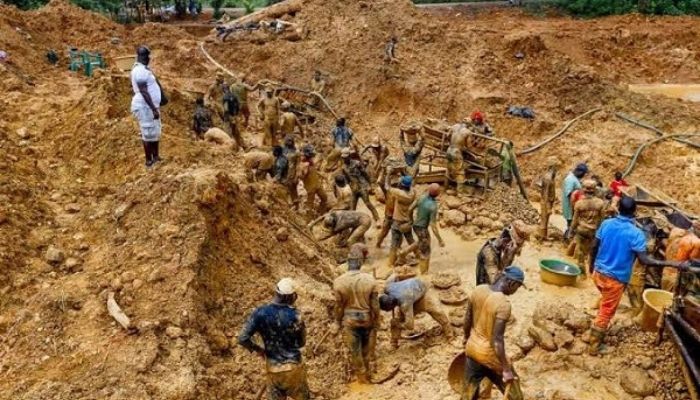
Nigeria’s vast mineral wealth is increasingly becoming a source of national loss rather than prosperity, as illegal mining operations expand across key regions, driven by foreign syndicates, local collaborators, and armed groups.
From gold deposits in Zamfara to lithium in Nasarawa and tin in Plateau, the country is richly endowed with solid minerals capable of transforming its industrial base.
However, widespread illegal extraction has created a parallel economy that drains value, weakens state revenue, and intensifies insecurity in affected communities.
Industry estimates suggest Nigeria loses about $9 billion annually to illegal mining activities, including unpaid royalties, tax evasion, and unrecorded mineral exports.
Despite this scale of wealth extraction, the formal mining sector contributes less than 1 per cent to national GDP, highlighting a stark imbalance between potential and actual returns.
Investigations and field reports indicate that well-organised networks are at the heart of the crisis. Foreign actors, including some Chinese nationals, have repeatedly been linked to unlicensed mining operations in several states.
These operators are alleged to gain access to mining sites through arrangements with armed groups that control remote and difficult-to-access territories.
This growing nexus between illegal mining and insecurity has raised concerns that proceeds from mineral theft may be indirectly financing banditry and other violent criminal enterprises, particularly in the North-West and North-Central regions.
In response, government enforcement has intensified. The Minister of Solid Minerals Development, Dele Alake, recently confirmed that more than 327 suspects, including foreign nationals, have been arrested in nationwide crackdowns targeting illegal mining operations.
Some of these cases are now under investigation by national security agencies over possible links to organised crime networks.
However, experts argue that enforcement alone is insufficient. In many communities, local actors are also deeply embedded in the illegal mining chain.
Allegations point to the involvement of politically exposed individuals, traditional power brokers, and local facilitators who allegedly provide protection and logistical support for illicit operators.
Minerals extracted illegally are often smuggled out of Nigeria through porous borders, moving across West Africa before reaching international markets, including trading hubs in Dubai.
Analysts note that export-import discrepancies strongly suggest widespread under-declaration of Nigeria’s mineral output.
Critical resources such as lithium, columbite, tantalite, and tin—essential for global electronics and clean energy technologies—are also being extracted without regulation or local value addition.
States such as Zamfara, Plateau, Kaduna, Niger, Nasarawa, and Kwara remain major hotspots where mineral wealth overlaps with insecurity, environmental degradation, and community displacement.
Until Nigeria strengthens border control, enforces transparent licensing systems, and dismantles entrenched criminal networks, its mineral wealth risks continuing to enrich foreign syndicates and criminal actors while the nation bears the burden of loss, instability, and underdevelopment.



